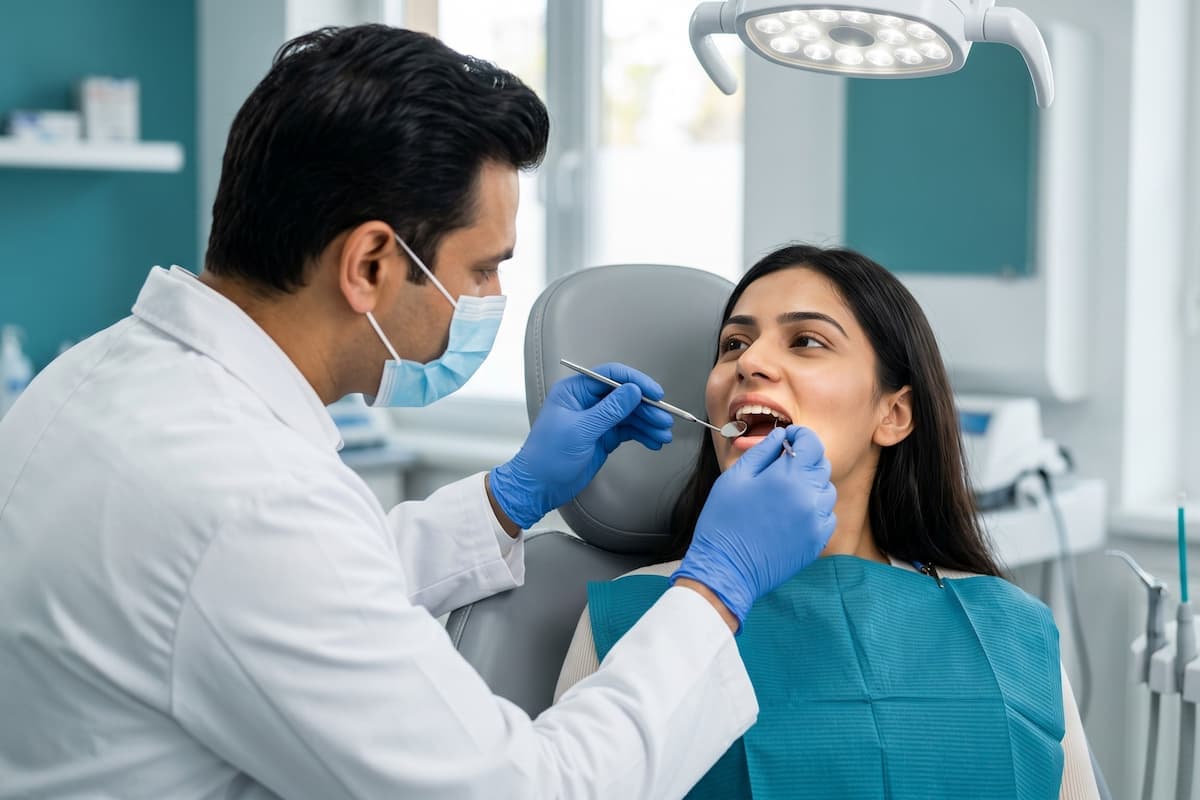
Dental Crowns Teeth: Types, Procedure and Benefits

If you have been told that a tooth needs a crown, or if you are simply trying to understand what the procedure involves, you are not alone. Dental crowns are one of the most commonly recommended restorations in dentistry, yet many patients arrive at their appointment with only a vague understanding of what a crown actually does, what fitting involves and what to expect afterwards.
This article explains dental crowns for teeth in straightforward terms — from what they are and why they may be recommended, to the types available, how the fitting process generally works and how to care for a crown once it is in place.
What Is a Dental Crown?
Direct Answer — Featured Snippet: A dental crown is a tooth-shaped cap that fits over and covers the visible part of a natural tooth above the gumline. It is used to restore a tooth's shape, strength and appearance when that tooth has been significantly damaged, weakened or extensively decayed. Crowns can be made from several materials and are fixed permanently in place using dental cement.
A dental crown — sometimes called a tooth cap, dental cap or simply a crown — is a custom-made restoration that encloses the entire visible surface of a tooth. Once placed, it functions as the outer layer of that tooth, protecting the structure underneath and allowing normal chewing and biting.
Unlike a dental filling, which repairs a relatively small area within the tooth, a crown covers the whole of the visible tooth above the gum. This distinction matters when assessing which type of restoration may be appropriate, and it is something your dentist will consider carefully before recommending treatment.
Crowns are distinct from dental veneers, which only cover the front surface of a tooth, and from dental bridges, which span a gap where a tooth is missing.
Why Might Someone Need a Crown on Their Tooth?
There is no single reason why a dentist may recommend a crown. The decision is typically based on an assessment of the individual tooth, the surrounding structures and the patient's overall oral health. Common considerations may include:
• Extensive tooth decay that has removed too much tooth structure for a filling to reliably restore
• A fractured or cracked tooth where the remaining structure needs protection
• A significantly weakened tooth following root canal treatment, in situations where the tooth is at greater risk of fracture
• Replacement of a failing or worn crown that is no longer providing adequate protection
• Restoration of a tooth that has worn down significantly over time
• Protection following a large or repeated filling where insufficient tooth structure remains
It is worth noting that not every damaged or root-treated tooth automatically requires a crown. Your dentist will weigh up several factors, including how much natural tooth structure remains and the position of the tooth in the mouth, before recommending a particular treatment path.
Types of Dental Crowns for Teeth
Several crown materials are available in UK dentistry today, each with different properties relating to appearance, strength, durability and suitability. Your dentist will discuss which options may be most appropriate for your individual situation.
All-Ceramic and Porcelain Crowns
All-ceramic and porcelain crowns are designed to closely match the natural colour and translucency of surrounding teeth. They are often considered for front teeth where appearance is a primary concern. They can be a good aesthetic option but may be less resistant to heavy biting forces than some other materials.
Zirconia Crowns
Zirconia is a type of ceramic that is notably strong and durable. Zirconia crowns can be produced in tooth-coloured shades and are increasingly used for both front and back teeth. They offer a combination of aesthetics and resistance to chewing forces, though their appearance can vary depending on the manufacturing process and the shade chosen.
Porcelain-Fused-to-Metal (PFM) Crowns
These crowns have a metal inner structure with a porcelain outer layer bonded to it. They have been used in dentistry for many years and can be reasonably durable. However, the metal substructure can sometimes become visible at the gumline over time, which may be a consideration for teeth in visible positions.
Metal Alloy Crowns
Metal crowns — often made from gold alloys or other metal combinations — are highly durable and well-suited to back teeth where chewing forces are greatest. They require less removal of tooth structure during preparation than some other crown types. Their appearance is the primary reason they are less frequently chosen for visible teeth.
Is one material best? No single crown material is universally superior. The most appropriate choice depends on the tooth's position, the amount of remaining natural tooth, your bite, your aesthetic preferences and your dentist's clinical assessment. Discussing the options openly with your dentist is the most reliable way to understand what may suit your individual circumstances.
Dental Crown on Front Teeth vs Back Teeth
The position of the tooth influences which crown material may be most appropriate and what the priorities are when planning treatment.
This is a general guide rather than a fixed rule. Individual clinical assessment remains essential, and some patients may have particular needs or preferences that influence the final recommendation.
How Is a Dental Crown Fitted? A Step-by-Step Overview
The crown fitting process typically involves more than one appointment. The exact number of visits, and what happens at each stage, may vary depending on the tooth, the material chosen and your clinical circumstances.
Step 1 — Initial dental assessment Your dentist will examine the tooth, assess the surrounding gum and bone, and may take X-rays. This helps establish whether a crown is appropriate and whether any other treatment is needed first.
Step 2 — Discussion of treatment options Your dentist will explain the available options, the likely treatment process, the materials being considered and what the procedure involves. This is a good opportunity to ask questions.
Step 3 — Tooth preparation To fit a crown, the tooth is reshaped — a small amount of the outer layer is removed — to create space for the crown to sit properly. Local anaesthesia is typically used during this stage to keep you comfortable.
Step 4 — Impressions or digital scans An accurate record of the prepared tooth and surrounding teeth is taken, either using traditional impression materials or, increasingly, digital scanning technology. This record is used to fabricate the crown.
Step 5 — Temporary crown placement A temporary crown is usually fitted to protect the prepared tooth while the permanent crown is being made. Temporary crowns are functional but are not as durable as the final restoration.
Step 6 — Crown fabrication The impression or scan is sent to a dental laboratory, where the crown is custom-made according to your dentist's specifications. This process may take one to two weeks or longer, depending on the material and laboratory.
Step 7 — Fitting the final crown At a follow-up appointment, the temporary crown is removed and the permanent crown is tried in to check its fit, shape and colour. Adjustments may be made at this stage.
Step 8 — Final placement and bite check Once your dentist and you are satisfied with the fit and appearance, the crown is fixed in place using dental cement. Your bite is checked and any fine adjustments are made.
Some practices now offer same-day crowns using in-surgery milling technology, which may reduce the number of appointments required. Your dentist will explain what is available at your practice.
Does Getting a Dental Crown Hurt?
This is one of the questions patients most commonly ask, and understandably so. The tooth preparation stage involves local anaesthesia, which is given to numb the tooth and surrounding area before work begins. Most patients report that the procedure itself is not painful when anaesthesia is effective, though some pressure or vibration may be felt.
After the appointment, it is relatively common to experience some temporary sensitivity around the prepared tooth, particularly to temperature or pressure. This usually settles over a few days. If sensitivity persists or worsens, it is worth mentioning to your dentist.
Individual experiences vary, and no specific outcome can be guaranteed. If you have concerns about discomfort or dental anxiety, discussing these with your dentist before the appointment can help.
What to Expect After Getting a Tooth Crown
In the days following crown fitting, some patients notice:
• Mild sensitivity to hot or cold temperatures
• A slight awareness of the crown when biting or chewing
• Minor gum tenderness around the treated tooth
Most of these adjustments settle relatively quickly. Avoid particularly hard, sticky or chewy foods for the first few days. Good oral hygiene — gentle brushing around the crown and cleaning between the teeth — is important from the outset.
If your bite feels noticeably uneven, or if discomfort does not settle within a reasonable period, contact your dental practice for a review. Minor bite adjustments are straightforward to carry out.
Dental Crown vs Filling: What Is the Difference?
A dental filling restores a relatively contained area of damage or decay within the tooth structure, while the outer walls of the tooth remain largely intact. A crown, by contrast, covers and protects the entire visible surface of the tooth.
When a significant proportion of the original tooth structure has been lost — whether through decay, fracture or repeated restorations — a filling alone may not provide sufficient strength or protection. In these situations, a crown may be considered to restore both the function and the integrity of the tooth.
The decision between a filling and a crown is not always straightforward, and it will depend on how much natural tooth remains, the position of the tooth and the individual clinical picture. Your dentist will explain the reasoning behind any recommendation.
Difference Between a Dental Crown and a Dental Bridge
These two restorations serve different purposes and are sometimes confused.
• A dental crown restores an existing tooth that is still present in the mouth but is damaged, weakened or significantly compromised. The crown covers and protects that tooth.
• A dental bridge is used to replace a tooth that is missing. A traditional bridge uses the teeth on either side of the gap as supports, with a false tooth suspended between them. Those supporting teeth typically require preparation similar to a crown, which is why crowns and bridges are closely related in clinical terms.
If you are missing a tooth, the options for replacement may include a bridge, a dental implant or a removable denture, depending on individual suitability. Your dentist can help you understand which options may be appropriate.
How Long Do Dental Crowns Last?
Crown longevity varies between individuals and depends on a number of factors. There is no fixed lifespan that can be guaranteed for any crown, but the following influences are generally recognised:
• Oral hygiene — Regular brushing and cleaning between teeth help protect the tooth structure at the crown margin
• Material — Different materials have different durability profiles
• Bite forces — Teeth under greater chewing pressure may place more stress on a crown
• Teeth grinding (bruxism) — Habitual grinding or clenching can accelerate crown wear
• Crown fit and marginal integrity — The quality of the fit affects long-term performance
• Regular dental examinations — Routine checks allow early identification of any changes
• Diet and habits — Regularly biting hard objects or consuming very sticky foods can affect crown longevity
Published evidence and clinical guidance suggest that well-maintained crowns can remain functional for many years, but the specific duration will depend on individual circumstances. Replacement may be considered when a crown is no longer providing adequate protection, when the underlying tooth has been affected or when the crown itself has become worn or damaged.
Can a Crowned Tooth Still Get a Cavity?
Yes. While the crown itself cannot decay, the natural tooth structure underneath it can still develop decay, particularly at the margin where the crown meets the gumline. If bacteria and plaque accumulate in this area and oral hygiene is not maintained, decay can develop and may eventually affect the tooth beneath the crown.
This is one of the reasons why:
• Brushing twice daily with fluoride toothpaste remains important for crowned teeth
• Cleaning between the teeth — using interdental brushes or floss — matters at the crown margin
• Regular dental examinations allow early detection of any marginal changes
• Gum health around the crown should be maintained
A crowned tooth is not immune from dental problems. Treating it with the same care as your other teeth, plus routine professional monitoring, is the most practical approach.
Signs of a Potentially Problematic Crown
Several changes may indicate that a crown requires professional review. These are not diagnostic in themselves, but they are worth mentioning to your dentist if you notice:
• A loose or wobbly sensation when biting
• Persistent or worsening discomfort under or around the crown
• A noticeable change in your bite
• Visible damage, chipping or cracking of the crown
• Increased sensitivity that does not settle
• Gum irritation, redness or swelling around the crown
• Food consistently trapping around the restoration
None of these observations establish a specific diagnosis, and some can have more than one possible explanation. A dental assessment will help clarify the cause.
Tooth Pain Under a Dental Crown: Possible Causes
Discomfort beneath a crown can arise from several different sources, and it is not always straightforward to identify the cause without a clinical examination. Possible explanations that a dentist may consider include:
• Decay developing at the crown margin or beneath the crown
• Bite-related pressure if the crown is not sitting in ideal alignment
• Gum inflammation around the restoration
• Problems affecting the tooth nerve or dental pulp
• A crack or fracture in the remaining tooth structure
It is important not to attempt to self-diagnose on the basis of symptoms alone. If you experience persistent, worsening or unexplained discomfort beneath a crown, arranging a professional assessment is the appropriate course of action.
How to Handle a Loose Dental Crown Safely
If a crown becomes loose or falls off, it is important to approach the situation carefully.
What to do: - Keep the crown safe — store it in a small container or bag - Avoid chewing on the affected side where practical - Contact your dental practice promptly to arrange an assessment - Mention the issue to your dentist as soon as possible
What not to do: - Do not attempt to permanently re-cement the crown yourself - Do not use superglue, household adhesives or any form of DIY dental cement as a permanent fix - Do not file or modify the crown - Do not force a crown back onto the tooth without professional assessment
A loose crown can expose the underlying tooth structure to temperature sensitivity, bacterial accumulation and further damage. While some dental retailers sell temporary dental cement for short-term use in emergencies, these products are not intended as a long-term solution. They do not replace professional assessment and definitive treatment.
Your dentist will examine the crown, the underlying tooth and the margins before deciding the most appropriate course of action, which may include re-cementing the existing crown or, in some cases, providing a new one.
How to Care for Dental Crowns
Caring for a dental crown involves the same fundamentals as good oral hygiene generally, with a few practical points worth keeping in mind:
1. Brush twice daily with a fluoride toothpaste, including carefully around the crown margin
2. Clean between your teeth daily using interdental brushes or floss, paying attention to the gumline around the crown
3. Attend regular dental examinations so the crown and underlying tooth can be monitored
4. If you grind your teeth, discuss this with your dentist — a protective night guard may be recommended
5. Avoid biting very hard objects such as ice, hard sweets or non-food items
6. Avoid very sticky foods that may place excessive pull on the crown
A crown is a fixed restoration, but it does require maintenance. Consistent oral hygiene and regular professional monitoring are the most practical ways to support its long-term performance.
Thinking About Dental Crown Treatment?
If you are concerned about a damaged or weakened tooth, or if you have been advised that a crown may be appropriate, an individual assessment with a qualified dentist is the most reliable way to understand your options.
Wimpole Dental's restorative dentistry team works with patients to assess their oral health, explain the options available and help them make informed decisions about their treatment. There is no pressure to proceed — the priority is always understanding your individual situation.
You are welcome to contact Wimpole Dental to arrange a consultation or ask any questions about dental crowns or other restorative treatments.
Frequently Asked Questions
1. Is a temporary crown the same as a permanent crown?
No. A temporary crown is a short-term protective restoration fitted while the permanent crown is being fabricated in a dental laboratory. Temporary crowns are made from less durable materials and are not designed to withstand the same forces as a permanent crown. They are usually fixed with a weaker cement to allow easy removal at the next appointment.
2. Can a dental crown be replaced?
Yes, a crown can be replaced if it is no longer functioning adequately, if the underlying tooth has been affected or if the crown itself is significantly damaged or worn. The replacement process involves removing the existing crown and, depending on the condition of the underlying tooth, preparing for and fitting a new one. Your dentist will assess whether replacement is appropriate.
3. Can a crown be fitted after root canal treatment?
A crown is sometimes recommended following root canal treatment, particularly for back teeth that bear significant chewing forces. Root canal treatment removes the nerve and associated tissue from inside the tooth, which can leave the remaining tooth structure more vulnerable to fracture. Whether a crown is appropriate after root canal treatment depends on how much natural tooth structure remains and the position of the tooth.
4. Can you eat normally after crown fitting?
Most patients are able to eat relatively normally after crown fitting, though it is sensible to avoid particularly hard, sticky or chewy foods for the first few days while any sensitivity or adjustment settles. If the bite feels uneven, or if chewing causes persistent discomfort, a brief review with your dentist is advisable.
5. Is a crown always a better option than a large filling?
Not necessarily. In some situations, a well-placed large filling can effectively restore a tooth, while in others, a crown may provide better long-term protection. The decision depends on factors including how much natural tooth structure remains, the position and function of the tooth and the overall condition of your oral health. Your dentist will explain the reasoning behind any recommendation.
6. Does a dental crown require any special cleaning products?
Not specifically. A dental crown can generally be maintained with a standard fluoride toothpaste and a toothbrush suited to your gum health. Some patients find that interdental brushes or floss threaders help with cleaning around the crown margin more effectively. Your dentist or dental hygienist can advise on the most suitable cleaning tools for your individual circumstances.
7. Can a crowned tooth become sensitive to temperature?
Yes, some temperature sensitivity is relatively common in the period immediately after crown fitting, particularly if the tooth has recently been prepared. This usually settles over a few days to weeks. If sensitivity is persistent, worsening or accompanied by other symptoms, it is worth contacting your dental practice for assessment, as this may occasionally indicate an issue with the underlying tooth.
8. What happens if a crown chips or breaks?
A chipped or broken crown should be assessed by a dentist. Depending on the extent of the damage and the crown material, it may be possible to smooth or, in some cases, repair a minor chip. More significant damage may require crown replacement. Do not attempt to smooth or file a damaged crown yourself, as this can cause further damage or affect your bite.
9. How do I know if my crown was not fitted correctly?
Signs that may suggest a crown requires review include a persistently uneven bite, ongoing sensitivity, visible gaps or a dark line at the gumline, food trapping consistently around the restoration or a loose feeling. However, these signs do not confirm incorrect fitting on their own — other causes are possible. A professional assessment will help establish what, if anything, requires attention.
Dental Disclaimer
This article has been written for educational and informational purposes only. It is intended to help patients understand dental crowns in general terms and does not constitute professional dental advice, diagnosis or a personalised treatment recommendation. The information provided reflects general clinical principles and recognised UK dental guidance, but individual circumstances vary considerably.
If you are experiencing tooth pain, sensitivity, a loose crown or any other dental concern, you should seek an assessment from a qualified dental professional. Only a dentist who has examined you in person, reviewed your dental records and assessed your individual clinical situation can provide appropriate advice about whether a crown or any other form of dental treatment may be suitable for you.
Treatment outcomes and crown longevity depend on many individual factors and cannot be guaranteed. This article does not replace a professional consultation.
Written Date: 02 November 2026
Next Review Date: 02 November 2027
Written by Wimpole Dental Editorial Team · reviewed by Wimpole Dental Clinical Team
This article is general information, not personal clinical advice. For a diagnosis and a plan tailored to you, book a consultation with a GDC-registered dentist.
Related treatments at our Wimpole Street practice