Eat, speak and smile with confidence again
Dental Implants Wimpole Street, London
Titanium implants with custom porcelain crowns to replace missing teeth — planned in 3D and placed in-house.
from £2,950 (inc. crown)Flexible payment options — ask at your consultation
- 3–6 months typical
- £30 consultation
- Written, itemised quote
Why choose us
Why choose dental implants?
Delivered to a consistently high standard by a named, GDC-registered clinician at our CQC-regulated practice on Wimpole Street, London.
3D CBCT-guided planning
Preserves jawbone
Long-term tooth replacement
About the treatment
Dental Implants at our Wimpole Street practice
Clinically reviewed by Dr Sam Parsno, Implant Dentist, GDC 72207 · Last reviewed July 2026
A dental implant is a small titanium post placed into the jaw, where it acts as an artificial tooth root. Once it has integrated with the surrounding bone, it supports a custom porcelain crown designed to feel and function like a natural tooth. Implants can replace a single tooth, several teeth, or support a full arch of fixed teeth, and they are widely regarded as the modern benchmark for tooth replacement. At our Wimpole Street practice, every stage — from planning to placement to the final crown — is delivered in-house by our experienced implant team.
If you are researching dental implants in London, the most important first step is an honest suitability assessment. Most healthy adults with reasonable bone volume and stable gum health are candidates. Where bone has shrunk after an extraction, grafting or ridge augmentation can often rebuild it, though this adds time and cost. Smoking reduces implant success rates and slows healing, so we will discuss this frankly; many patients use implant treatment as motivation to cut down or stop. Well-controlled diabetes is not usually a barrier, but poorly controlled diabetes and untreated gum disease both increase the risk of complications, so these are addressed first.
Your journey begins with a comprehensive one-hour implant consultation (£80) at our Marylebone practice, near Harley Street. This includes a full clinical examination and, where appropriate, a 3D CBCT scan — a low-dose cone beam scan that maps your bone in three dimensions, showing its height, width and density as well as the position of nerves and sinuses. From this we plan the implant position digitally before any treatment starts, which supports precise, carefully considered placement and helps us anticipate whether grafting will be needed.
Placement itself is a planned surgical procedure carried out under local anaesthetic, usually taking around an hour for a single implant. With modern anaesthesia, most patients report far less discomfort than they expected — commonly comparing it favourably with an extraction — and any tenderness afterwards is typically manageable with over-the-counter pain relief for a few days. Sedation can be discussed for anxious patients. In many cases a temporary tooth can be provided so you are not left with a visible gap while you heal.
After placement, the implant is left to fuse with your jawbone in a biological process called osseointegration. This typically takes 3–6 months, though timescales vary with bone quality, the site in the mouth and individual healing. Once your dentist confirms the implant is stable, a connector called an abutment is fitted and a digital impression is taken. Your final crown is then crafted by a skilled UK laboratory in porcelain matched carefully to your neighbouring teeth, and fitted at a short, comfortable appointment.
Materials and technology matter in implant dentistry. We use reputable, well-documented implant systems in medical-grade titanium — a material with decades of research behind it — together with 3D CBCT planning, digital impressions and laboratory-made ceramic restorations. Choosing an established system also protects you long term: components and compatible parts remain available if your restoration ever needs maintenance years from now.
Treatment starts from £2,950 including the implant, abutment and crown. The final cost depends on how many teeth are being replaced, whether bone grafting or a sinus lift is needed, the type of restoration, and the complexity of your case. Before anything begins, you receive a written, itemised quote so every component and every fee is clear. Flexible payment options can be discussed at your consultation.
How do implants compare with the alternatives? A bridge is quicker and avoids surgery, but usually requires the neighbouring teeth to be prepared and does not preserve the bone beneath the gap. A denture is the most economical option and can restore several teeth at once, but it is removable and some patients find lower dentures difficult to stabilise. An implant is the only option that replaces the root itself, stimulating the jawbone and helping prevent the bone shrinkage that follows tooth loss. Your dentist will set out all three routes honestly, with written prices, so you can choose with confidence.
It is important to be realistic about limitations. Implants are not permanent in the absolute sense — they are a long-term solution that can last decades with good care, but no dental treatment can be guaranteed for life. A small percentage of implants fail to integrate and occasionally an implant can be lost later, most often linked to gum inflammation around the implant (peri-implantitis), smoking or heavy bite forces. We monitor every implant we place at regular reviews so that any early signs are caught and managed promptly.
Aftercare is straightforward but essential. An implant cannot decay, but the gum and bone around it still need meticulous daily cleaning and regular professional maintenance with our hygiene team. Patients who keep the surrounding tissues healthy typically enjoy the longest-lasting results; longevity varies with individual factors such as gum health, smoking status and general health, which is why suitability is always confirmed at an in-person consultation with a GDC-registered dentist.
Nervous patients are especially welcome. Implant treatment sounds daunting, but appointments are calm and methodical: each stage is explained before it happens, local anaesthetic is given gently and tested before we begin, and sedation options can be discussed if you would prefer to feel more relaxed. Many patients tell us afterwards that the anticipation was far worse than the appointment itself.
Choosing where to have implant treatment in central London is a significant decision. Our Wimpole Street practice sits in the heart of Marylebone's historic medical district, and we combine that heritage with modern digital planning, in-house delivery from consultation to final crown, and complete written transparency on price. If you are missing a tooth — or facing an extraction and wondering what comes next — we would be pleased to talk you through your options without any pressure.
Day to day, a well-integrated implant crown behaves very much like a natural tooth: you can chew on it, it does not move, and there is nothing to remove at night. Cleaning takes only slightly more attention than a natural tooth — careful brushing at the gum line plus daily interdental cleaning around the implant, using the brushes or floss your hygienist recommends. We schedule review appointments so the gum and bone around each implant can be checked, and periodic X-rays confirm all remains stable. Patients travel to us from across London — we are a short walk from Bond Street, Oxford Circus and Regent's Park stations — and review visits are quick and easy to fit around a working day.
Dental Implants cost in London
- Treatment fee
- from £2,950 (inc. crown)
- Consultation
- £30
- Typical duration
- 3–6 months typical
- Payment
- Flexible options — ask at your consultation
Full fees for every treatment are published in our fee guide.
Explore more restorative dentistry, compare costs in our pricing guide or browse real patient results in the smile gallery.
What to expect at our Wimpole Street practice
- Care from a named, GDC-registered clinician at a CQC-regulated practice.
- A written, itemised plan and fixed quote before anything begins.
- Time to ask questions, understand your options and give informed consent — no pressure to proceed.
- Clear aftercare and structured review where clinically needed, with support if you have concerns.
Suitability is always confirmed at an in-person consultation with a GDC-registered dentist. Treatment outcomes depend on individual clinical factors — individual results may vary and no result can be guaranteed. A written, itemised quote is provided before any treatment begins.
Dental Implants at a glance
- Price from
- from £2,950 (inc. crown)
- Typical time
- 3–6 months typical
- New patients
- £30 consultation
- Payment
- Flexible options — ask at consultation
- CQC-regulated practice
- GDC-registered clinicians
- Written, itemised plan
Your journey
Dental Implants treatment steps
Assessment
Your journey begins with a £30 consultation: a full examination with a GDC-registered dentist, X-rays where clinically needed, and time to talk through what you'd like to achieve and answer any questions you might have.
Your written plan
You'll receive a personalised, itemised treatment plan outlining the process and costs — every option explained in plain English with an exact price against each item, and never any pressure to proceed.
Treatment
Dental Implants is carried out by a named, GDC-registered clinician at our CQC-regulated practice on Wimpole Street, London — with evening and weekend appointments to fit around work.
Aftercare & review
Clear written aftercare, review appointments where clinically needed, and structured recall to protect your result — and your oral health — for the long term.
Real results
Our dental implants results
Genuine patients of the practice, treated by named clinicians and published with consent. Drag the slider to compare — individual results vary and no outcome can be guaranteed.
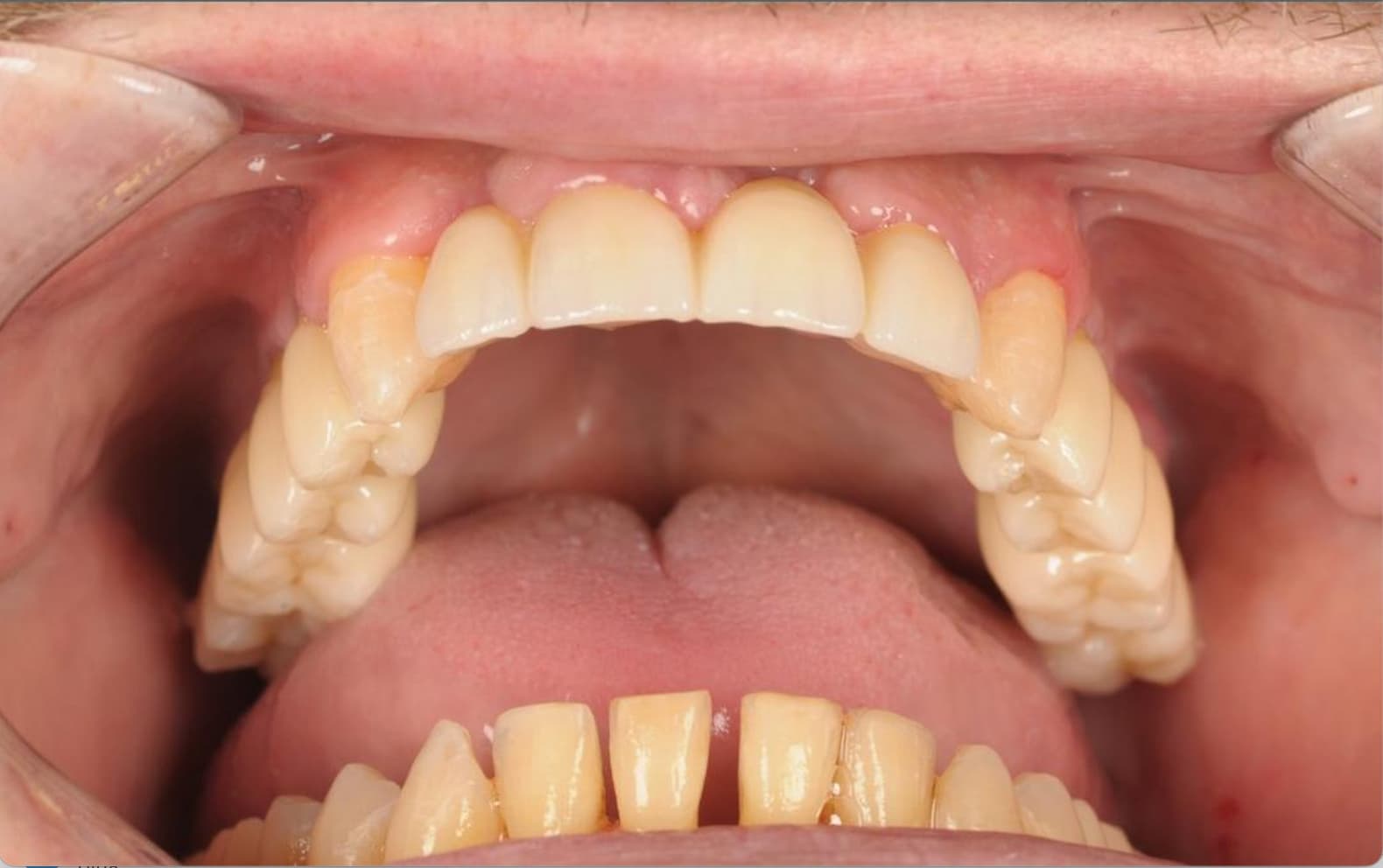
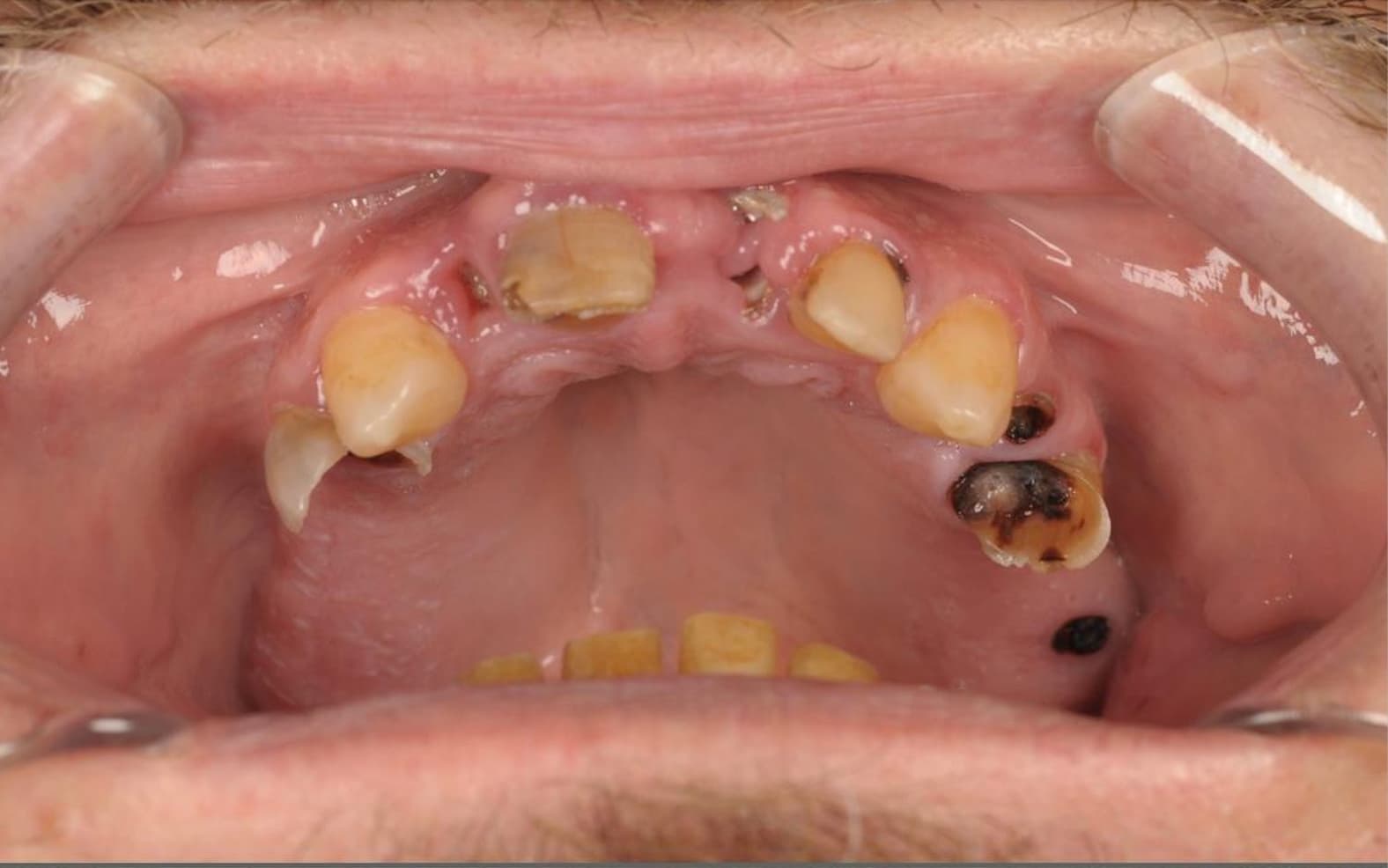
Full Mouth Reconstruction
Full upper arch rehabilitation with fixed prosthesis
A failing upper arch replaced with a fixed, natural-looking prosthesis.
Treated by Dr Kamran Yazdi
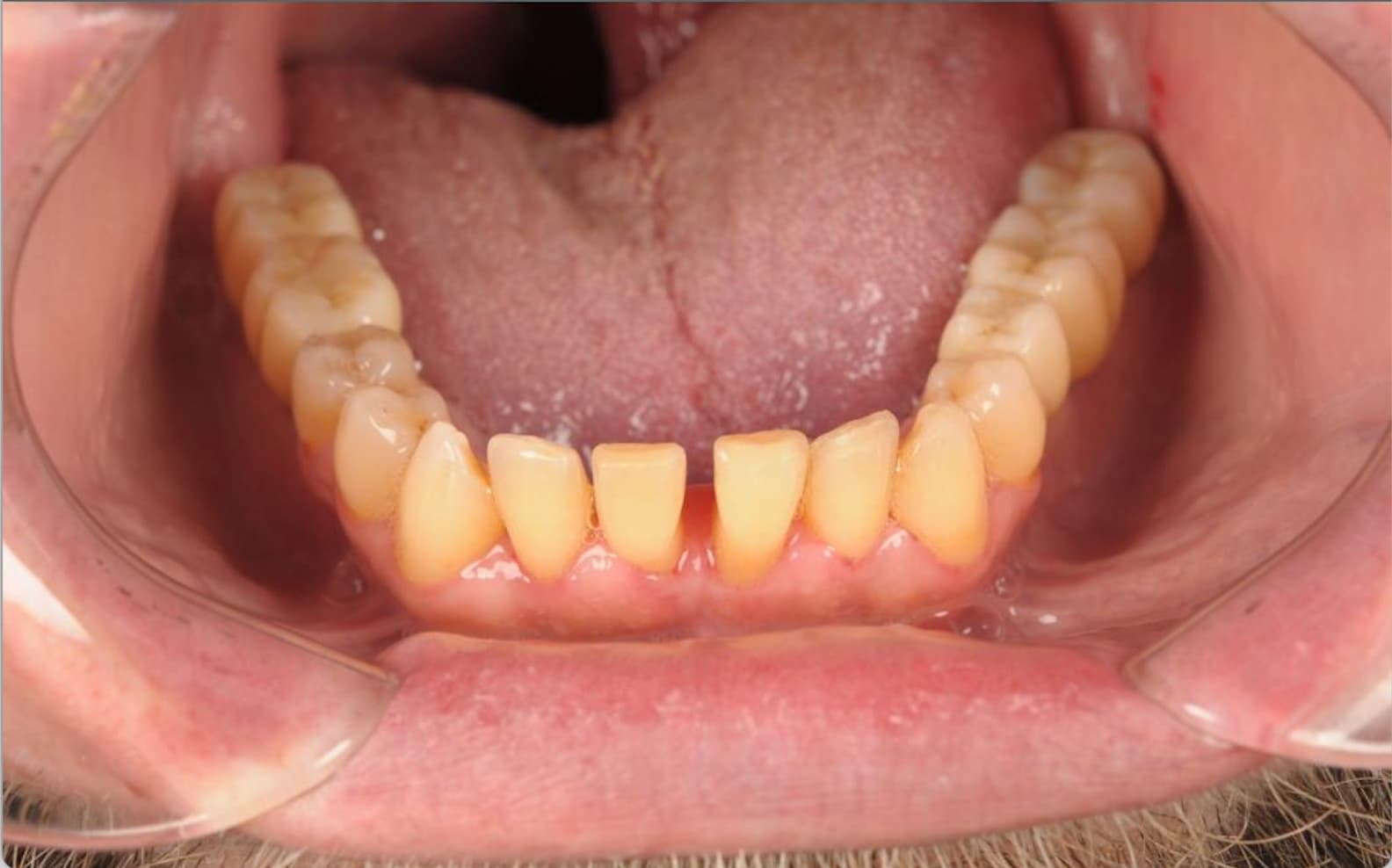
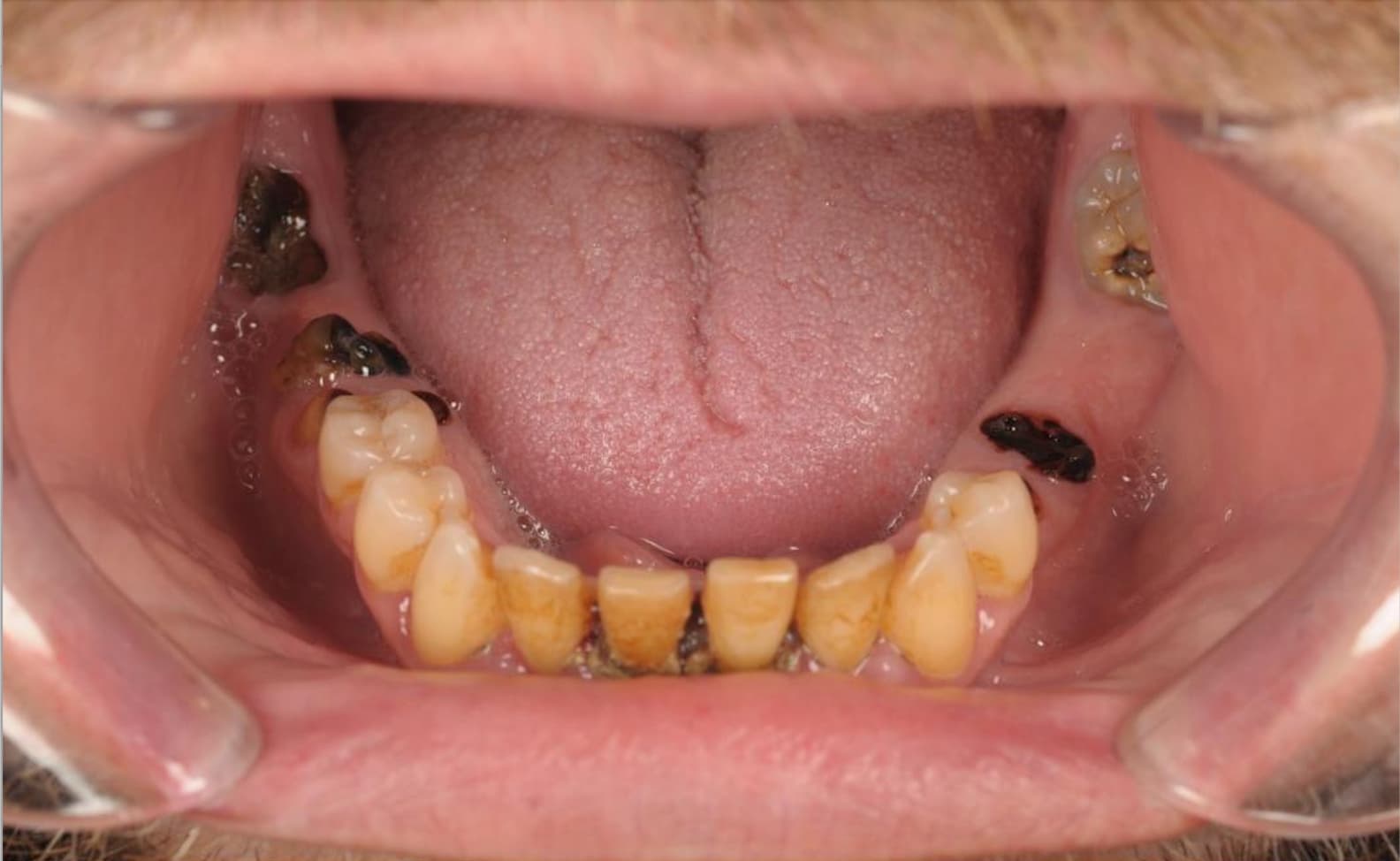
Full Mouth Reconstruction
Full arch prosthetic restoration
Missing and damaged teeth replaced with a full-arch prosthetic restoration.
Treated by Dr Kamran Yazdi
Watch & learn
Explained by our clinicians
Short, plain-English explainers from our clinicians on dental implants and closely related treatments.
Dental Crown Treatment
Dental Bridge Treatment
Root Canal Treatment
Your clinicians
Meet your dentists
Every clinician at our Wimpole Street practice is GDC-registered — numbers published and verifiable on the public register.

Dr Yasha Y Shirazi
Dentist
GDC No. 195843

Dr Kamran Yazdi
Principal Dentist
GDC No. 197926

Dr Andreia Phipps
Dentist
GDC No. 229601

Dr Reza Davari
Dentist
GDC No. 302422

Dr Narges Ameri
Dentist
GDC No. 325081

Dr Ayman Mukhtar
Dentist
GDC No. 302583

Dr Elisabeth Lichtmannegger
Dentist
GDC No. 319325

Dr Niknaz Rostam Yazdi
Dentist
GDC No. 328954

Dr Sam Parsno
Implant Dentist
GDC No. 72207

Jack Button
Dental Hygienist & Therapist
GDC No. 244367
Questions & Answers
Frequently asked questions
Honest answers about dental implants, costs and what to expect. Everything is explained again in person at your consultation with a GDC-registered dentist.
Most healthy adults with adequate bone are suitable. A 3D scan at your consultation confirms this — and where bone is limited, grafting options can be discussed.
Placement is done under local anaesthetic and most patients report less discomfort than they expected — usually manageable with over-the-counter pain relief for a few days.
With good hygiene and regular maintenance, implants can last decades — but longevity varies with individual factors such as gum health and smoking.
Our from-price includes the implant, abutment and crown. Your written quote itemises every component before treatment begins — no surprises.
Smoking does not automatically rule out implants, but it reduces success rates and slows healing. Your dentist will discuss this honestly at consultation, and many patients choose to cut down or stop before treatment to give their implant the best chance.
From placement to final crown is typically 3–6 months, allowing time for osseointegration — the process by which the implant fuses with your bone. Timescales vary with bone quality and whether grafting is needed; your written plan sets out the expected stages for your case.
A small percentage of implants do not integrate or are lost later, most often linked to gum inflammation or smoking. If this happens, the site is allowed to heal and options — including replacing the implant — are discussed with you. Regular reviews help us catch any early signs promptly.
Usually not. For visible teeth we can normally provide a temporary crown, bridge or denture while the implant integrates, so you can smile and speak with confidence throughout treatment.
Brush carefully at the gum line twice daily and clean between the implant and neighbouring teeth with interdental brushes or floss — your hygienist at our Wimpole Street practice will show you the exact technique for your restoration. Regular hygiene visits and reviews help keep the gum around the implant healthy, which is one of the most important factors in how long an implant lasts.
Tell us when you book. We allow longer, unhurried appointments, explain every stage before it happens, and agree a stop signal so you stay in control. Local anaesthetic is placed gently and tested before we begin, and sedation options can be discussed for suitable patients. Many nervous patients tell us the anticipation was far worse than the appointment itself.
Yes — Wimpole Dental is regulated by the Care Quality Commission (CQC), and every clinician is registered with the General Dental Council (GDC), with numbers you can verify on the public register. You'll be treated by a named, experienced clinician working to current professional standards — never a rotating locum.
You'll always receive a written, itemised quote before any treatment begins. New patients start with a £30 consultation; flexible payment options may be available — ask at your consultation.
That's very common and completely understood. Your dentist will explain each step in plain English, work at your pace and never pressure you to proceed. Let us know how you feel when you book and we'll make your visit as calm and comfortable as possible.
Sources & further reading
External links open in a new tab. This page was clinically reviewed by a GDC-registered dentist; it is general information, not a substitute for an in-person consultation.
Find Us
Dental Implants on Wimpole Street, London
Contact
020 7183 0692Opening hours
- Monday9:00am – 6:00pm
- Tuesday9:00am – 8:00pm
- Wednesday9:00am – 6:00pm
- Thursday9:00am – 8:00pm
- Friday8:00am – 5:00pm
- Saturday10:00am – 4:00pm
- SundayClosed
Related
More restorative dentistry
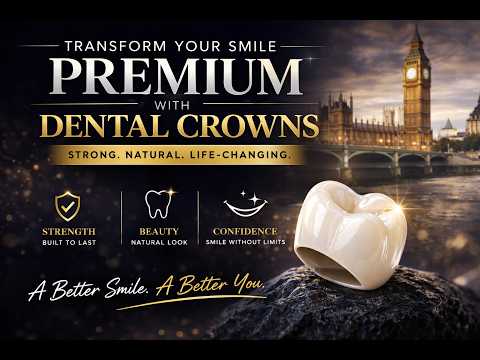
Restorative Dentistry
Dental Crowns
Dental Crowns
Lab-crafted porcelain, zirconia or e.max crowns that protect and restore damaged or root-treated teeth.
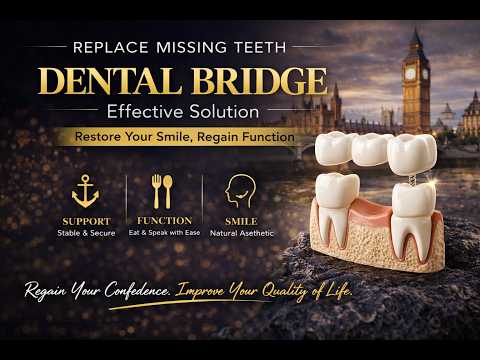
Restorative Dentistry
Dental Bridge
Dental Bridge
A fixed, non-removable replacement for one or more missing teeth, anchored to the neighbouring teeth.
Maryland Bridge
A minimally invasive, wing-bonded bridge — often ideal for replacing a single missing front tooth.
Book Today
Ready to start your smile journey?
Book a £30, no-obligation consultation. You'll leave with a written, itemised plan — and clarity on cost, timeline and options.
22 Wimpole St, London W1G 8GQ · CQC regulated · GDC-registered clinicians