A discreet replacement that keeps neighbouring teeth intact
Maryland Bridge Wimpole Street, London
A minimally invasive, wing-bonded bridge — often ideal for replacing a single missing front tooth.
from £1,030Flexible payment options — ask at your consultation
- 2 visits
- £30 consultation
- Written, itemised quote
Why choose us
Why choose maryland bridge?
Delivered to a consistently high standard by a named, GDC-registered clinician at our CQC-regulated practice on Wimpole Street, London.
Minimal tooth preparation
No surgery
Well suited to front teeth
About the treatment
Maryland Bridge at our Wimpole Street practice
Clinically reviewed by Dr Kamran Yazdi, Principal Dentist, GDC 197926 · Last reviewed July 2026
A Maryland bridge — also called a resin-bonded or adhesive bridge — replaces a missing tooth using a false tooth attached to a slim wing, which is bonded to the back of a neighbouring tooth. Because the wing sits on the hidden surface of the supporting tooth, little or no drilling of healthy tooth structure is required. For the right case, it is one of the most conservative ways to close a gap, and it is a treatment we plan frequently at our Wimpole Street practice.
Maryland bridges are best suited to replacing a single missing front tooth, where biting forces are lower and the bonding surface is favourable. They are a popular choice for younger patients whose jaws are still developing and who are not yet ready for an implant, for patients who prefer to avoid surgery altogether, and as a high-quality long-term interim while a recent extraction site heals before implant placement. Suitability depends on your bite, the health of the supporting tooth and the amount of enamel available for bonding — all confirmed at an in-person consultation with a GDC-registered dentist.
The great appeal of this treatment is what it does not involve. A conventional bridge requires the neighbouring teeth to be shaped for full crowns; an implant involves a surgical procedure and months of healing. A Maryland bridge asks almost nothing of the neighbouring tooth beyond a clean enamel surface, which means every future option — including an implant or conventional bridge — remains fully open.
Treatment typically takes two visits to our Marylebone practice, near Harley Street. At the first, the supporting tooth is prepared minimally — often little more than cleaning and lightly adjusting the enamel — and a digital impression is taken. Your bridge is then crafted by a skilled UK laboratory, usually with a strong zirconia or metal wing and a porcelain tooth matched to your natural shade. At the second visit the fit and appearance are checked with you before the wing is bonded in place using modern adhesive techniques. Local anaesthetic is often not even needed.
Design details make the difference between a Maryland bridge that lasts and one that debonds early. We usually favour a single-wing (cantilever) design bonded to one tooth, which contemporary evidence suggests performs at least as well as two-wing designs, and we assess your bite carefully so the wing is not overloaded when you chew. Where a metal wing is used behind a thin front tooth, we will discuss any possibility of slight shine-through and choose materials accordingly.
Treatment starts from £1,030. Prices are indicative and may vary with clinical complexity — for example, the material of the wing, the position of the tooth and whether any minor bite adjustment is needed. You will always receive a clear, written, itemised quote after your consultation, before any treatment begins, and Flexible payment options can be discussed at your consultation.
How does a Maryland bridge compare with the alternatives? Against a conventional bridge, it preserves far more natural tooth but is generally less robust, particularly on back teeth. Against an implant, it avoids surgery and healing time and costs less initially, but it does not replace the missing root or stimulate the bone beneath the gap. Against a removable partial denture, it is fixed and far more discreet. Your dentist will talk through each route honestly so the decision is genuinely yours.
Be aware of the limitations. The most common issue is debonding — the wing coming away from the supporting tooth — which is usually repairable by rebonding but can recur in unfavourable bites. Maryland bridges are generally not recommended for patients with heavy grinding habits or deep overbites, and the false tooth does not prevent slow bone remodelling under the gap. No treatment can be guaranteed, but well-planned resin-bonded bridges frequently give many years of reliable service; longevity varies with bite forces and how well the bridge is maintained.
Aftercare is simple: brush normally, clean beneath the false tooth daily with superfloss or an interdental brush, and avoid using the bridged tooth to bite very hard items such as ice or pens. Regular check-ups at our central London practice let us monitor the bond and the supporting tooth so any issues are addressed early.
Because so little is done to your natural teeth, Maryland bridge treatment is also one of the most reassuring options for nervous patients. Appointments are short and conventional, drilling is minimal or absent, and there is no surgical phase or healing period to plan around. Many patients walk out of the fitting appointment with a complete smile having felt nothing more than the polish of an enamel surface.
A word on appearance, because front teeth are unforgiving. We photograph your smile, match the shade in natural light, and work with our laboratory on the fine details — translucency at the edge, surface texture, the subtle characterisation that makes a false tooth read as real. If you are having whitening as well, we sequence it first, so the new tooth is matched to your brighter shade. The goal is a tooth that even you forget is not your own.
If you are exploring options for a missing front tooth in London, our Wimpole Street team will give you an unhurried, honest assessment of whether a Maryland bridge, conventional bridge or implant best suits your mouth, your timescale and your budget — always with a written, itemised quote before anything goes ahead.
Your consultation in Marylebone follows a simple, thorough pattern: an examination of the gap and the proposed supporting tooth, digital X-rays to confirm it is healthy to the root, an assessment of your bite in the positions that matter for a bonded wing, and photographs for shade planning with the laboratory. Because we are a few minutes' walk from Bond Street, Oxford Circus and Regent's Park stations, most patients manage the whole treatment — consultation, fitting and review — around a normal London working week. Everything is priced in a written, itemised quote before you commit, and there is never any pressure to proceed on the day.
Maryland Bridge cost in London
- Treatment fee
- from £1,030
- Consultation
- £30
- Typical duration
- 2 visits
- Payment
- Flexible options — ask at your consultation
Full fees for every treatment are published in our fee guide.
Explore more restorative dentistry, compare costs in our pricing guide or browse real patient results in the smile gallery.
What to expect at our Wimpole Street practice
- Care from a named, GDC-registered clinician at a CQC-regulated practice.
- A written, itemised plan and fixed quote before anything begins.
- Time to ask questions, understand your options and give informed consent — no pressure to proceed.
- Clear aftercare and structured review where clinically needed, with support if you have concerns.
Suitability is always confirmed at an in-person consultation with a GDC-registered dentist. Treatment outcomes depend on individual clinical factors — individual results may vary and no result can be guaranteed. A written, itemised quote is provided before any treatment begins.
Maryland Bridge at a glance
- Price from
- from £1,030
- Typical time
- 2 visits
- New patients
- £30 consultation
- Payment
- Flexible options — ask at consultation
- CQC-regulated practice
- GDC-registered clinicians
- Written, itemised plan
Your journey
Maryland Bridge treatment steps
Assessment
Your journey begins with a £30 consultation: a full examination with a GDC-registered dentist, X-rays where clinically needed, and time to talk through what you'd like to achieve and answer any questions you might have.
Your written plan
You'll receive a personalised, itemised treatment plan outlining the process and costs — every option explained in plain English with an exact price against each item, and never any pressure to proceed.
Treatment
Maryland Bridge is carried out by a named, GDC-registered clinician at our CQC-regulated practice on Wimpole Street, London — with evening and weekend appointments to fit around work.
Aftercare & review
Clear written aftercare, review appointments where clinically needed, and structured recall to protect your result — and your oral health — for the long term.
Real results
Our maryland bridge results
Genuine patients of the practice, treated by named clinicians and published with consent. Drag the slider to compare — individual results vary and no outcome can be guaranteed.
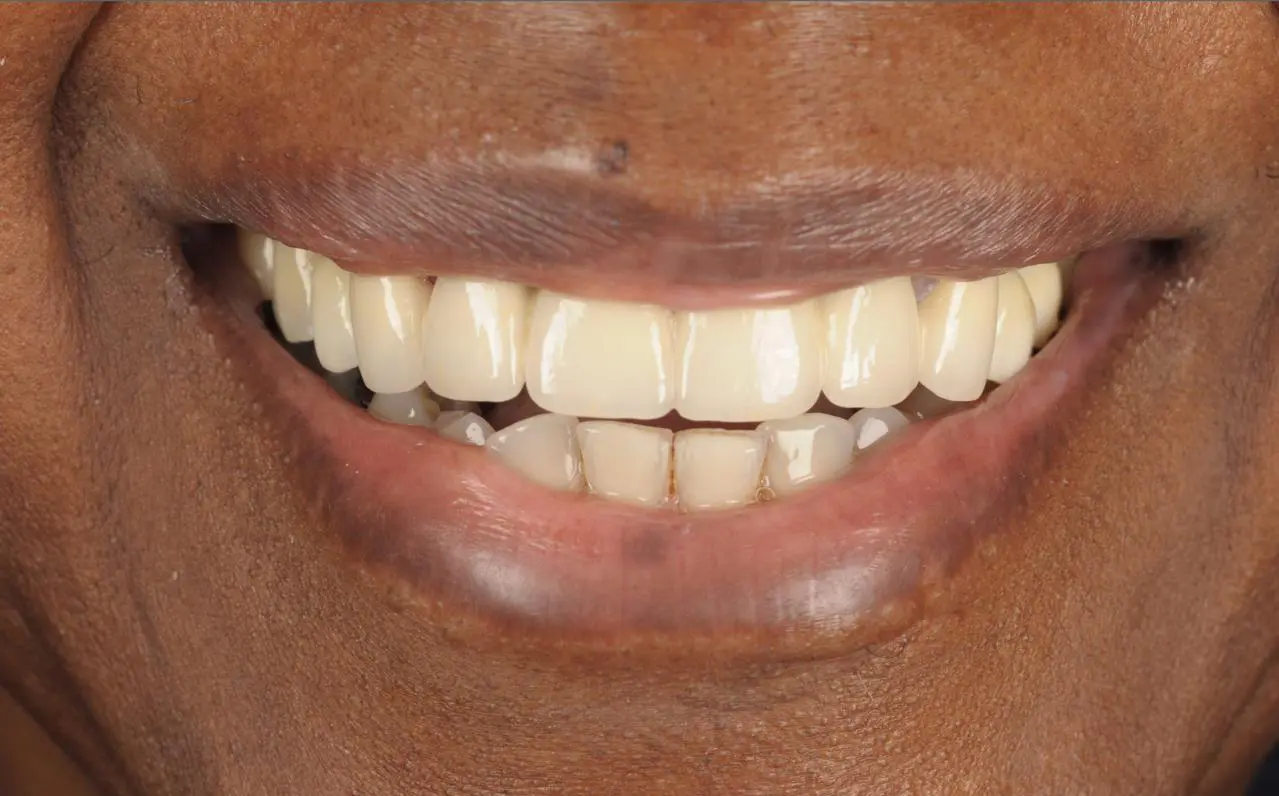
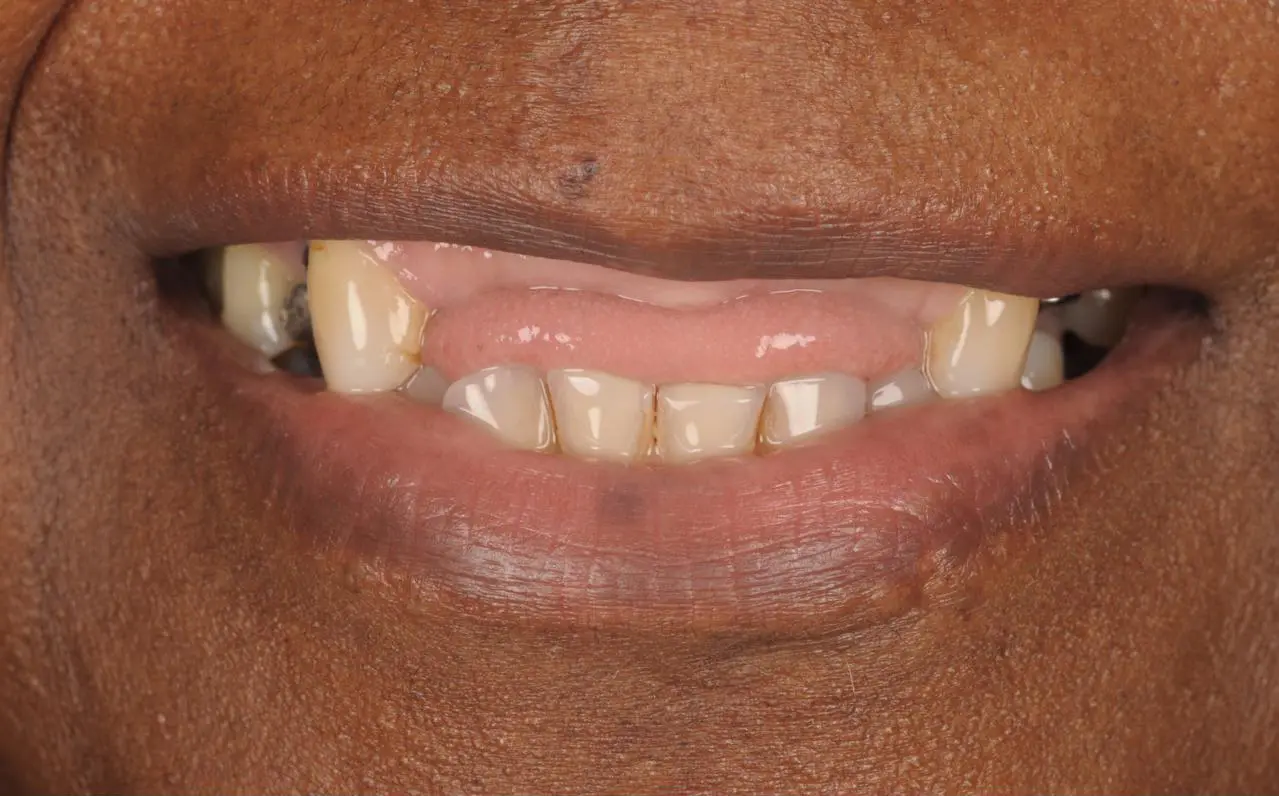
Dental Implants
Dental implant restoration
A missing tooth replaced with a titanium implant and custom porcelain crown.
Treated by Dr Kamran Yazdi
Watch & learn
Explained by our clinicians
Short, plain-English explainers from our clinicians on maryland bridge and closely related treatments.
Dental Crown Treatment
Dental Bridge Treatment
Root Canal Treatment
Your clinicians
Meet your dentists
Every clinician at our Wimpole Street practice is GDC-registered — numbers published and verifiable on the public register.

Dr Yasha Y Shirazi
Dentist
GDC No. 195843

Dr Kamran Yazdi
Principal Dentist
GDC No. 197926

Dr Andreia Phipps
Dentist
GDC No. 229601
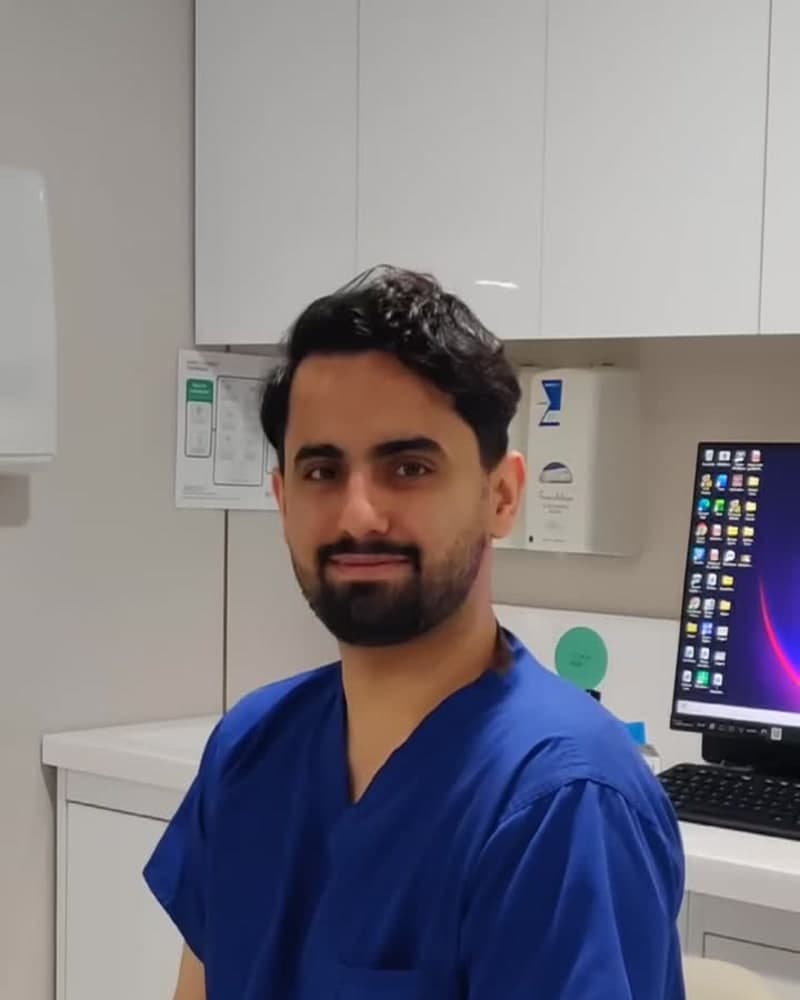
Dr Reza Davari
Dentist
GDC No. 302422

Dr Narges Ameri
Dentist
GDC No. 325081

Dr Ayman Mukhtar
Dentist
GDC No. 302583

Dr Elisabeth Lichtmannegger
Dentist
GDC No. 319325

Dr Niknaz Rostam Yazdi
Dentist
GDC No. 328954

Dr Sam Parsno
Implant Dentist
GDC No. 72207

Jack Button
Dental Hygienist & Therapist
GDC No. 244367
Questions & Answers
Frequently asked questions
Honest answers about maryland bridge, costs and what to expect. Everything is explained again in person at your consultation with a GDC-registered dentist.
Modern bonding makes them reliable for front teeth, where biting forces are lower. Your dentist will advise if your bite is suitable.
Yes — because tooth preparation is minimal, a Maryland bridge keeps future options such as an implant open.
Very little tooth preparation is involved, and in many cases local anaesthetic is not even required. Most patients describe the fitting appointment as entirely comfortable.
Well-planned resin-bonded bridges frequently give many years of service, though longevity varies with your bite and how well the bridge is maintained. If the wing debonds, it can usually be rebonded.
Where a metal wing is bonded behind a thin or translucent front tooth, a slight grey shine-through is occasionally possible. We assess this in advance and can use tooth-coloured zirconia wings where appearance is a concern.
Generally it is best suited to front teeth, where biting forces are lower. For missing back teeth, a conventional bridge or implant is usually the more reliable choice — your dentist will advise honestly at consultation.
Often yes — it is a popular way to fill a front-tooth gap while the extraction site heals, keeping the option of a future implant open. Timing is confirmed at your consultation.
Brush normally, clean beneath the false tooth daily with superfloss or an interdental brush, and avoid biting very hard items with the bridged tooth. Regular check-ups let us monitor the bond so any early loosening is dealt with promptly.
Debonding is the most common issue with resin-bonded bridges, and it is usually straightforward to fix: keep the bridge safe, avoid chewing on the area, and contact our Wimpole Street practice promptly. In most cases the wing can be cleaned and rebonded at a single short visit. If debonding recurs, your dentist will reassess your bite and discuss whether a different design or alternative option would serve you better.
Heavy grinding or a deep overbite can overload the bonded wing, so a Maryland bridge may not be the most reliable choice in those cases — though this is assessed individually rather than assumed. Your dentist at our central London practice will examine your bite and, where a resin-bonded bridge is borderline, explain the alternatives honestly with written prices for each.
After the first few days most patients eat entirely normally. Because the false tooth is supported by a bonded wing rather than a root, it is sensible to avoid biting very hard items — ice, crusty bread torn with the front teeth, pen tops — directly with the bridged tooth. Cutting food into smaller pieces for the first week helps you adjust, and your dentist will advise on anything specific to your bite. If anything ever feels loose or different, contact our Wimpole Street practice promptly so we can check the bond.
Yes — Wimpole Dental is regulated by the Care Quality Commission (CQC), and every clinician is registered with the General Dental Council (GDC), with numbers you can verify on the public register. You'll be treated by a named, experienced clinician working to current professional standards — never a rotating locum.
You'll always receive a written, itemised quote before any treatment begins. New patients start with a £30 consultation; flexible payment options may be available — ask at your consultation.
That's very common and completely understood. Your dentist will explain each step in plain English, work at your pace and never pressure you to proceed. Let us know how you feel when you book and we'll make your visit as calm and comfortable as possible.
Sources & further reading
External links open in a new tab. This page was clinically reviewed by a GDC-registered dentist; it is general information, not a substitute for an in-person consultation.
Find Us
Maryland Bridge on Wimpole Street, London
Contact
020 7183 0692Opening hours
- Monday9:00am – 6:00pm
- Tuesday9:00am – 8:00pm
- Wednesday9:00am – 6:00pm
- Thursday9:00am – 8:00pm
- Friday8:00am – 5:00pm
- Saturday10:00am – 4:00pm
- SundayClosed
Related
More restorative dentistry
Restorative Dentistry
Dental Implants
Dental Implants
Titanium implants with custom porcelain crowns to replace missing teeth — planned in 3D and placed in-house.

Restorative Dentistry
Dental Crowns
Dental Crowns
Lab-crafted porcelain, zirconia or e.max crowns that protect and restore damaged or root-treated teeth.
Restorative Dentistry
Dental Bridge
Dental Bridge
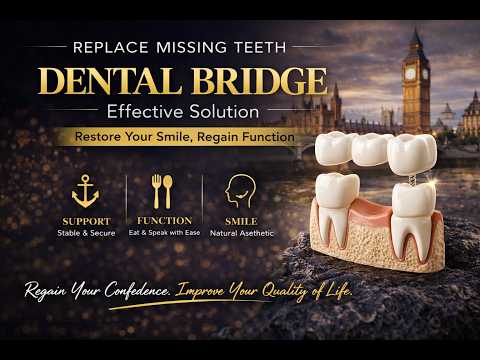
A fixed, non-removable replacement for one or more missing teeth, anchored to the neighbouring teeth.
Book Today
Ready to start your smile journey?
Book a £30, no-obligation consultation. You'll leave with a written, itemised plan — and clarity on cost, timeline and options.
22 Wimpole St, London W1G 8GQ · CQC regulated · GDC-registered clinicians