Why A Dental Check-Up Is The Foundation Of Oral Health
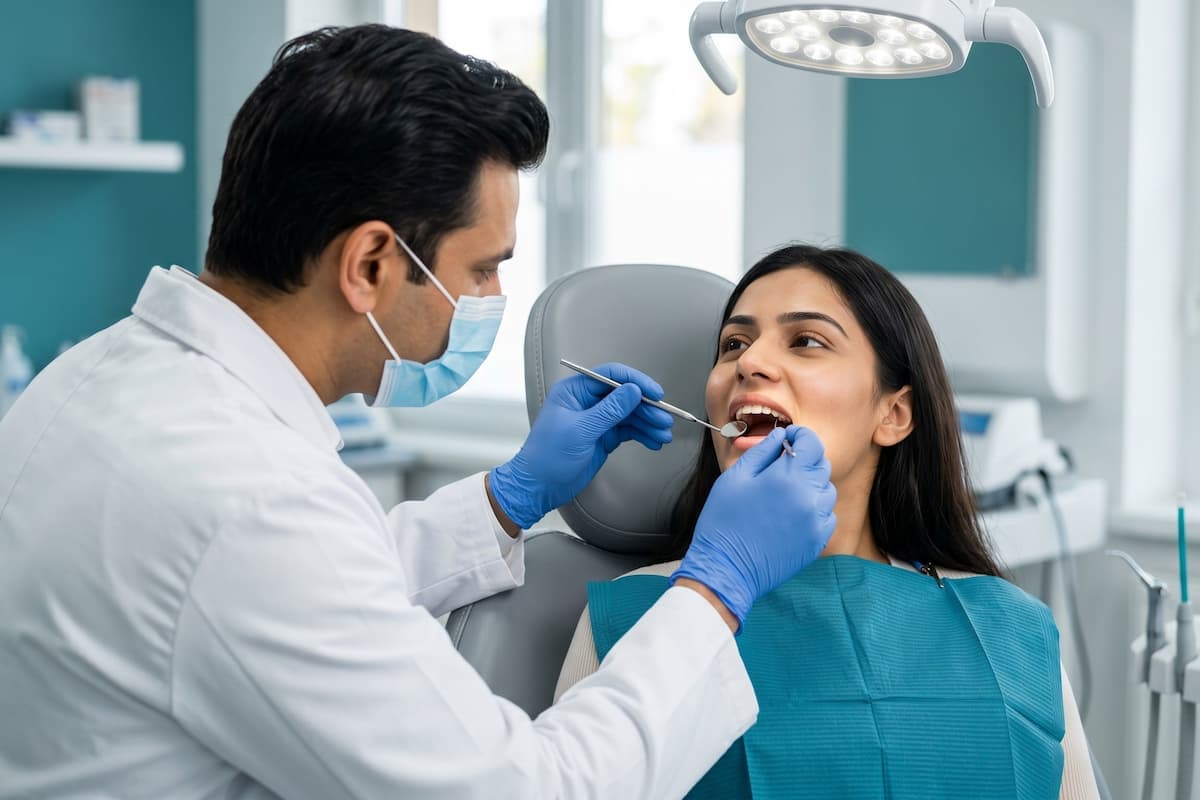
Many people attend a dental appointment only when something feels wrong. Yet the evidence consistently shows that regular preventive assessment — rather than symptom-led visits — is the most effective approach to maintaining oral health across a lifetime. Understanding the dental check-up foundation of oral health means recognising that examinations are not simply about identifying problems; they are structured opportunities to understand your individual oral health profile, monitor gradual changes, and act early when intervention is simplest.
A private dentist oral health assessment is a structured, personalised clinical evaluation that goes beyond counting cavities. It involves reviewing your medical and dental history, examining the health of your teeth, gums, soft tissues, bite, and jaw, and using diagnostic tools — including digital imaging where appropriate — to build a complete picture of your oral health. This thorough approach enables your dentist to offer genuinely tailored preventive advice rather than generic guidance.
What Is a Private Dentist Oral Health Assessment?
A private dentist oral health assessment is a structured clinical examination that evaluates every aspect of your oral environment — from gum health and tooth condition to bite function and soft tissue screening. It is more comprehensive than a standard routine check, allowing more time for clinical reasoning, personalised risk assessment, and detailed preventive planning based on your individual needs.
• Examines teeth, gums, soft tissues, bite, and jaw function
• Reviews medical history and current medications
• Screens for early signs of decay, gum disease, and oral cancer
• Uses digital imaging when clinically indicated
• Produces a personalised preventive and monitoring plan
Unlike a brief symptomatic assessment, a comprehensive private examination is designed to understand your oral health trajectory. Rather than simply recording what exists today, your dentist considers how your oral environment may change over time, what factors place you at greater risk, and how those risks can be managed proactively. This longer-term perspective is one of the most clinically valuable aspects of private preventive care.
For patients new to private dentistry, it is worth knowing that the first appointment will typically involve more time than subsequent visits. This initial assessment builds the clinical baseline against which future changes are measured — meaning your dentist has a meaningful reference point at every future review.
Why Is a Comprehensive Oral Health Assessment Important?
A comprehensive oral health assessment matters because many of the conditions most likely to affect long-term dental health — including early-stage gum disease, tooth wear, and small areas of decay — produce no noticeable symptoms until they are well-established. Early clinical detection allows simpler, less invasive, and often less costly management than treatment at a later stage.
• Gum disease affects approximately 45% of UK adults in some form, according to NHS data
• Early-stage decay rarely causes pain, making clinical detection the primary means of identification
• Tooth wear can progress silently over months or years before patients notice changes
• Oral cancer screening at every assessment supports early detection, when outcomes are most favourable
• Personalised risk assessment identifies lifestyle, systemic health, and dietary factors relevant to your oral health
The NICE clinical guideline on dental recall intervals (CG19) recognises that not every patient requires examination at the same frequency. A comprehensive private assessment helps determine what interval is genuinely appropriate for you as an individual, rather than applying a one-size-fits-all approach. This is one of the clearest examples of how personalised preventive care differs from a standard routine check.
Patients sometimes question whether attending when they feel no discomfort is worthwhile. The clinical reality is that the absence of symptoms is not equivalent to the absence of disease. Many of the most significant oral health conditions progress in ways that are clinically detectable before they become symptomatic — which is precisely why a structured assessment remains the most reliable foundation for long-term oral health.
How Private Dentists Examine Oral Health
A private comprehensive examination follows a systematic clinical methodology. Each element of the assessment provides specific diagnostic information that informs the overall picture of your oral health. Understanding what each stage involves can help patients feel reassured and well-prepared for their appointment.
Reviewing Medical and Dental History
Before any clinical examination begins, your dentist will review your medical and dental history in detail. This is not administrative procedure — it is a clinically essential step. Systemic conditions including diabetes, osteoporosis, cardiovascular disease, and autoimmune conditions can directly affect oral health. Similarly, many medications — including anticoagulants, antihypertensives, and immunosuppressants — influence gum health, saliva production, and healing capacity.
Your dental history allows your dentist to understand previous treatment, identify any patterns of recurring problems, and note areas that may require closer monitoring. For new patients, this stage establishes the foundation for everything that follows.
Assessing Teeth and Existing Restorations
Each tooth is examined individually, including all surfaces and margins. Your dentist assesses enamel integrity, looks for signs of early or established decay, and evaluates the condition of any existing restorations — including fillings, crowns, veneers, bridges, and dental implants where present.
Restorations do not last indefinitely. Margins can degrade, fillings can fracture, and crowns can develop secondary decay beneath their edges. Identifying these changes early allows timely intervention before more complex treatment becomes necessary. Patients with implant-supported restorations will also have the health of surrounding tissues assessed as part of this stage. For further information on implant care and assessment, you can explore https://www.wimpoledental.com/dental-implants/.
Evaluating Gum Health
Periodontal health is assessed through a combination of visual examination and clinical probing. Your dentist or hygienist will gently measure the depth of the gingival sulcus — the space between tooth and gum — using a periodontal probe. Healthy gum tissue typically measures 1–3 mm. Increased pocket depths, bleeding on probing, gum recession, and changes in bone support visible on radiographs all provide important diagnostic information.
Gum disease is both highly prevalent and clinically significant. Research published in peer-reviewed periodontology journals has reinforced the association between periodontal disease and systemic conditions including cardiovascular disease and poorly controlled diabetes. Early detection and professional management of gum disease — beginning at the assessment stage — is one of the most impactful preventive actions available in dentistry. To learn more about gum health and treatment options, visit https://www.wimpoledental.com/gum-disease/.
Checking Bite and Jaw Function
Occlusion — the way upper and lower teeth meet — has implications beyond comfort. An imbalanced bite can contribute to tooth wear, jaw joint discomfort, headaches, and stress fractures in teeth. Your dentist will assess how your teeth come together across different jaw positions, looking for signs of uneven load distribution, worn contact points, or evidence of grinding or clenching (bruxism).
Patients are not always aware that they grind their teeth, particularly if they do so during sleep. Clinical signs — including characteristic wear facets on the biting surfaces, tooth sensitivity, and muscle tenderness — can allow your dentist to identify this pattern and discuss protective options, such as a custom occlusal splint.
Oral Cancer Screening
Every comprehensive examination should include a systematic soft tissue screening, covering the lips, tongue (including the underside), floor of the mouth, cheeks, palate, and the back of the throat. Oral cancer is most successfully managed when detected at an early stage, and routine clinical screening is the primary means by which early changes are identified.
According to Cancer Research UK, approximately 8,900 people are diagnosed with oral cancer in the UK each year. Many cases involve no pain in the early stages, reinforcing why clinical screening during a dental assessment — rather than waiting for symptoms — is so clinically important. Your dentist will look for any unusual changes in tissue colour, texture, or contour, and will advise on any areas requiring monitoring or onward assessment if indicated.
Understanding the Comprehensive Dental Exam Process
The comprehensive dental exam is a layered clinical process, not a single-step procedure. Each stage builds on the information gathered before it, allowing your dentist to reach considered, evidence-informed conclusions about your oral health rather than isolated observations.
Visual Clinical Examination
The visual clinical examination is the primary diagnostic tool in every assessment. Under appropriate lighting, your dentist examines every visible surface of the oral cavity systematically. This includes the teeth, gingival tissues, oral mucosa, tongue, palate, and all accessible soft tissue areas. Good clinical technique at this stage can identify decay, erosion, wear, fractures, soft tissue changes, and restoration failures that might otherwise go unnoticed.
Digital X-rays and Imaging
Digital radiographs are used when clinically indicated — they are not routine for every patient at every appointment. Bitewing radiographs provide diagnostic information about interproximal (between-tooth) decay and the bone levels supporting back teeth. Periapical radiographs assess individual tooth roots and surrounding bone. Panoramic (OPG) radiographs offer a broader overview of the jaw, sinuses, and all teeth.
Digital X-rays use significantly less radiation than conventional film radiographs and produce images that can be viewed immediately and stored as part of your digital clinical record. CBCT (cone beam computed tomography) may be considered in specific clinical situations — for example, complex implant planning or assessment of bone anatomy — but is not a standard component of a routine comprehensive assessment. The decision to take radiographs is always based on clinical need, patient history, and an individual risk-benefit assessment in line with current UK ionising radiation regulations.
Periodontal Assessment
A formal periodontal assessment records pocket depths, bleeding scores, recession measurements, furcation involvement where relevant, and tooth mobility. This data provides a structured clinical picture of gum and bone health that can be compared meaningfully at future appointments. Changes over time — whether improvement in response to treatment or progression despite care — are clinically significant and inform decisions about monitoring intervals and the need for specialist referral.
Occlusion Assessment
The occlusion assessment evaluates tooth contacts in multiple jaw positions — maximum intercuspation, lateral excursions, and protrusive movement. Your dentist may use articulating paper to mark contact points, assess the evenness of load across the dental arch, and identify any teeth receiving disproportionate force. This information is particularly relevant for patients with existing restorations, signs of tooth wear, or jaw discomfort. For patients considering restorative or cosmetic treatment, an accurate occlusal assessment forms part of the treatment planning foundation.
Private Dental Check-up Procedures Explained
Understanding what to expect during a private dental check-up helps reduce uncertainty, particularly for patients who feel anxious about dental appointments. A comprehensive private assessment is methodical and unhurried. The appointment is designed to give your dentist sufficient time to examine carefully and discuss findings with you clearly.
You will typically be asked to complete or update a medical history questionnaire before the clinical examination begins. The dentist will then discuss any specific concerns you have before proceeding with the examination itself. Each stage — soft tissue review, tooth assessment, gum measurement, bite analysis, and radiographic review where needed — will be carried out in a structured order.
Many patients are surprised to learn that a comprehensive assessment involves very little that is uncomfortable. Periodontal probing may feel mildly sensitive in areas where gum health is compromised, but the examination itself is not a painful process. If you have dental anxiety, it is worth discussing this with your dentist before the appointment begins. Private practice settings typically allow additional time and flexibility to support patients who find dental environments challenging. The Wimpole Dental team can discuss how they support anxious patients as part of your consultation enquiry.
Diagnosing Dental Problems in Private Practice
One of the most clinically valuable aspects of a comprehensive private assessment is the depth of diagnostic reasoning it allows. Rather than simply noting visible problems, your dentist considers the underlying causes, contributing risk factors, and likely progression of any issues identified.
Early decay detected at the enamel or early dentine stage may be managed conservatively — through enhanced oral hygiene, fluoride application, and dietary advice — without the need for restorative intervention. This requires both clinical detection (often aided by digital imaging) and a preventive approach to management.
Gum disease ranges from mild gingivitis — entirely reversible with professional cleaning and improved home care — to established periodontitis affecting underlying bone. The clinical assessment determines the stage and grade of any periodontal condition present, which directly informs the treatment pathway.
Tooth wear — whether from acid erosion, attrition (grinding), or abrasion — is assessed in terms of severity, likely cause, and rate of progression. Understanding the aetiology is essential before recommending management, since protective and restorative approaches differ significantly depending on the cause. To explore options for managing worn teeth, visit https://www.wimpoledental.com/tooth-wear/.
Cracked teeth can be among the most diagnostically challenging conditions in dentistry. Symptoms may be inconsistent, and cracks are not always visible. A thorough private examination — including transillumination and bite testing where indicated — improves the likelihood of identifying crack lines before they propagate to a point requiring more complex management.
Failing restorations detected early can often be replaced or repaired before secondary decay or structural fracture occurs. This is a meaningful clinical and cost advantage of regular comprehensive assessment over symptom-led dental visits.
Bite problems identified during assessment allow your dentist to discuss protective and corrective options — including occlusal splints, equilibration, or orthodontic assessment where appropriate. Further information on orthodontic options is available at https://www.wimpoledental.com/orthodontics/.
How a Personalised Oral Health Assessment Supports Preventive Dentistry
Preventive dentistry is most effective when it is based on individual clinical risk — not generic population advice. A personalised oral health evaluation identifies the specific factors that influence your oral health, allowing preventive recommendations to be genuinely targeted rather than broadly applied.
• Dietary acid exposure — frequency, timing, and type — affects erosion risk and requires specific dietary counselling
• Systemic health conditions and medications create individual risk profiles that generic advice cannot address
• Oral hygiene technique and product selection should be tailored to the patient's anatomy, gum condition, and restorations
• Fluoride exposure — from toothpaste, professional applications, and water — is assessed and optimised based on individual caries risk
• Smoking and alcohol consumption elevate oral cancer risk and influence gum health; personalised cessation support referral can be offered where appropriate
Preventive recommendations are most likely to be acted upon when patients understand the reasoning behind them. A comprehensive private assessment creates the clinical relationship and time necessary to explain not just what to do, but why it matters for your specific oral health profile. To understand more about professional preventive treatments available, you can explore https://www.wimpoledental.com/hygienist/.
What Happens After the Assessment?
Following a comprehensive oral health assessment, your dentist will discuss findings clearly and in terms that make sense to you — not clinical shorthand. This conversation is an important part of the process, and you should feel comfortable asking questions about anything you are uncertain about.
Personalised treatment planning — where treatment is needed, your dentist will explain what has been identified, why treatment is recommended, what the options are, and what is involved at each stage. You will never be pressured to make immediate decisions; considered treatment planning is always preferable to rushed choices.
Preventive advice — personalised recommendations for home care, oral hygiene products, dietary considerations, and lifestyle factors will be discussed based on your individual assessment findings.
Maintenance scheduling — in line with NICE guidance on dental recall intervals, your dentist will recommend an appropriate review interval for your next comprehensive assessment. This may be 3, 6, or 12 months, depending on your individual clinical risk level. A patient with well-managed, stable oral health and low risk factors may be appropriately reviewed annually. A patient with active gum disease or high caries risk may benefit from more frequent preventive monitoring.
Monitoring — for any areas of clinical interest that do not require immediate treatment — such as an early lesion being watched conservatively or a tissue change being monitored — your dentist will document baseline findings so that meaningful comparison is possible at future appointments.
For patients who may require restorative treatment following their assessment, further information on specific treatments — including composite bonding, dental crowns, and tooth whitening — is available across the Wimpole Dental website.
When Should You Arrange a Comprehensive Dental Assessment?
A comprehensive dental assessment is appropriate for any adult who wants a thorough, personalised evaluation of their oral health — whether they are new to private dentistry, returning after a gap in regular care, or seeking a more detailed understanding of their oral health than a brief routine check provides.
Consider arranging a comprehensive assessment if:
• You have not had a dental examination within the past 12–24 months
• You are new to a private dental practice and want to establish a clinical baseline
• You have experienced changes in your oral health — such as sensitivity, gum bleeding, or jaw discomfort — and want these properly evaluated
• You have systemic health conditions that affect oral health, or you are taking medications known to influence gum health or saliva
• You are considering restorative or cosmetic dental treatment and want a complete clinical assessment before planning begins
• You have a family history of periodontal disease or oral cancer and wish to ensure regular clinical monitoring
Attending when you have no symptoms is not unnecessary — it is precisely the point. A scheduled, unhurried comprehensive assessment is the most reliable means of understanding where your oral health stands and what, if anything, needs attention. To arrange a consultation at Wimpole Dental, visit https://www.wimpoledental.com/contact/.
Comparison Table: Routine Check vs. Comprehensive Private Assessment
This table reflects general differences in approach and scope. Individual NHS appointments may include some elements listed above, and private provision varies between practices. The table is intended to be informative rather than a definitive comparison.
Frequently Asked Questions
1. How long does a comprehensive private dental assessment typically take?
A comprehensive private dental assessment usually takes between 45 minutes and one hour for an initial appointment, though this can vary depending on clinical complexity and the investigations required. Subsequent routine assessments — once a clinical baseline has been established — are often shorter. It is worth allowing sufficient time so that the examination is unhurried and your dentist can discuss findings thoroughly with you.
2. Will the examination be uncomfortable?
For most patients, a comprehensive dental assessment is not painful. The visual examination and probing of gum tissues may feel mildly sensitive in areas where gum health is compromised, but this typically settles quickly. If you experience significant discomfort at any point, you can let your dentist know. Patients with dental anxiety are encouraged to mention this before the appointment begins, so that the dentist can adjust their approach accordingly.
3. How often should I have a comprehensive dental assessment?
The appropriate frequency depends on your individual oral health risk profile, as outlined by NICE clinical guidance. Some patients with stable, low-risk oral health may be appropriately reviewed every 12–24 months. Those with active gum disease, high caries risk, or other clinical factors may benefit from more frequent monitoring — potentially every 3–6 months. Your dentist will recommend an interval that reflects your specific clinical situation.
4. Are digital dental records kept from my assessment?
Yes, private dental practices maintain detailed digital clinical records from each assessment. These records — including periodontal measurements, examination findings, and digital radiographs — form the clinical baseline against which future changes are compared. Maintaining accurate records supports continuity of care and meaningful long-term monitoring.
5. I haven't been to the dentist for several years. Is it too late to benefit from a comprehensive assessment?
It is never too late to benefit from a dental assessment. Patients who have not attended for a number of years may find that more time is needed at the first appointment to establish a full clinical picture, and there may be areas that require attention. However, beginning preventive care at any point is valuable. Your dentist will approach the appointment without judgement and focus on understanding your current oral health and planning the most appropriate pathway forward.
6. Can children have a comprehensive dental assessment?
Children can and do benefit from structured dental assessments, although the clinical approach is adapted for age and development. For younger patients, establishing a positive dental experience and building familiarity with the examination process is as important as the clinical findings themselves. Parents are encouraged to bring children for regular dental appointments from the time their first teeth emerge, in line with NHS guidance.
7. What if I have dental anxiety about attending?
Dental anxiety is very common and is taken seriously by dental professionals. If you feel anxious about dental appointments, it is helpful to mention this when booking and again at the start of your appointment. A private comprehensive assessment is conducted at a measured pace with clear explanation at every stage. Some patients find that understanding what each step involves — before it happens — significantly reduces anxiety. You will never be expected to proceed with any aspect of the examination that you are uncomfortable with.
8. I have dental implants. Does the assessment cover these?
Yes. If you have dental implant-supported restorations, the assessment will include evaluation of the surrounding tissues, checking for any signs of peri-implant mucositis or peri-implantitis, and assessing the condition of the prosthetic restoration. Implants require the same — and in some ways more vigilant — monitoring as natural teeth, making regular comprehensive assessment particularly important for implant patients.
9. What is the difference between an oral health assessment and a hygienist appointment?
A comprehensive oral health assessment is a clinical examination carried out by a dentist, focusing on diagnosis, risk assessment, and treatment planning. A hygienist appointment focuses on professional cleaning — removing dental plaque and calculus from tooth surfaces — alongside oral hygiene instruction. The two complement each other and are often recommended in combination. Your dentist will advise on how frequently hygienist visits are appropriate for your individual needs.
10. Should I attend a comprehensive assessment if I currently have no dental concerns?
Yes. The clinical value of a comprehensive assessment is precisely that it identifies conditions which are not yet symptomatic. Many of the most significant oral health conditions — including early gum disease and small areas of decay — produce no noticeable discomfort in their early stages. Attending for assessment when you feel well is the most effective way to maintain oral health and avoid more significant problems developing over time.
Schema Recommendations
The following schema types are recommended for this article to support structured data visibility across search engines and AI platforms:
• Article — to identify this as an authored clinical educational article
• FAQPage — to mark up the FAQ section for potential rich results
• Breadcrumb — to support site navigation structure in search results
• WebPage — general page-level schema
• MedicalWebPage — to signal clinical relevance and health topic categorisation
• Speakable — to identify key passages suitable for audio delivery in voice search and AI overview responses
JSON-LD implementation should be carried out by the site development team in line with current Google structured data guidelines.
Dental Disclaimer
This article is intended for general educational purposes and does not constitute clinical advice, diagnosis, or a treatment recommendation. Every patient's oral health is individual. Readers are encouraged to arrange a personal consultation with a qualified dental professional to receive advice and recommendations appropriate to their specific circumstances. This article has been written in accordance with General Dental Council (GDC) standards, CQC communication guidelines, and ASA advertising regulations.
Medical safety note: If you experience rapidly spreading facial swelling, swelling extending to your jaw or neck, difficulty swallowing, difficulty breathing, or a high fever in association with dental symptoms, contact NHS 111 immediately or attend your nearest Accident & Emergency (A&E) department without delay. These symptoms may indicate a severe dental infection requiring urgent medical assessment.
Written date: 10 August 2026 Next review date: 10 August 2027
Output Validation Summary
Written by Wimpole Dental Editorial Team · reviewed by Wimpole Dental Clinical Team
This article is general information, not personal clinical advice. For a diagnosis and a plan tailored to you, book a consultation with a GDC-registered dentist.
Related treatments at our Wimpole Street practice