Healthier gums are the foundation of a lasting smile
Gum Disease Treatment Wimpole Street, London
Structured periodontal therapy — deep cleaning, pocket charting and maintenance — designed to help halt gum disease and protect your teeth.
from £850Flexible payment options — ask at your consultation
- Course of visits
- £30 consultation
- Written, itemised quote
Why choose us
Why choose gum disease treatment?
Delivered to a consistently high standard by a named, GDC-registered clinician at our CQC-regulated practice on Wimpole Street, London.
Deep scaling & root surface debridement
Pocket-depth charting
Structured maintenance
About the treatment
Gum Disease Treatment at our Wimpole Street practice
Clinically reviewed by Dr Yasha Y Shirazi, Dentist, GDC 195843 · Last reviewed July 2026
Gum (periodontal) disease is one of the leading causes of adult tooth loss in the UK, yet in its earliest stage — gingivitis — it is largely reversible. Structured gum disease treatment in London at our Wimpole Street practice focuses on removing the bacterial deposits above and below the gum line that drive inflammation, then helping to keep them from returning through a personalised maintenance plan. The aim is straightforward: to help stabilise the condition and protect the teeth and bone you have.
Common signs that may suggest gum problems include bleeding when brushing or flossing, persistent bad breath, gums that look red or puffy, gum recession, and teeth that feel slightly loose or have drifted. These signs can have several causes, so they are not a diagnosis in themselves — but they are a good reason to arrange an assessment. Some people, particularly smokers, notice very little bleeding even when disease is active, which is why regular checks matter.
Risk factors include plaque accumulation, smoking, diabetes, certain medications, stress and a family history of periodontitis. Anyone can develop gum disease, but people with one or more of these factors tend to benefit most from early, structured care. Suitability for each stage of therapy is always confirmed at an in-person consultation with a GDC-registered dentist, who will consider your medical history alongside your gum condition.
Assessment begins with a Basic Periodontal Examination (BPE), the standard UK screening tool that scores each area of the mouth from 0 to 4. Where scores indicate established disease, we move to detailed six-point pocket-depth charting of every tooth, recording bleeding, recession and mobility, often supported by X-rays to assess bone levels. This gives us — and you — a clear baseline against which progress can be measured.
Treatment then follows the staged approach recommended in current UK and European periodontal guidelines. Step one addresses the causes: tailored oral hygiene coaching, professional cleaning above the gum line and advice on risk factors such as smoking. Step two is root surface debridement — careful deep cleaning of the root surfaces below the gum, performed under local anaesthetic where needed so the visits themselves are comfortable.
After an appropriate healing period, usually around eight to twelve weeks, we re-chart the pockets and compare the results with your baseline. Many sites respond well to this non-surgical phase. Where deep pockets persist, we discuss further options, which can include repeated targeted debridement or, in selected cases, referral for periodontal surgery. Nothing is rushed, and each stage is explained before you commit to it.
Our structured course of periodontal therapy starts from £850, and you will always receive a written, itemised quote before treatment begins. The final cost depends on how many teeth are affected, the depth and number of pockets, whether repeat visits are needed and the frequency of supportive maintenance afterwards. Being clear about cost drivers at the outset means there are no surprises part-way through.
It is worth being honest about alternatives. A standard hygiene visit polishes above the gum line and is excellent for prevention, but it does not treat established periodontitis. Doing nothing is also a choice — though untreated gum disease may put teeth at risk over time as bone support is gradually lost. For complex or aggressive cases, referral to a specialist periodontist is sometimes the most appropriate route, and we will tell you if we believe that applies to you.
Limitations matter too. Periodontitis can be stabilised in most cases with good compliance; it cannot be cured, and bone that has already been lost does not regrow with cleaning alone. Some tenderness, temporary sensitivity and slight gum shrinkage as inflammation resolves are normal after deep cleaning. Individual results vary, and outcomes depend heavily on home care and attendance at maintenance visits.
That is why aftercare is built into the plan from day one. Periodontal disease is managed, not cured — maintenance is lifelong. Most patients settle into supportive periodontal care with our hygiene team every three to four months, with periodic re-charting so any relapse is caught early. Daily interdental cleaning at home does as much for your long-term result as anything we do in the chair.
Home care is the other half of the treatment, and we spend real time on it. Effective daily plaque control means brushing twice a day with a technique suited to your gum anatomy, plus interdental brushes or floss sized correctly for each gap — one size rarely fits a whole mouth. We demonstrate the technique in your own mouth, write down the sizes that fit you, and refine things at each visit. Many patients find that once the routine becomes habit, it takes only a few extra minutes a day, and the difference it makes to bleeding scores at review can be striking. Small, consistent habits are what keep pockets stable between professional visits.
Nervous patients often ask what happens if they have avoided the dentist for years and fear being told off. The honest answer is: nothing of the sort. Gum disease is common, it is rarely anyone’s fault alone, and our job is to assess where you are today and plan forwards, not backwards. Appointments are unhurried, everything is explained before it happens, and local anaesthetic is offered whenever deep cleaning might otherwise be uncomfortable. If anxiety has kept you away, telling us at booking means we can allow extra time and pace the visits to suit you.
If gum disease is left untreated, the typical pattern is gradual rather than dramatic: pockets slowly deepen, bone support reduces, and teeth may in time become loose or drift. Progression varies widely between individuals — some people remain stable for long periods, others progress more quickly, particularly smokers and people with poorly controlled diabetes. That variability is exactly why baseline charting and periodic re-measurement matter: they replace guesswork with evidence, and let us intervene early where change is detected rather than waiting for symptoms.
Getting to us is straightforward from almost anywhere in London. The practice sits on Wimpole Street in Marylebone, a short walk from Bond Street, Oxford Circus and Regent’s Park underground stations, so patients travel to us easily from the City, from west London and from mainline stations for regular maintenance visits. Because periodontal care involves a series of appointments over months and years, that accessibility is a practical part of making the plan sustainable.
Choosing where to have periodontal care matters, because it is a long-term relationship rather than a one-off procedure. At our Wimpole Street practice in Marylebone, near Harley Street, you will see a consistent clinical team who track your charting over years, not visits. If you have noticed bleeding gums or have been told you have pockets, we would be pleased to assess you at our central London practice and set out your options clearly.
Gum Disease Treatment cost in London
- Treatment fee
- from £850
- Consultation
- £30
- Typical duration
- Course of visits
- Payment
- Flexible options — ask at your consultation
Full fees for every treatment are published in our fee guide.
Explore more gum health, compare costs in our pricing guide or browse real patient results in the smile gallery.
What to expect at our Wimpole Street practice
- Care from a named, GDC-registered clinician at a CQC-regulated practice.
- A written, itemised plan and fixed quote before anything begins.
- Time to ask questions, understand your options and give informed consent — no pressure to proceed.
- Clear aftercare and structured review where clinically needed, with support if you have concerns.
Suitability is always confirmed at an in-person consultation with a GDC-registered dentist. Treatment outcomes depend on individual clinical factors — individual results may vary and no result can be guaranteed. A written, itemised quote is provided before any treatment begins.
Gum Disease Treatment at a glance
- Price from
- from £850
- Typical time
- Course of visits
- New patients
- £30 consultation
- Payment
- Flexible options — ask at consultation
- CQC-regulated practice
- GDC-registered clinicians
- Written, itemised plan
Your journey
Gum Disease Treatment treatment steps
Assessment
Your journey begins with a £30 consultation: a full examination with a GDC-registered dentist, X-rays where clinically needed, and time to talk through what you'd like to achieve and answer any questions you might have.
Your written plan
You'll receive a personalised, itemised treatment plan outlining the process and costs — every option explained in plain English with an exact price against each item, and never any pressure to proceed.
Treatment
Gum Disease Treatment is carried out by a named, GDC-registered clinician at our CQC-regulated practice on Wimpole Street, London — with evening and weekend appointments to fit around work.
Aftercare & review
Clear written aftercare, review appointments where clinically needed, and structured recall to protect your result — and your oral health — for the long term.
Real results
Our gum disease treatment results
Genuine patients of the practice, treated by named clinicians and published with consent. Drag the slider to compare — individual results vary and no outcome can be guaranteed.
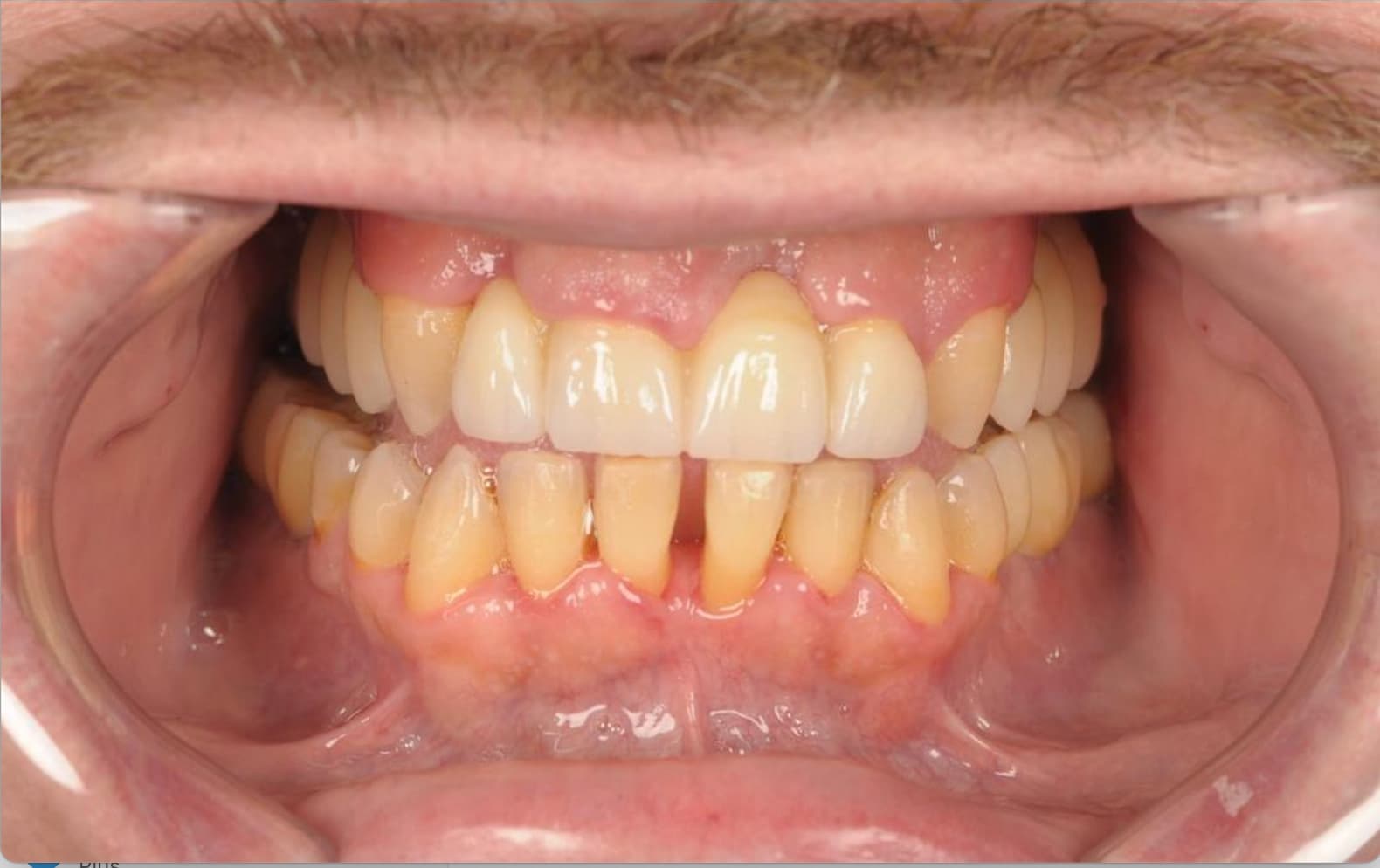
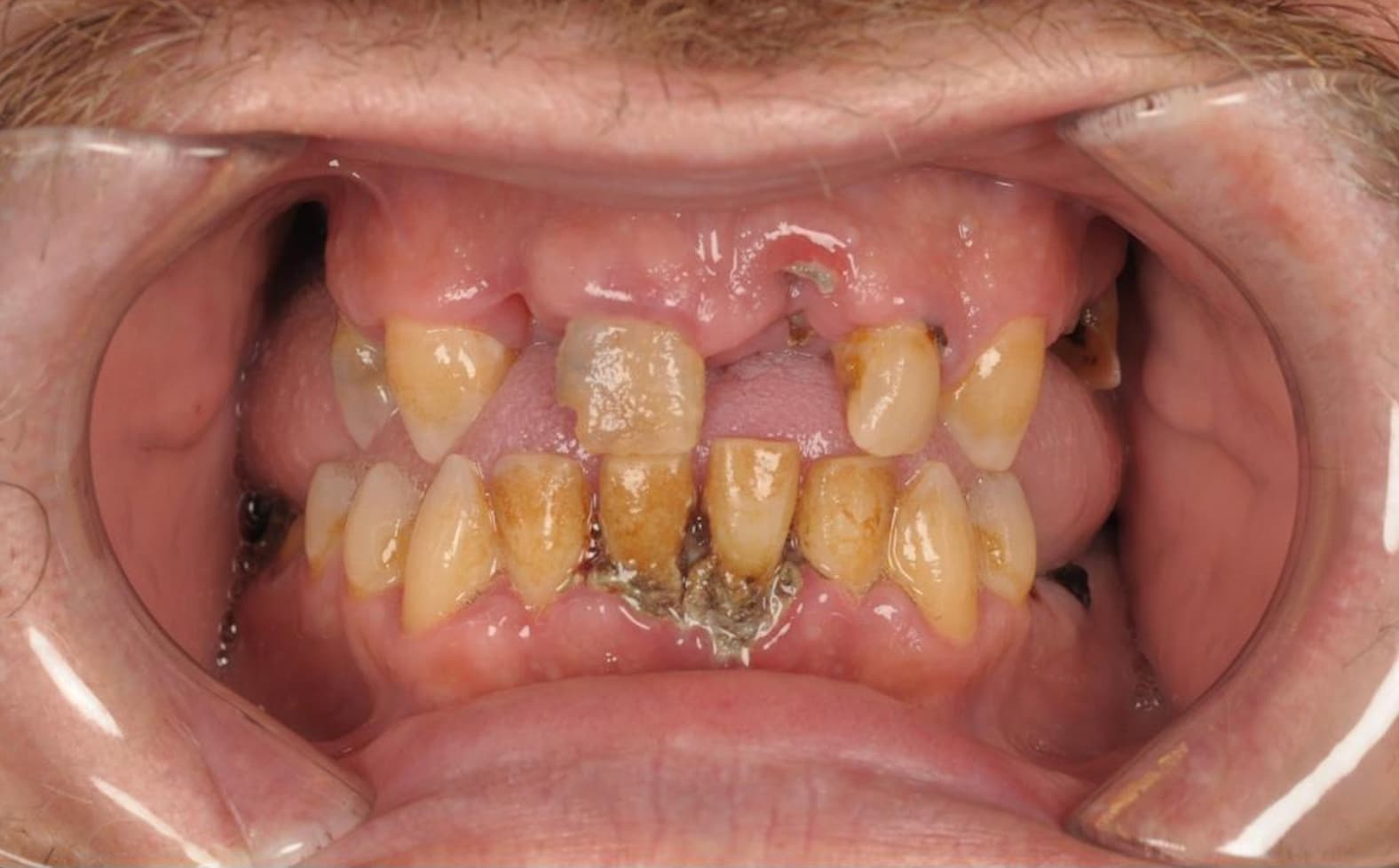
Full Mouth Reconstruction
Full mouth rehabilitation — front view
Decayed, missing and non-restorable teeth — with advanced gum disease and heavy calculus — rebuilt through a staged plan of hygiene therapy and restoration.
Treated by Dr Kamran Yazdi
Your clinicians
Meet your dentists
Every clinician at our Wimpole Street practice is GDC-registered — numbers published and verifiable on the public register.

Dr Yasha Y Shirazi
Dentist
GDC No. 195843

Dr Kamran Yazdi
Principal Dentist
GDC No. 197926

Dr Andreia Phipps
Dentist
GDC No. 229601

Dr Reza Davari
Dentist
GDC No. 302422

Dr Narges Ameri
Dentist
GDC No. 325081

Dr Ayman Mukhtar
Dentist
GDC No. 302583

Dr Elisabeth Lichtmannegger
Dentist
GDC No. 319325

Dr Niknaz Rostam Yazdi
Dentist
GDC No. 328954

Dr Sam Parsno
Implant Dentist
GDC No. 72207

Jack Button
Dental Hygienist & Therapist
GDC No. 244367
Questions & Answers
Frequently asked questions
Honest answers about gum disease treatment, costs and what to expect. Everything is explained again in person at your consultation with a GDC-registered dentist.
Gingivitis (early gum disease) is reversible. Periodontitis can be stabilised and controlled with structured therapy and maintenance, though lost bone does not regrow.
It is performed under local anaesthetic where needed, so treatment itself is comfortable. Mild tenderness for a day or two afterwards is normal.
The Basic Periodontal Examination is the standard UK screening check. Each area of your mouth is scored from 0 to 4; higher scores prompt detailed pocket charting and, where appropriate, structured periodontal therapy.
It varies with the extent of the disease. A typical course involves an assessment, one or more debridement visits, a review with re-charting at around eight to twelve weeks, then ongoing maintenance. Your written plan sets out the expected visits.
Some temporary sensitivity to cold is common after root surface debridement and usually settles within a few weeks. Desensitising toothpaste and fluoride applications can help in the meantime.
Smoking is strongly associated with poorer healing and higher relapse rates after periodontal therapy. Stopping, or cutting down, tends to improve results — and we can signpost support if you would like it.
Most patients attend supportive periodontal care every three to four months once stable. The interval is tailored to your risk profile and reviewed over time.
A structured course at our Wimpole Street practice starts from £850, with the final figure depending on the number of affected teeth and visits required. You will receive a written, itemised quote before any treatment begins.
There are recognised associations between periodontitis and conditions such as diabetes — gum inflammation can be harder to control when blood sugar is poorly managed, and vice versa. Research into wider links is ongoing, so we keep the message practical: treating gum disease supports your oral health, and we are happy to liaise with your GP or diabetes team where that is helpful.
No. Many of our periodontal patients arrive after long gaps, often feeling anxious about what we will find. Our role is to assess calmly, explain your options and plan forwards. Appointments are unhurried, and if nerves are a factor we can pace visits to suit you.
We re-chart pocket depths and bleeding at the sites recorded at your baseline, compare them like for like, refresh your home-care technique where needed and carry out supportive cleaning. If any area is not responding, we discuss the next step there and then, so the plan always reflects your current gum condition.
Yes — Wimpole Dental is regulated by the Care Quality Commission (CQC), and every clinician is registered with the General Dental Council (GDC), with numbers you can verify on the public register. You'll be treated by a named, experienced clinician working to current professional standards — never a rotating locum.
You'll always receive a written, itemised quote before any treatment begins. New patients start with a £30 consultation; flexible payment options may be available — ask at your consultation.
That's very common and completely understood. Your dentist will explain each step in plain English, work at your pace and never pressure you to proceed. Let us know how you feel when you book and we'll make your visit as calm and comfortable as possible.
Sources & further reading
External links open in a new tab. This page was clinically reviewed by a GDC-registered dentist; it is general information, not a substitute for an in-person consultation.
Find Us
Gum Disease Treatment on Wimpole Street, London
Contact
020 7183 0692Opening hours
- Monday9:00am – 6:00pm
- Tuesday9:00am – 8:00pm
- Wednesday9:00am – 6:00pm
- Thursday9:00am – 8:00pm
- Friday8:00am – 5:00pm
- Saturday10:00am – 4:00pm
- SundayClosed
Related
More gum health
Gum Contouring
Precise reshaping of an uneven or low gum line to reveal a balanced, harmonious smile.
Gummy Smile Treatment
Tailored treatment for excessive gum display — from contouring to crown lengthening — for a natural tooth-to-gum balance.
Receding Gums
Diagnosis and treatment of gum recession — non-surgical care first, with grafting options where needed.
Book Today
Ready to start your smile journey?
Book a £30, no-obligation consultation. You'll leave with a written, itemised plan — and clarity on cost, timeline and options.
22 Wimpole St, London W1G 8GQ · CQC regulated · GDC-registered clinicians