Noticed your gums changing? Let's protect what remains
Receding Gums Wimpole Street, London
Diagnosis and treatment of gum recession — non-surgical care first, with grafting options where needed.
Quoted after consultationFlexible payment options — ask at your consultation
- Varies by cause
- £30 consultation
- Written, itemised quote
Why choose us
Why choose receding gums?
Delivered to a consistently high standard by a named, GDC-registered clinician at our CQC-regulated practice on Wimpole Street, London.
Root-cause diagnosis
Non-surgical first
Graft options available
About the treatment
Receding Gums at our Wimpole Street practice
Clinically reviewed by Dr Yasha Y Shirazi, Dentist, GDC 195843 · Last reviewed July 2026
Gum recession is the gradual movement of the gum margin away from the crown of the tooth, exposing part of the root surface. It is very common — many adults have at least one area of recession — and it can contribute to sensitivity, root-surface decay and a longer-toothed appearance. Treatment for receding gums in London at our Wimpole Street practice begins not with a procedure, but with a diagnosis: understanding why your gums are receding.
Signs that may suggest recession include teeth that look longer than they used to, notches you can feel at the gum line, sensitivity to cold or sweet foods, and gums that appear thin or uneven. These signs can have several explanations, so they are not diagnostic on their own — but they are worth having assessed, particularly if the change seems to be progressing.
Common contributing causes include over-vigorous or abrasive brushing, thin gum tissue that some people simply inherit, gum disease, tooth grinding and clenching, the position of teeth in the jaw, and occasionally lip or tongue piercings. Orthodontic movement can also play a role in susceptible tissue. Frequently, more than one factor operates at once, which is why a careful assessment matters more than jumping to treatment.
Assessment at our Marylebone practice involves measuring each area of recession, charting gum thickness and attachment, screening for gum disease with a BPE, checking your brushing technique and tools, and looking for signs of grinding. Photographs give us a baseline, because the single most useful question in recession is: is it stable, or is it progressing? Suitability for any treatment is confirmed in person with a GDC-registered dentist.
For most patients, management comes first. That means removing or reducing the cause — softer brushing with a technique we demonstrate, a night guard if grinding is a factor, periodontal treatment if disease is present — plus protecting the exposed roots. Desensitising varnishes and, where roots are worn or vulnerable, tooth-coloured bonding over the exposed surface can make a real difference to comfort and appearance.
Where recession is deeper, progressing, or aesthetically significant, gum grafting can rebuild coverage. This involves surgically adding tissue — usually taken from the palate or using a substitute material — over the exposed root. We refer grafting cases to experienced periodontal colleagues where that offers you the best outcome, and we are candid that grafting is not needed, or predictable, in every situation. Root coverage results vary with the anatomy of each site.
Costs are quoted after consultation, because they depend entirely on the route: monitoring and preventive care sit at the modest end, bonding is charged per tooth, and grafting — where referred — is quoted by the treating specialist. Whatever the plan, you will receive a written, itemised quote before anything begins, and monitoring alone is often the honest recommendation for stable, mild recession.
It helps to be realistic about limitations. Gum tissue does not regrow by itself, and even successful grafting cannot always achieve full root coverage, particularly where bone between the teeth has been lost. Untreated progressive recession may put the affected teeth at greater risk over time, but many mild cases, once the cause is addressed, remain stable for years. Individual results vary.
Aftercare centres on protecting what you have: gentle, effective brushing with a soft brush, interdental cleaning, wearing a night guard if prescribed, and regular reviews where we re-measure the recession against your baseline photographs. If gum disease contributed, remember that periodontal disease is managed, not cured — maintenance is lifelong, and your hygiene visits are part of the treatment.
Brushing technique deserves particular attention, because it is one of the few causes entirely within your control. Recession linked to brushing tends to appear on the cheek-side surfaces of the more prominent teeth — often the canines and premolars — and is frequently paired with a scrubbing action, a firm-bristled brush or heavy pressure. At your visit we watch how you brush, then coach a gentler technique: a soft or electric brush with a pressure sensor, small controlled movements, and letting the bristles do the work. Many patients find that alone is enough to halt further change at the affected sites, which is why we treat technique as a treatment in its own right.
Patients sometimes ask whether exposed roots are more vulnerable to decay, and the answer is yes — root surfaces are covered by softer material than enamel, so they can decay more readily, particularly in a mouth with frequent sugar exposure or reduced saliva. That is one reason recession is worth managing even when it does not bother you cosmetically. Practical protection includes a fluoride toothpaste used correctly, attention to snacking frequency, and in some cases high-fluoride prescription toothpaste or in-surgery fluoride varnish applied to the exposed surfaces at your reviews.
For those anxious about being pushed towards surgery, it may be reassuring to know how rarely grafting is actually the recommendation. In our experience, the majority of recession cases seen at our Wimpole Street practice are managed with cause control, monitoring and, where needed, desensitising care or bonding. Grafting is reserved for cases where the evidence of progression or the depth of recession justifies it, and even then it is discussed as an option with realistic expectations rather than presented as inevitable.
Where cosmetic appearance is the main concern — typically a front tooth that looks noticeably longer than its neighbours — there are gentler options than surgery worth knowing about. Carefully placed tooth-coloured composite at the exposed root, or gum-shaded composite in selected cases, can visually rebalance a smile in a single visit, and these approaches are reversible and repairable. They do not replace lost tissue, and suitability varies with the site and your bite, but for many patients they offer a proportionate answer to a largely cosmetic problem, with the option of grafting kept in reserve.
The practice sits in Marylebone, central London, within easy walking distance of Bond Street, Oxford Circus and Regent’s Park underground stations. Because recession care is built around periodic reviews rather than intensive treatment, most patients simply fold their monitoring visits into a routine trip into town — a small, manageable commitment that keeps a slow-moving condition properly watched and gives you reliable evidence, year on year, about whether anything is actually changing.
Patients choose our central London practice, near Harley Street, for recession care because the value lies in continuity — the same team measuring the same sites year after year, intervening only when the evidence says it is needed. If you have noticed your gums receding, an assessment at our Wimpole Street practice will establish the cause, the stability and the sensible next step, with no pressure towards surgery you may not need.
Receding Gums cost in London
- Treatment fee
- Quoted after consultation
- Consultation
- £30
- Typical duration
- Varies by cause
- Payment
- Flexible options — ask at your consultation
Full fees for every treatment are published in our fee guide.
Explore more gum health, compare costs in our pricing guide or browse real patient results in the smile gallery.
What to expect at our Wimpole Street practice
- Care from a named, GDC-registered clinician at a CQC-regulated practice.
- A written, itemised plan and fixed quote before anything begins.
- Time to ask questions, understand your options and give informed consent — no pressure to proceed.
- Clear aftercare and structured review where clinically needed, with support if you have concerns.
Suitability is always confirmed at an in-person consultation with a GDC-registered dentist. Treatment outcomes depend on individual clinical factors — individual results may vary and no result can be guaranteed. A written, itemised quote is provided before any treatment begins.
Receding Gums at a glance
- Price from
- Quoted after consultation
- Typical time
- Varies by cause
- New patients
- £30 consultation
- Payment
- Flexible options — ask at consultation
- CQC-regulated practice
- GDC-registered clinicians
- Written, itemised plan
Your journey
Receding Gums treatment steps
Assessment
Your journey begins with a £30 consultation: a full examination with a GDC-registered dentist, X-rays where clinically needed, and time to talk through what you'd like to achieve and answer any questions you might have.
Your written plan
You'll receive a personalised, itemised treatment plan outlining the process and costs — every option explained in plain English with an exact price against each item, and never any pressure to proceed.
Treatment
Receding Gums is carried out by a named, GDC-registered clinician at our CQC-regulated practice on Wimpole Street, London — with evening and weekend appointments to fit around work.
Aftercare & review
Clear written aftercare, review appointments where clinically needed, and structured recall to protect your result — and your oral health — for the long term.
Real results
Real results from our smile gallery
Genuine patients of the practice, treated by named clinicians and published with consent. Drag the slider to compare — individual results vary and no outcome can be guaranteed.
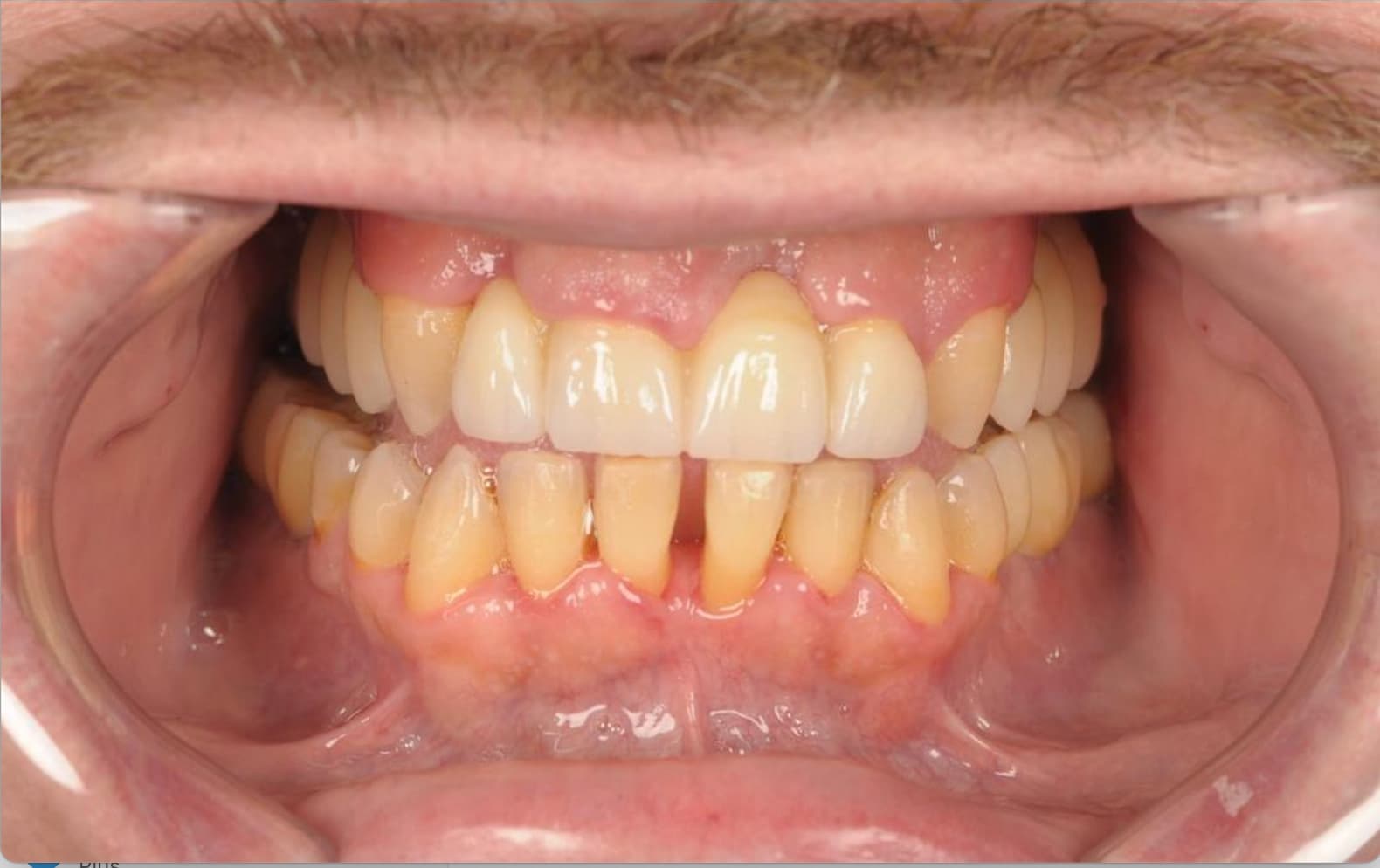
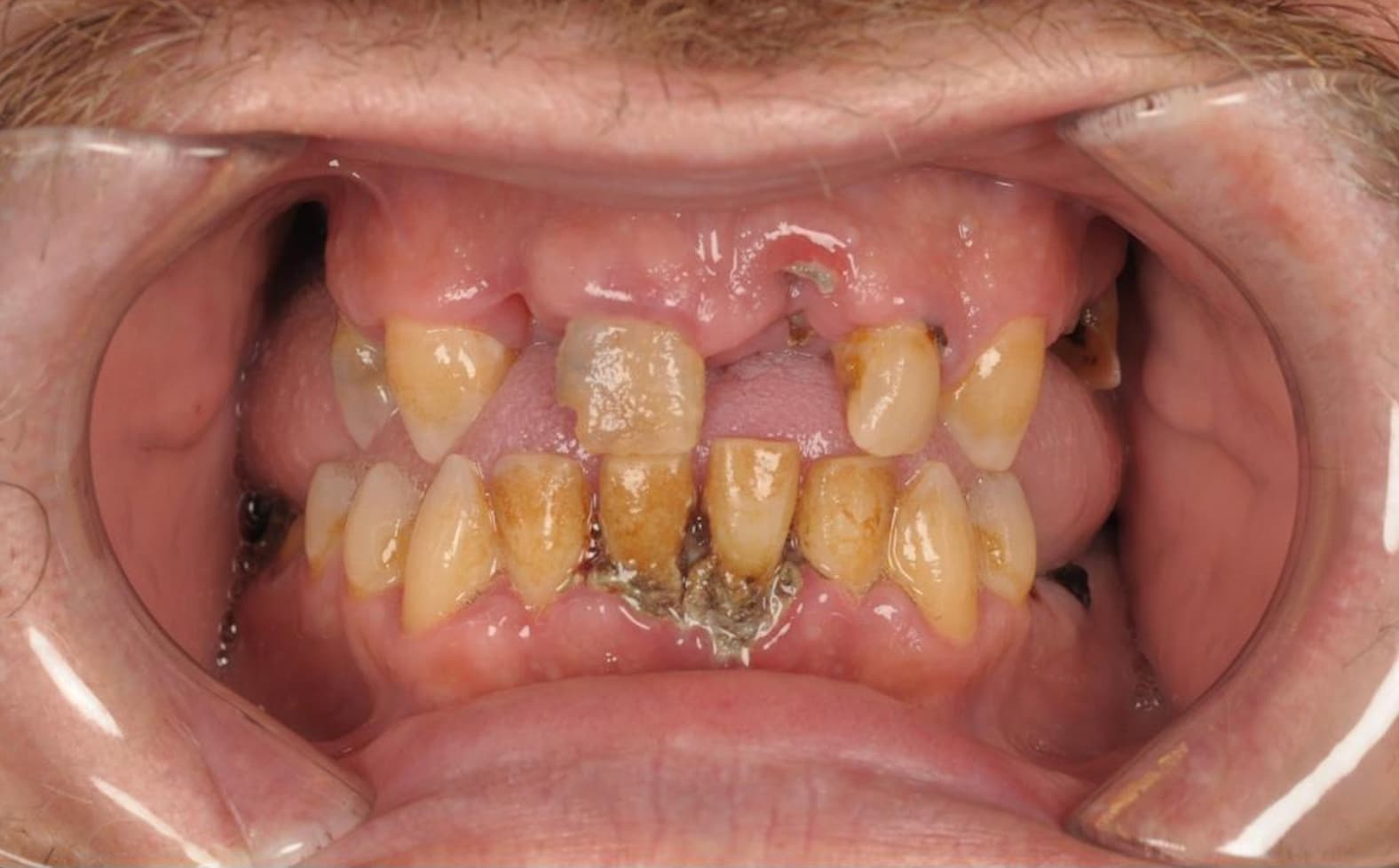
Full Mouth Reconstruction
Full mouth rehabilitation — front view
Decayed, missing and non-restorable teeth — with advanced gum disease and heavy calculus — rebuilt through a staged plan of hygiene therapy and restoration.
Treated by Dr Kamran Yazdi
Your clinicians
Meet your dentists
Every clinician at our Wimpole Street practice is GDC-registered — numbers published and verifiable on the public register.
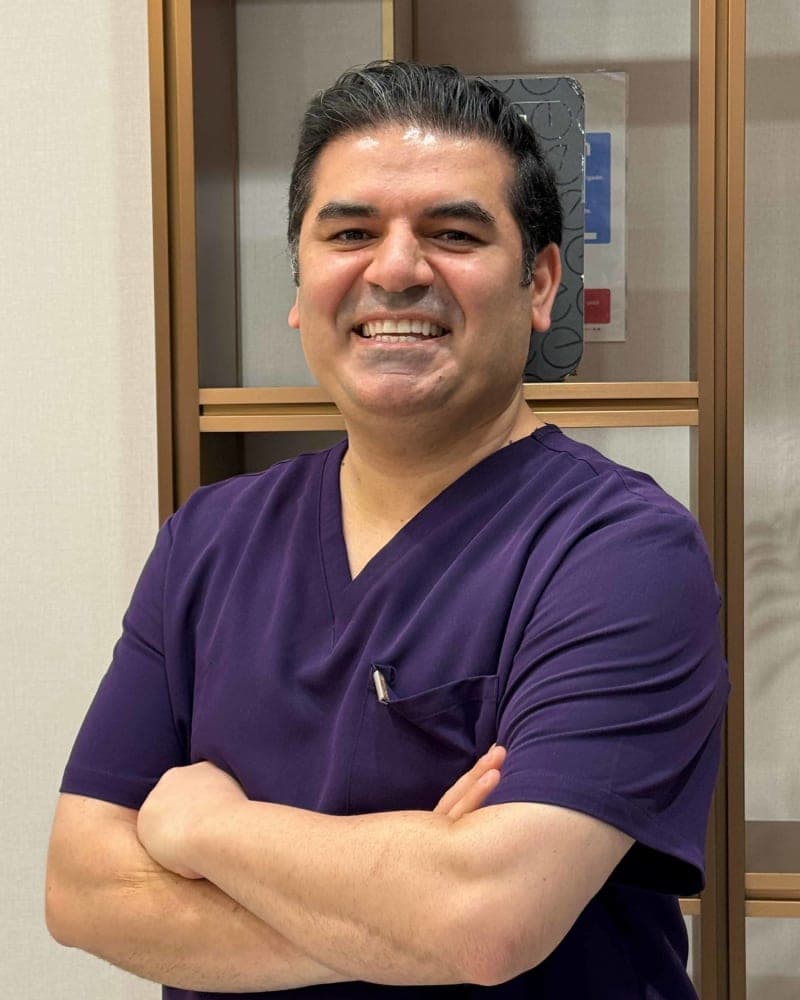
Dr Yasha Y Shirazi
Dentist
GDC No. 195843

Dr Kamran Yazdi
Principal Dentist
GDC No. 197926
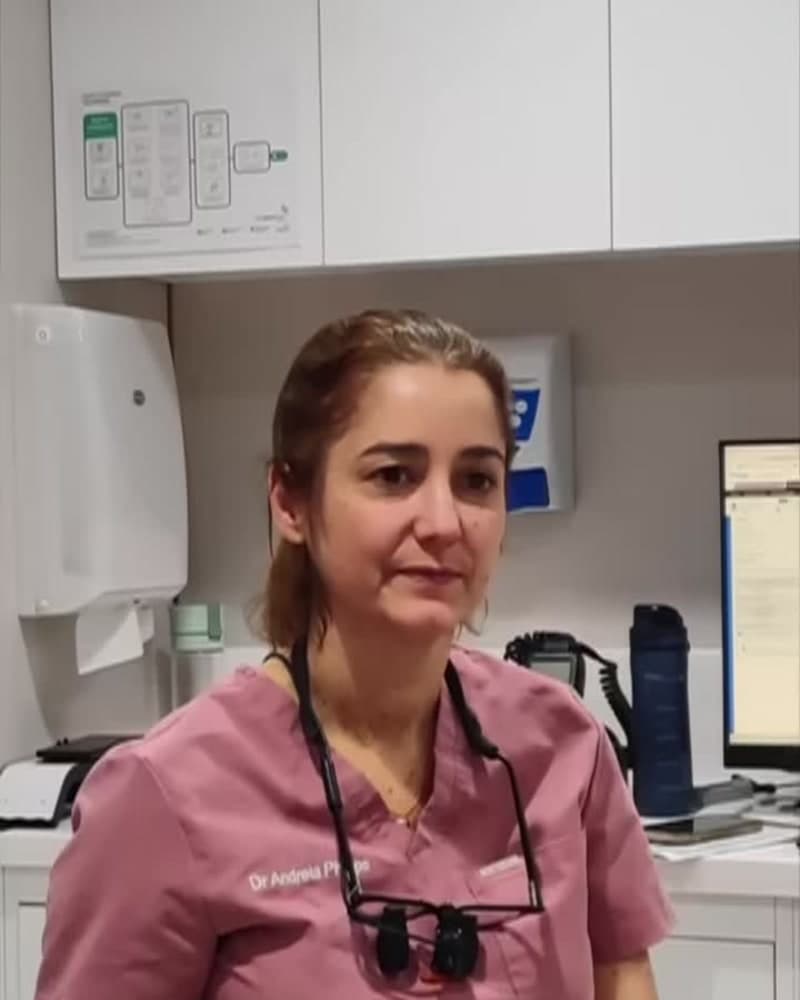
Dr Andreia Phipps
Dentist
GDC No. 229601
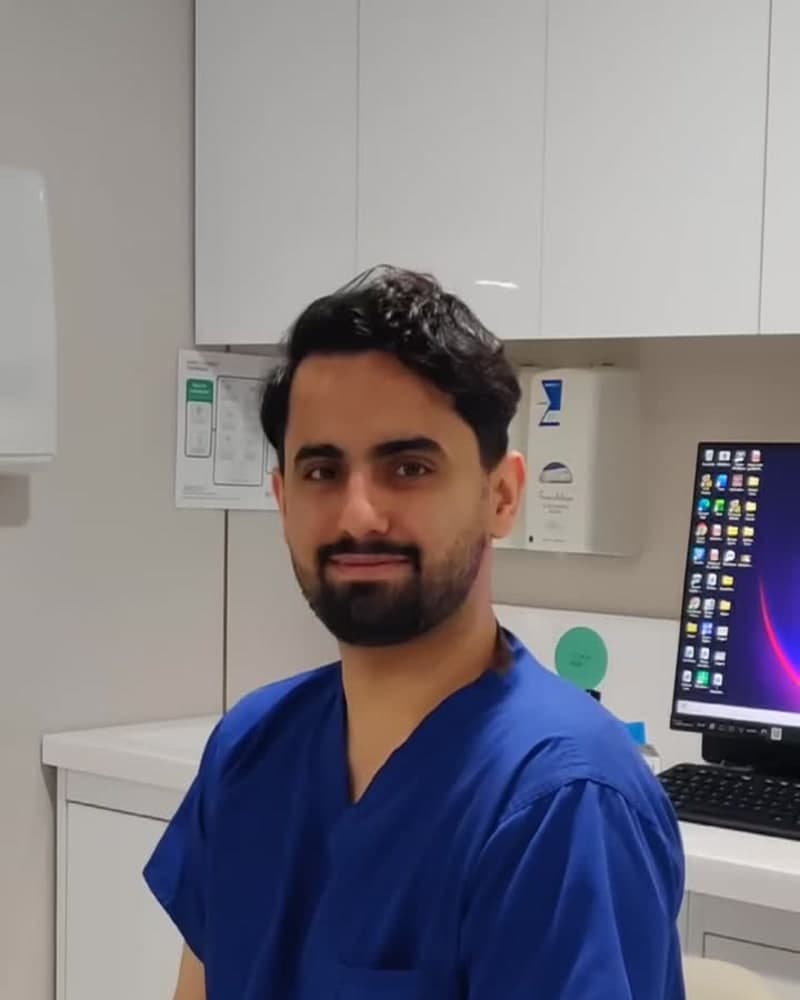
Dr Reza Davari
Dentist
GDC No. 302422
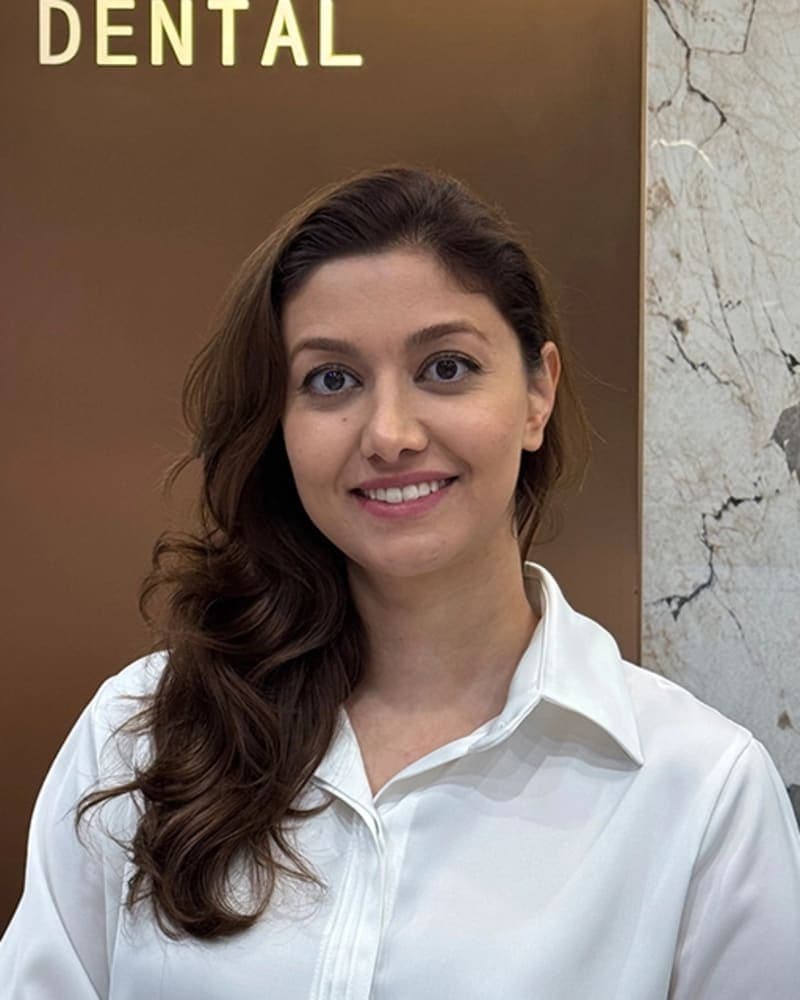
Dr Narges Ameri
Dentist
GDC No. 325081

Dr Ayman Mukhtar
Dentist
GDC No. 302583

Dr Elisabeth Lichtmannegger
Dentist
GDC No. 319325

Dr Niknaz Rostam Yazdi
Dentist
GDC No. 328954

Dr Sam Parsno
Implant Dentist
GDC No. 72207

Jack Button
Dental Hygienist & Therapist
GDC No. 244367
Questions & Answers
Frequently asked questions
Honest answers about receding gums, costs and what to expect. Everything is explained again in person at your consultation with a GDC-registered dentist.
Gum tissue does not regrow on its own, but grafting can restore coverage, and stabilising the cause prevents further loss.
Root surfaces lack enamel, so temperature and sweet triggers reach the nerve more easily. Desensitising treatments and bonding can help.
No. Over-vigorous brushing, naturally thin tissue, grinding and tooth position are all common contributors. Your assessment identifies which factors apply in your case.
Most patients do not. Mild, stable recession is usually managed conservatively by addressing the cause and protecting the roots. Grafting is discussed where recession is deep, progressing or aesthetically significant — and we refer to experienced colleagues where that is the best route.
If grinding or clenching is contributing, a custom night guard can reduce the forces involved. It is one part of managing the cause rather than a treatment for the recession itself.
We record measurements and baseline photographs at your first assessment, then re-measure at reviews. Comparing like for like over time is the most reliable way to judge stability.
It depends on the route — from simple monitoring and desensitising care to bonding per tooth or referred grafting. At our Wimpole Street practice everything is quoted after consultation with a written, itemised quote.
A soft-bristled manual brush or an electric brush with a pressure sensor is usually the sensible choice, combined with a gentle technique we will demonstrate at your visit. Heavy scrubbing with firm bristles is a common contributor to recession, so changing the tool and the technique together tends to work best.
It can occur in susceptible, thin gum tissue when teeth are moved, though most orthodontic patients experience no significant recession. If you have thin tissue and are considering alignment, we assess this beforehand and monitor during treatment, so any early change is caught and managed promptly.
Many mild, stable cases change little over years, particularly once the cause is addressed. Progressive recession, however, may gradually expose more root, increase sensitivity and raise the risk of root decay. The honest answer is that stability cannot be assumed without measurement — which is why a baseline assessment and periodic reviews are the low-commitment, sensible course.
Yes — Wimpole Dental is regulated by the Care Quality Commission (CQC), and every clinician is registered with the General Dental Council (GDC), with numbers you can verify on the public register. You'll be treated by a named, experienced clinician working to current professional standards — never a rotating locum.
You'll always receive a written, itemised quote before any treatment begins. New patients start with a £30 consultation; flexible payment options may be available — ask at your consultation.
That's very common and completely understood. Your dentist will explain each step in plain English, work at your pace and never pressure you to proceed. Let us know how you feel when you book and we'll make your visit as calm and comfortable as possible.
Sources & further reading
External links open in a new tab. This page was clinically reviewed by a GDC-registered dentist; it is general information, not a substitute for an in-person consultation.
Find Us
Receding Gums on Wimpole Street, London
Contact
020 7183 0692Opening hours
- Monday9:00am – 6:00pm
- Tuesday9:00am – 8:00pm
- Wednesday9:00am – 6:00pm
- Thursday9:00am – 8:00pm
- Friday8:00am – 5:00pm
- Saturday10:00am – 4:00pm
- SundayClosed
Related
More gum health
Gum Disease Treatment
Structured periodontal therapy — deep cleaning, pocket charting and maintenance — designed to help halt gum disease and protect your teeth.
Gum Contouring
Precise reshaping of an uneven or low gum line to reveal a balanced, harmonious smile.
Gummy Smile Treatment
Tailored treatment for excessive gum display — from contouring to crown lengthening — for a natural tooth-to-gum balance.
Book Today
Ready to start your smile journey?
Book a £30, no-obligation consultation. You'll leave with a written, itemised plan — and clarity on cost, timeline and options.
22 Wimpole St, London W1G 8GQ · CQC regulated · GDC-registered clinicians