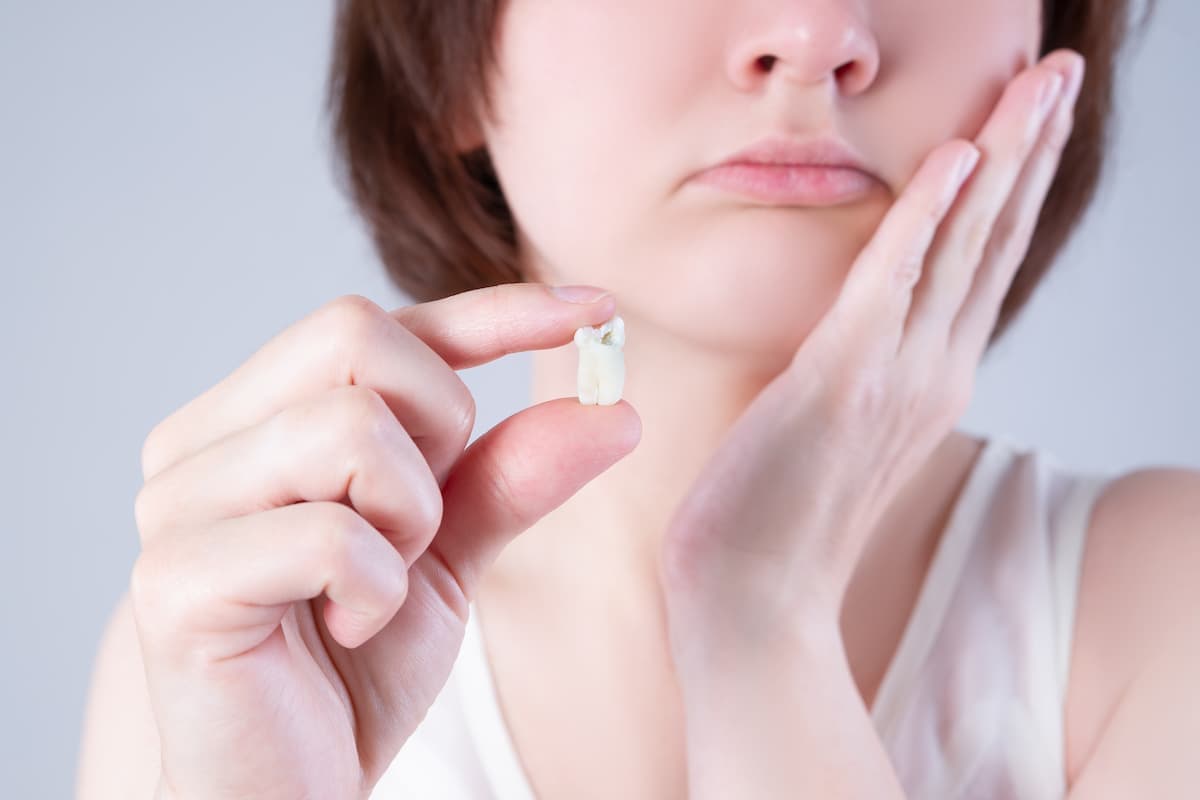
Lost a Crown at a Wedding? Managing a Dental Emergency Mid-Event

There is a particular kind of dread attached to a crown coming off on the morning of an event you have spent a year planning. It is worth saying immediately that this is usually fixable within the timescale, and that the outcome depends largely on what you do in the first few minutes.
This article is about the event-day scenario specifically — the time pressure, what is realistically achievable at short notice, and how to plan around significant dates. For the incident itself, in ordinary circumstances, our guide on losing a crown while eating covers the clinical side in more detail.
The next ten minutes
Find the crown and keep it. This is the difference between a recementation, which is quick, and a remake, which is not. Put it somewhere secure — a small box, a contact lens case, an envelope in a pocket that is not going anywhere. Not a tissue on a table, for reasons that should be obvious by now.
Rinse it under a running tap with the plug in, and rinse your mouth with warm water.
Do not try to force it back on. A crown seated incorrectly can lodge at the wrong angle, and removing it then becomes a job requiring instruments. If it slips easily into position when you place it gently, you will know within a second or two.
Check what came off. If the inside of the crown is hollow and clean, the cement failed and the tooth beneath is probably intact. If there is tooth structure or a post inside the crown, part of the tooth has come with it, and that is a different conversation.
Call a dentist. Do this before you do anything else on the internet. Practices keep emergency slots, and the earlier in the day you ring, the better your chance of one.
What can realistically be done at short notice
Recementation. If the crown is intact and the underlying tooth is sound, recementing is often a short appointment. This is the best outcome and it is the most common one. It may be done with a temporary cement initially if there is any uncertainty, with a definitive cementation arranged later.
A temporary crown. If the crown cannot be reused — it is fractured, or the tooth beneath has broken — a temporary crown can usually be made chairside. On a front tooth, a well-made temporary looks convincing in photographs and in conversation. It is not a long-term restoration, but it is entirely adequate for a weekend.
Direct composite. For a front tooth where a crown is not immediately viable, composite resin can be built onto the remaining structure to restore appearance and function for the short term. Our article on cosmetic resin bonding for immediate results covers the material.
Smoothing and covering. Where the exposed tooth is sharp against the tongue or lip, it can be smoothed and dressed even where a full restoration is not possible in the time available.
What cannot be done in a morning is a definitive laboratory-made crown, which requires an impression or scan, fabrication and a fitting appointment. Anyone suggesting otherwise should be treated with caution.
Temporary measures if you genuinely cannot see a dentist first
Sometimes the event is in three hours and you are two hundred miles from anywhere. Temporary dental cement is sold by most pharmacies and is designed for exactly this.
Used carefully, it can hold a crown in place for a day or two. The important caveats:
• Only if the crown seats fully and easily. If it does not go on cleanly, stop.
• A thin layer, and clean off the excess before it sets, particularly at the gum margin.
• Dry the tooth and the inside of the crown first, as much as you can.
• Do not use household adhesives. Superglue is not a dental material, it is not designed for the moist environment of the mouth, it is difficult to remove, and it can damage the tooth and make definitive recementation harder. This comes up more often than it should.
• It is temporary. Arrange proper recementation promptly, because temporary cement does not seal reliably and the exposed dentine beneath remains vulnerable.
Getting through the event
If the crown is off and nothing can be done before the ceremony, a few things make the day manageable.
Eat carefully and on the other side. Soft food, nothing sticky, nothing crunchy. Canapés, toffee-based desserts and anything requiring a decisive bite are best avoided.
Mind the temperature. Exposed dentine is sensitive to cold. Ice in drinks is the common trigger.
Be careful with alcohol and painkillers. If you are taking pain relief, follow the packet instructions and be mindful of interactions.
If you are wearing a recemented crown, avoid anything sticky for the first day — toffee and chewing gum are what dislodge freshly cemented crowns.
Rinse with warm salt water after eating if the tooth is exposed.
A prepared tooth under a missing crown is small and often dark, which is what makes people self-conscious. In practice it is far less visible to others than it feels, particularly on anything other than an upper front tooth. If it is an upper front tooth, a chairside temporary is worth pursuing seriously, because it is achievable.
Planning around significant dates
The most useful section, if you are reading this in advance.
Have a check-up six to eight weeks before. Not the week before. Six to eight weeks allows time for anything found to be treated properly without compressing the schedule.
Say what the date is. If a dentist knows you have a wedding in two months, the sequencing of any planned work changes. Nobody wants to be fitting a temporary crown the week of the event.
Mention any crown that has felt different. Crowns rarely come off without warning. A crown that has felt slightly loose, clicked, or become sensitive to cold over recent weeks is telling you something. Cement failure is usually gradual — see dental crowns, internal fit and cement washout.
Complete any cosmetic work well ahead. Whitening before crown work, not after, since ceramic does not respond to whitening. Bonding and veneer work need settling-in time. Our smile makeover page covers planning timescales.
If you have a temporary crown in place, do not schedule the event during that period if it can be avoided. Temporaries are held with weak cement by design, because they need to come off easily.
Know where emergency care is if the event is away from home.
Why crowns come off
Understanding it helps with preventing the next one.
Cement failure is the most common. Luting cement degrades over years with thermal cycling and moisture, and eventually the seal fails. The crown usually comes off cleanly and can be recemented.
Decay under the margin. Where recurrent decay has undermined the preparation, there is less sound tooth for the cement to grip. The crown may come off with soft tooth material inside it, and the tooth needs treatment before anything is recemented.
Insufficient retention. A short or over-tapered preparation offers less mechanical retention, and such crowns tend to come off repeatedly. Lengthening the clinical crown or altering the design may be needed.
Core or post failure. Where a post and core support the crown, failure of that assembly brings the crown off with the core attached.
Root fracture, which usually means the tooth cannot be restored.
Sticky food is the trigger rather than the cause. It applies a pulling force to a crown whose cement seal had already weakened.
A crown that comes off more than once needs the reason investigated rather than simply being recemented again. Broken crown emergency care covers the fractured-crown scenario, which is different.
Frequently Asked Questions
Can I get a crown recemented the same day?
Often, yes, if the crown is intact and the tooth beneath is sound. Ring early — emergency slots fill through the morning.
Can I use superglue to stick my crown back?
No. It is not designed for use in the mouth, is difficult to remove, and can damage the tooth and complicate proper recementation. Temporary dental cement from a pharmacy is the appropriate product.
Is a tooth without its crown an emergency?
It is urgent rather than an emergency in most cases. The exposed dentine is sensitive and vulnerable, and the tooth can shift or fracture if left, so prompt attention matters — but it is not usually a middle-of-the-night problem unless there is pain or swelling.
How long can I leave it?
Days rather than weeks. Adjacent and opposing teeth begin to move within a surprisingly short time, and if they do, the original crown may no longer fit.
Will the same crown go back on?
Usually, if it is undamaged and the underlying tooth is sound. If tooth structure came away with it, or there is decay beneath, a new crown is likely.
Next Steps
If a crown has come off before an event, ring a practice early in the day and keep the crown safe — those two things account for most of the outcome.
You can contact our team at our Wimpole Street practice, or see our emergency dentist page for urgent care.
Dental Disclaimer
This article provides general information about managing a lost dental crown and does not constitute individual dental advice. Whether a crown can be recemented depends on the condition of the crown and the underlying tooth, which can only be assessed clinically. If you have pain, swelling or fever, seek urgent care. Wimpole Dental is regulated by the Care Quality Commission, and our clinicians are registered with the General Dental Council.
Next review due: 10 August 2027
Written by Dr Elisabeth Lichtmannegger · reviewed by Dr Elisabeth Lichtmannegger, GDC 319325
This article is general information, not personal clinical advice. For a diagnosis and a plan tailored to you, book a consultation with a GDC-registered dentist.
Related treatments at our Wimpole Street practice