Veneers for Misaligned Teeth: When They May and May Not Be Suitable
If you have teeth that are uneven, slightly crooked or irregular in shape, you may be wondering whether dental veneers could help — and whether they might offer a quicker or simpler alternative to orthodontic treatment. It is a common and entirely understandable question, particularly for adults who are conscious of their smile and keen to explore their options before committing to any procedure.
The short answer is that veneers for misaligned teeth can sometimes improve the way certain teeth look, but only within meaningful clinical limits. Whether they are appropriate depends on the nature and degree of the misalignment, the health of your teeth and gums, your bite relationships and what you are hoping to achieve. This article explains when veneers may be a reasonable consideration and when a different approach is likely to serve you better.
Quick Answer: Can Veneers Fix Misaligned Teeth? Veneers can sometimes improve the visible appearance of mildly uneven, irregularly shaped or slightly asymmetric teeth by altering their size, shape or contour. However, veneers do not move teeth. They do not correct underlying alignment or change your bite. For significant crowding, meaningful tooth rotation or bite-related concerns, orthodontic treatment — such as braces or clear aligners — is generally more appropriate.
What Dental Veneers Actually Do
A dental veneer is a thin shell — typically made from porcelain or composite resin — that is bonded to the front surface of a tooth. Veneers are designed to change the visible appearance of a tooth: its colour, shape, size, length or surface texture.
Porcelain veneers are custom-made in a dental laboratory and are generally considered more durable and stain-resistant than composite alternatives. Composite veneers can often be applied in a single appointment and tend to be less costly, though they may require more frequent maintenance over time.
What veneers cannot do is physically move a tooth into a different position. They are a surface-level cosmetic or restorative solution, not a structural or orthodontic one. Understanding this distinction clearly is essential before exploring whether veneers are right for your situation.
You can find more detailed information about the different types available on the dental veneers treatment page.
When Veneers May Be Worth Considering for Uneven Teeth
There are circumstances in which veneers can genuinely improve the appearance of teeth that appear misaligned, even without any tooth movement taking place. These situations typically involve:
• Mild size or shape irregularities — where one or more teeth are naturally smaller, shorter or differently shaped than their neighbours, creating an uneven appearance
• Slight asymmetry — where minor differences in tooth position or form affect the overall symmetry of the smile
• Minor gaps or spacing — small spaces between teeth can sometimes be closed cosmetically through carefully shaped veneers, though this has limits
• Surface irregularities — chips, uneven edges or worn surfaces that make teeth appear misshapen or out of line
• Slightly rotated or tilted front teeth — in very mild cases, where the deviation is modest and the bite is unaffected, veneers may adjust the optical appearance without orthodontic intervention
In these cases, an experienced cosmetic dentist may be able to achieve a more harmonious appearance through careful veneer design — adjusting proportions and contours to create a more balanced smile. This is sometimes referred to as a cosmetic improvement rather than a clinical correction.
It is worth noting that this approach works by changing what is visible, not what is structurally present. The teeth themselves remain in the same position.
When Veneers Are Unlikely to Be the Right Choice
Veneers are not a universal solution for crooked or misaligned teeth, and in many situations they are clinically inappropriate. Your dentist is likely to advise against veneers — or to recommend orthodontic treatment either before or instead — in the following circumstances:
Significant Crowding or Overlapping
When teeth are noticeably crowded or overlap each other, the degree of misalignment generally exceeds what veneers can address cosmetically. Placing veneers over heavily overlapping teeth may result in a disproportionate or unnatural appearance, and in some cases may not be structurally feasible without excessive tooth reduction.
Meaningful Tooth Rotation
A tooth that is substantially rotated in its socket requires movement, not surface treatment. Veneers cannot correct the rotation itself, and attempting to mask it may compromise the veneer's fit, longevity and the health of surrounding tissue.
Bite Problems and Malocclusion
If your upper and lower teeth do not come together correctly — a condition known as malocclusion — this is a functional issue, not solely an aesthetic one. Placing veneers without addressing an underlying bite problem can place them under abnormal stress, increasing the risk of chipping, debonding or longer-term damage. A bite assessment is an important part of any pre-veneer evaluation.
Jaw-Related Alignment Concerns
Where misalignment has a skeletal or jaw-related component, neither veneers nor simple orthodontic appliances may be sufficient. These cases may require specialist orthodontic or maxillofacial assessment.
Insufficient Enamel
Porcelain veneers typically require a thin layer of enamel to be removed from the tooth surface to ensure a natural fit and appearance. If a tooth already has limited enamel — due to previous dental work, erosion or other factors — there may not be enough remaining for safe veneer placement. Enamel does not regenerate, which is why this assessment matters.
Active Gum Disease or Poor Oral Health
Veneers are a long-term cosmetic investment, and they require a stable oral environment. Active gum disease, significant decay or unresolved restorative needs would generally need to be addressed before veneers are considered. Proceeding without doing so risks compromising both the veneers and the underlying teeth.
Veneers Versus Orthodontic Treatment: Understanding the Difference
A question that comes up frequently is how veneers compare with braces or clear aligners for crooked teeth. The honest answer is that they serve different purposes and are not straightforwardly interchangeable.
Orthodontic treatment — whether through fixed braces or clear aligners such as Invisalign — moves teeth to new positions within the jaw. This addresses the actual alignment rather than its visible surface. For patients with meaningful crowding, rotation or bite concerns, this is generally the more appropriate clinical pathway.
Some patients choose to combine approaches: orthodontic treatment first to achieve functional alignment, followed by veneers to refine colour, shape or final appearance. This sequence — often called ortho-restorative treatment planning — allows each discipline to do what it does best.
Tooth Preparation, Enamel and Reversibility
One of the most important things to understand before choosing veneers is that porcelain veneer placement is generally an irreversible procedure. A small but permanent amount of enamel is typically removed to accommodate the veneer. Once this has been done, the tooth will always require a veneer or crown.
This is not a reason to avoid veneers where they are clinically appropriate — but it is a significant consideration that warrants careful thought and informed discussion with your dentist. The amount of preparation varies depending on the type of veneer, the tooth's existing position and the desired outcome, and your dentist should explain clearly what is involved in your individual case.
Composite veneers, in some circumstances, can be placed with minimal or no tooth preparation, making them a less irreversible option. However, they tend to have a shorter lifespan than porcelain and may be more prone to staining over time.
Risks, Limitations and What to Expect Long-Term
Like all dental treatments, veneers carry potential risks and limitations that patients should understand before proceeding. These include:
• Sensitivity — some patients experience increased sensitivity to temperature following preparation, which may be temporary or, less commonly, longer-lasting
• Chipping or fracture — porcelain veneers can chip under significant force, particularly in patients who grind their teeth (bruxism)
• Debonding — veneers can occasionally detach, particularly if bite forces are not well-distributed
• Gum margin changes — over time, changes to the gumline can affect the appearance of veneers, which is relevant to long-term aesthetics
• Lifespan — porcelain veneers typically last between ten and fifteen years with good care, though this varies significantly between individuals; they are not permanent restorations
Your dentist should also assess whether you grind or clench your teeth, as this can significantly affect veneer longevity. A night guard may be recommended in some cases.
Alternatives to Veneers for Misaligned Teeth
If veneers are not the most appropriate option for your situation, there are several alternatives worth exploring with your dentist:
• Composite bonding — a tooth-coloured resin applied directly to the tooth surface, which can improve the appearance of minor chips, gaps or irregularities with less or no enamel removal; learn more about composite bonding
• Orthodontic treatment — fixed or removable appliances that move teeth to address alignment and bite concerns; NHS orthodontics may be available for eligible patients under certain criteria
• Clear aligner therapy — a discreet option for many adults that can address mild to moderate alignment concerns without fixed appliances
• Tooth recontouring — minor reshaping of enamel edges to improve symmetry in very mild cases, without full veneer coverage
• A combined approach — orthodontic treatment followed by cosmetic refinement, where both alignment and aesthetics are priorities
What a Dentist Will Assess Before Recommending Veneers
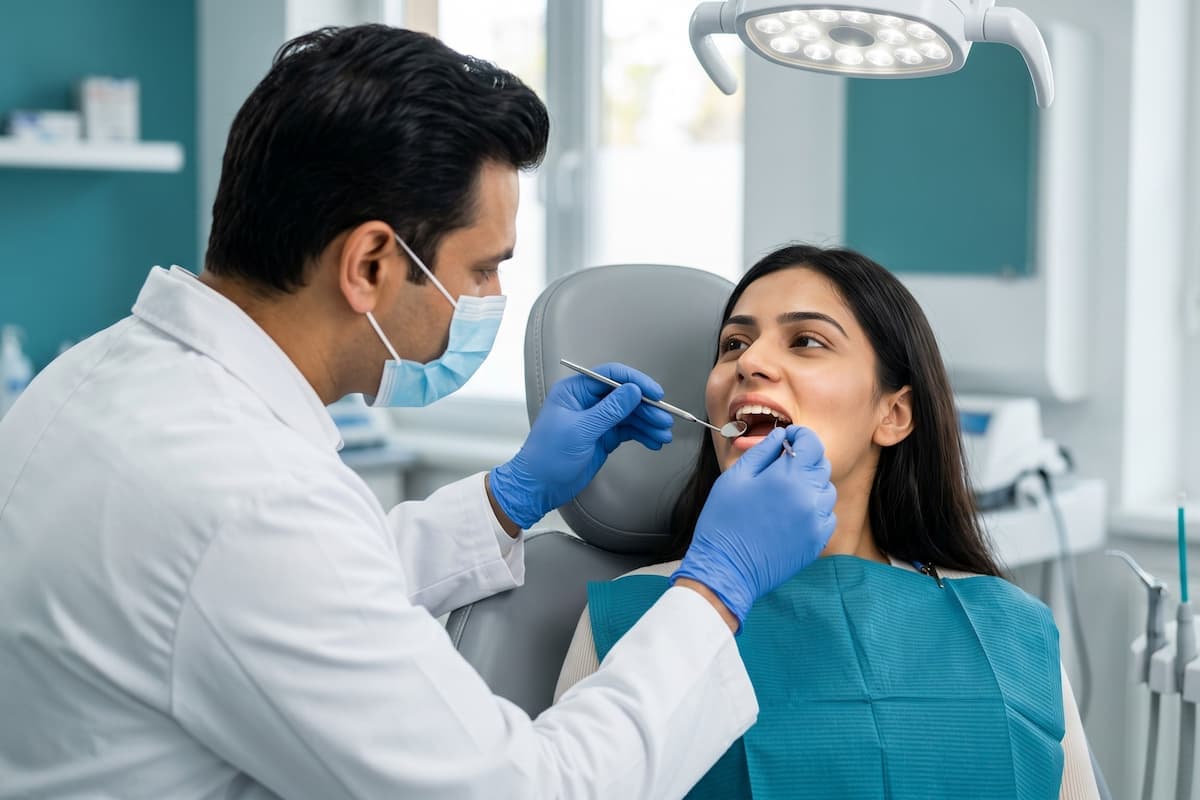
A thorough clinical assessment is essential before any recommendation is made. A dentist considering veneers for a patient with uneven or irregular teeth will typically evaluate:
• The nature and degree of tooth misalignment
• Bite relationships and occlusal function
• Available enamel on the relevant teeth
• Gum health and periodontal status
• Any existing restorations, decay or structural concerns
• The patient's oral hygiene and long-term maintenance habits
• The patient's aesthetic goals and expectations
• Whether orthodontic treatment may be a more appropriate first step
This assessment may include dental X-rays, photographs and, in some cases, study models or digital scans. It is through this process that a truly personalised recommendation can be made.
If you are considering cosmetic options for your smile, a smile assessment consultation can be a useful starting point before any treatment decisions are made.
Questions Worth Reflecting on Before You Decide
Before pursuing veneers for misaligned teeth, it may help to consider the following:
1. Is my primary concern cosmetic, functional or both? If there is a functional component to your misalignment — such as difficulty biting, jaw discomfort or uneven wear — orthodontic assessment is likely to be important.
2. Am I comfortable with an irreversible procedure? Understanding that porcelain veneers involve permanent enamel reduction is important before committing.
3. Have I been assessed by a dentist rather than making a self-diagnosis? Photographs, mirrors and online research have limits. A clinical assessment can reveal factors that are not visible to the patient and that significantly influence suitability.
Frequently Asked Questions
Can veneers straighten teeth the way braces do?
No. Veneers do not move teeth. They change the visible shape and appearance of the tooth surface but leave the underlying tooth and its position entirely unchanged. For actual tooth movement and alignment correction, orthodontic treatment such as braces or clear aligners is necessary.
Is it possible to get veneers on just one crooked tooth?
In some cases, a single veneer may be placed to improve the appearance of one tooth that appears out of position due to its shape or size rather than its actual position. However, care is needed to ensure that the veneer blends naturally with surrounding teeth, and a dentist will need to assess whether the tooth's actual position makes this feasible and aesthetically appropriate.
Will veneers affect how my teeth feel when I bite?
Veneers alter the surface of the tooth, which can subtly change the bite relationship. A skilled dentist will assess your bite carefully and adjust the veneer accordingly. Poorly planned veneer work that does not account for bite forces can lead to discomfort, premature wear or debonding, which is why occlusal assessment is a standard part of the planning process.
Do veneers require special maintenance?
Veneers require the same oral hygiene practices as natural teeth — twice-daily brushing, regular flossing and routine dental check-ups. Some dentists advise caution with very hard or sticky foods. Porcelain veneers can be polished but not whitened, so it is worth considering teeth whitening before veneer placement if that is part of your plan.
How long do porcelain veneers typically last?
With proper care, porcelain veneers generally last between ten and fifteen years, though individual longevity varies depending on oral hygiene, bite forces, habits such as grinding and the quality of the original placement. They are not permanent and will eventually need replacement.
Can I have orthodontic treatment after getting veneers?
Orthodontic treatment after veneer placement is generally not recommended, as the forces involved in moving teeth can stress the veneer bond and the prepared enamel. For patients interested in both options, the typical clinical sequence is orthodontic treatment first, then cosmetic refinement such as veneers afterwards, once teeth are in their final positions.
Are veneers available on the NHS for crooked teeth?
Veneers for cosmetic reasons — including improving the appearance of mildly misaligned or uneven teeth — are not routinely available on the NHS. NHS dental treatment prioritises clinical need rather than cosmetic preference. Patients seeking veneers for aesthetic reasons will generally need to consult a private or mixed-practice dentist.
What happens if a veneer chips or comes off?
A chipped or debonded veneer should be assessed by a dentist as soon as reasonably possible. In some cases, minor chips can be repaired with composite resin; more significant damage may require veneer replacement. Until the veneer is repaired, the underlying prepared tooth surface may be sensitive or more susceptible to damage.
Is there an age consideration for veneers?
Veneers are generally more appropriate for adults whose teeth and jaw development are complete. In younger patients, teeth may still be developing, and premature veneer placement could create long-term challenges. A dentist will consider the patient's age and dental maturity as part of the suitability assessment.
1. Thinking About Veneers or Alternatives for Uneven Teeth?
If you are considering veneers for misaligned or irregular teeth, the most valuable first step is an individual consultation with a dentist who can assess your oral health, tooth position, bite and aesthetic goals. What is appropriate for one person may not be suitable for another, and the right recommendation depends on factors that can only be evaluated through a proper clinical examination.
Suitability for veneers depends on a combination of factors including the health of your gums, the condition of your enamel, your bite, the degree of misalignment and what you are hoping to achieve. In some cases, orthodontic treatment — either on its own or as a first step — may serve your long-term interests better.
At Wimpole Dental, our approach is to provide honest, evidence-informed guidance so that you can make a well-informed decision. If you would like to explore your options, we would be glad to discuss them with you at a consultation.
Dental Disclaimer
This article has been written for educational and informational purposes only. It is intended to help readers understand the general considerations around dental veneers for misaligned or uneven teeth and is not a substitute for professional dental advice, clinical examination or personalised treatment recommendations.
The suitability of veneers — or any alternative treatment such as orthodontics or composite bonding — depends on individual factors including oral health, gum condition, available enamel, bite relationships, tooth position and personal treatment objectives. These factors can only be assessed accurately by a qualified dental professional following a clinical examination.
Nothing in this article constitutes a diagnosis, a treatment recommendation or a guarantee of any clinical outcome. Individual results vary. Readers should consult a registered dental professional for advice specific to their own circumstances.
Clinical information in this article is aligned with general UK dental guidance. It does not override the clinical judgement of a treating dentist.
Written Date: 22 October 2026
Next Review Date: 22 October 2027
Written by Wimpole Dental Editorial Team · reviewed by Wimpole Dental Clinical Team
This article is general information, not personal clinical advice. For a diagnosis and a plan tailored to you, book a consultation with a GDC-registered dentist.
Related treatments at our Wimpole Street practice