Protect your teeth from grinding while you sleep
Night Guards (Teeth Grinding) Wimpole Street, London
Custom-fitted night guards that protect your teeth from grinding and clenching (bruxism) while you sleep.
£595Flexible payment options — ask at your consultation
- 2 visits
- £30 consultation
- Written, itemised quote
Why choose us
Why choose night guards (teeth grinding)?
Delivered to a consistently high standard by a named, GDC-registered clinician at our CQC-regulated practice on Wimpole Street, London.
Custom-fitted
Protects enamel & restorations
Eases morning jaw ache
About the treatment
Night Guards (Teeth Grinding) at our Wimpole Street practice
Clinically reviewed by Dr Yasha Y Shirazi, Dentist, GDC 195843 · Last reviewed July 2026
Bruxism — grinding or clenching the teeth, most often during sleep — is remarkably common, and many people have no idea they do it. The forces involved can be several times higher than normal chewing, which is why night-time grinding wears enamel, chips edges, cracks fillings and crowns, and leaves some people waking with jaw ache or dull temple headaches. A custom night guard, made at our Wimpole Street practice, helps absorb and redistribute those forces while you sleep.
Signs that may suggest you grind include flattened or shortened front teeth, chipped edges, unexplained cracks in fillings, sensitivity, morning jaw stiffness or ache, temple headaches on waking, and a partner hearing grinding at night. None of these is conclusive on its own — wear has several causes — but together they form a pattern your dentist can recognise quickly at examination.
Why do people grind? Contributing factors include stress and anxiety, sleep disturbances, certain medications, caffeine and alcohol close to bedtime, and simple habit. Because the causes are often outside dentistry’s reach, the practical goal is protection: we cannot reliably stop the grinding, but we can stop it damaging your teeth. That honest framing matters — a night guard manages the consequences rather than curing the habit.
Night guards suit anyone with evidence of active grinding, and they are particularly worthwhile if you have invested in cosmetic or restorative work. If you have had bonding, veneers, crowns or completed aligner treatment, a guard is a cost-effective insurance policy for that investment — it is far cheaper to replace a worn guard than a fractured veneer. Suitability is confirmed at an in-person consultation with a GDC-registered dentist.
The process takes two visits at our Marylebone practice. At the first, we examine your teeth and jaw muscles, note the wear pattern, and take precise impressions or a digital scan of your teeth together with a bite record. A dental laboratory then constructs your guard to fit your teeth exactly. At the second visit, we fit the guard, adjust the biting surface so it meets evenly, and check comfort and retention.
A custom night guard costs £595, confirmed in a written, itemised quote. That fee covers the records, laboratory construction, fitting and adjustment. Cost considerations over time include eventual replacement — guards are consumable by design, wearing so your teeth do not — and occasional re-adjustment if your bite changes after new dental work.
You may wonder about cheaper alternatives. Pharmacy boil-and-bite guards are bulky, poorly retained and often abandoned within weeks; some people find they encourage clenching rather than reduce it. Soft guards can suffer the same problem. Where jaw pain and TMD symptoms dominate rather than tooth wear, a Michigan splint — a more comprehensively adjusted appliance — may be the better recommendation, and we will tell you if that applies to you.
Limitations are worth stating plainly. A night guard protects teeth while it is worn; it does not stop the underlying habit, and it only works if it is comfortable enough to wear consistently — which is precisely the argument for a well-made custom fit. Some people take a week or two to adapt to sleeping with it. Guards gradually wear and eventually need replacing, and individual experiences vary.
Aftercare is simple: rinse and brush the guard with cool water and a soft brush each morning, store it dry in its case, keep it away from heat and pets, and bring it to your routine check-ups. We check its fit and wear at each visit — visible wear facets on the guard are quiet proof it is doing its job instead of your enamel.
If grinding continues unprotected, the typical long-term pattern is cumulative rather than sudden: enamel gradually flattens, biting edges chip, sensitivity can increase as the harder outer layer thins, and existing fillings and crowns face repeated heavy loads that may shorten their lifespan. Progression varies enormously between individuals — some grinders show little change over decades, others wear noticeably within years — which is why we photograph and monitor wear at check-ups rather than making blanket predictions. Where measurable wear is progressing, that evidence is what turns a maybe into a clear recommendation.
Alongside the guard, small habit changes can reduce the load. Cutting caffeine and alcohol in the hours before bed, winding down screens, and consciously checking during the day that your teeth are apart — lips together, teeth apart is the ideal resting posture — all help some patients. Daytime clenching is surprisingly common at desks and in traffic; a discreet reminder, such as a note on your monitor, sounds trivial but many patients find it genuinely effective at breaking the loop.
The fitting appointment is short and comfortable. We seat the guard, check it clips positively over the teeth without rocking, then mark and adjust the biting surface with articulating paper until it meets your opposing teeth evenly — that even contact is what makes a custom guard pleasant to wear. We also show you how to insert and remove it without strain, and how to spot the wear facets that will develop as it does its job. A quick review can be arranged if anything needs refining once you have slept with it for a couple of weeks.
Getting your guard made is easy to arrange around a London working week: the practice is on Wimpole Street in Marylebone, a short walk from Bond Street, Oxford Circus and Regent’s Park underground stations, and both visits are brief. Many patients pair the fitting with a routine check-up or hygiene visit to save a journey.
Patients choose our central London practice, near Harley Street, for night guards because fit and adjustment are what separate a guard that gets worn from one that lives in a drawer. At our Wimpole Street practice your guard is made from precise records, adjusted to your bite at the chair, and reviewed over time — a small, sensible investment in protecting your teeth in London’s most experienced dental district.
Night Guards (Teeth Grinding) cost in London
- Treatment fee
- £595
- Consultation
- £30
- Typical duration
- 2 visits
- Payment
- Flexible options — ask at your consultation
Full fees for every treatment are published in our fee guide.
Explore more advanced dentistry, compare costs in our pricing guide or browse real patient results in the smile gallery.
What to expect at our Wimpole Street practice
- Care from a named, GDC-registered clinician at a CQC-regulated practice.
- A written, itemised plan and fixed quote before anything begins.
- Time to ask questions, understand your options and give informed consent — no pressure to proceed.
- Clear aftercare and structured review where clinically needed, with support if you have concerns.
Suitability is always confirmed at an in-person consultation with a GDC-registered dentist. Treatment outcomes depend on individual clinical factors — individual results may vary and no result can be guaranteed. A written, itemised quote is provided before any treatment begins.
Night Guards (Teeth Grinding) at a glance
- Price from
- £595
- Typical time
- 2 visits
- New patients
- £30 consultation
- Payment
- Flexible options — ask at consultation
- CQC-regulated practice
- GDC-registered clinicians
- Written, itemised plan
Your journey
Night Guards (Teeth Grinding) treatment steps
Assessment
Your journey begins with a £30 consultation: a full examination with a GDC-registered dentist, X-rays where clinically needed, and time to talk through what you'd like to achieve and answer any questions you might have.
Your written plan
You'll receive a personalised, itemised treatment plan outlining the process and costs — every option explained in plain English with an exact price against each item, and never any pressure to proceed.
Treatment
Night Guards (Teeth Grinding) is carried out by a named, GDC-registered clinician at our CQC-regulated practice on Wimpole Street, London — with evening and weekend appointments to fit around work.
Aftercare & review
Clear written aftercare, review appointments where clinically needed, and structured recall to protect your result — and your oral health — for the long term.
Real results
Real results from our smile gallery
Genuine patients of the practice, treated by named clinicians and published with consent. Drag the slider to compare — individual results vary and no outcome can be guaranteed.
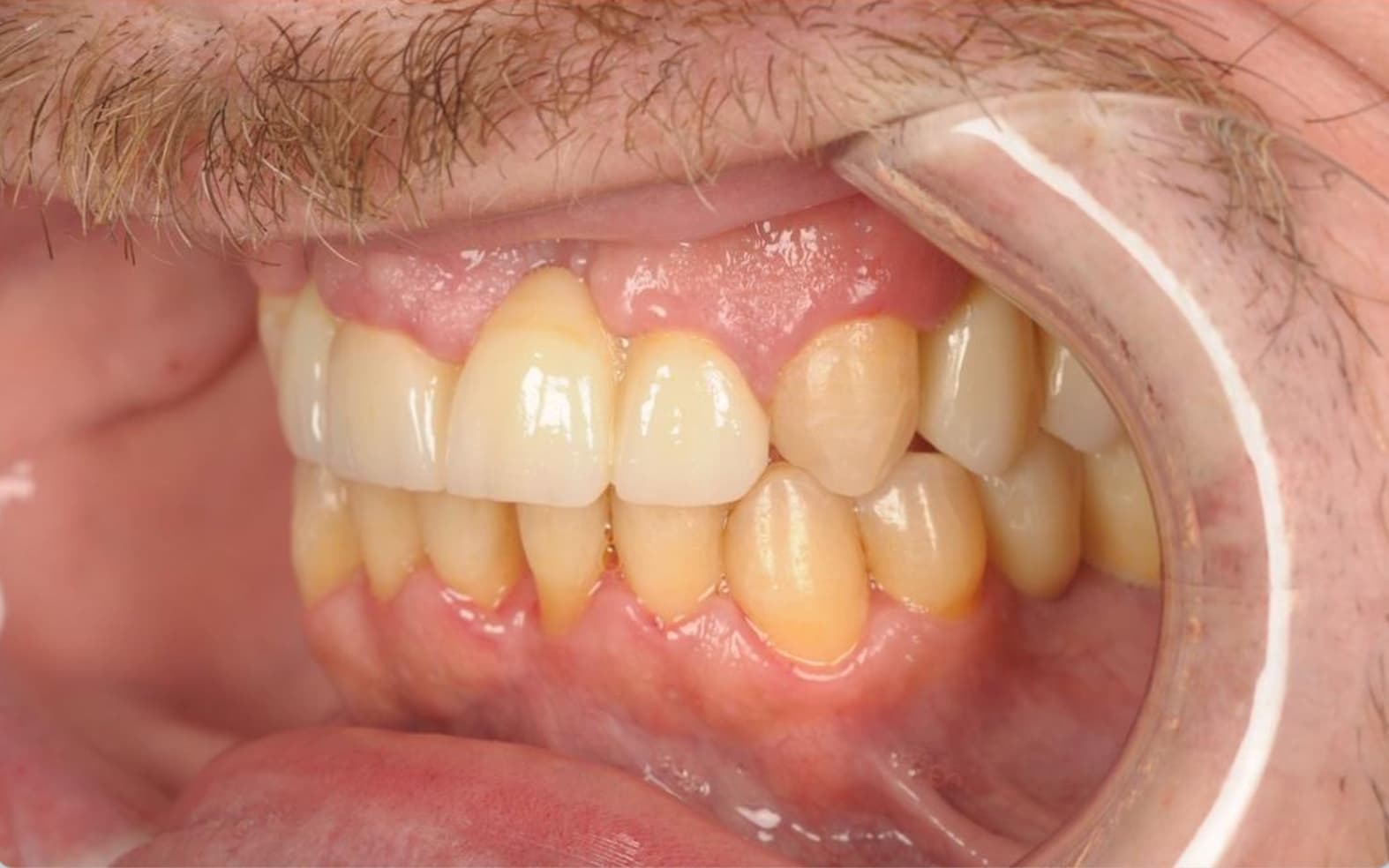
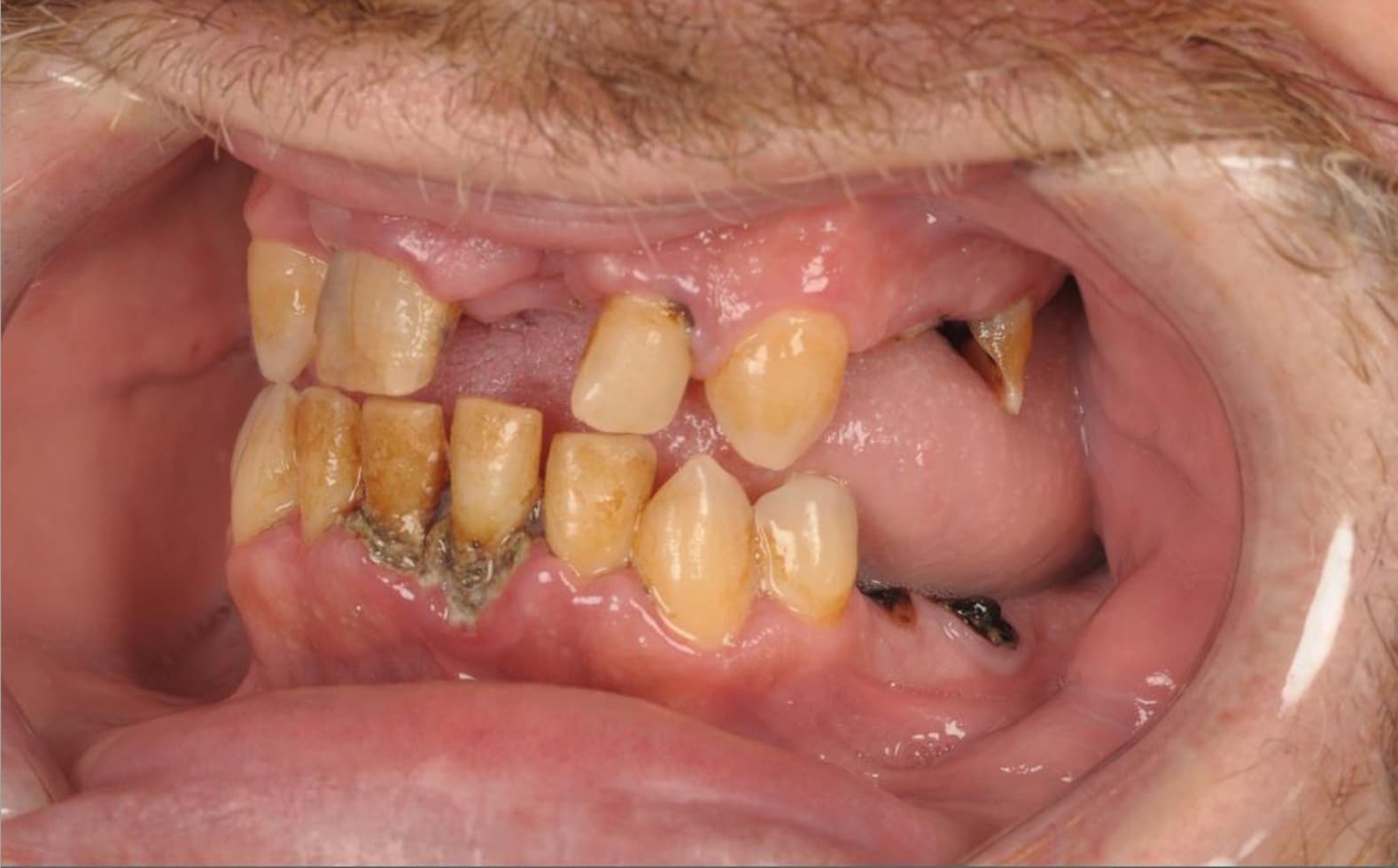
Full Mouth Reconstruction
Full mouth rehabilitation — improved bite and profile
Side view showing the restored bite relationship and facial profile after staged reconstruction.
Treated by Dr Kamran Yazdi
Watch & learn
Explained by our clinicians
Short, plain-English explainers from our clinicians on night guards (teeth grinding) and closely related treatments.
Impacted Wisdom Tooth
Your clinicians
Meet your dentists
Every clinician at our Wimpole Street practice is GDC-registered — numbers published and verifiable on the public register.

Dr Yasha Y Shirazi
Dentist
GDC No. 195843

Dr Kamran Yazdi
Principal Dentist
GDC No. 197926

Dr Andreia Phipps
Dentist
GDC No. 229601

Dr Reza Davari
Dentist
GDC No. 302422

Dr Narges Ameri
Dentist
GDC No. 325081

Dr Ayman Mukhtar
Dentist
GDC No. 302583

Dr Elisabeth Lichtmannegger
Dentist
GDC No. 319325

Dr Niknaz Rostam Yazdi
Dentist
GDC No. 328954

Dr Sam Parsno
Implant Dentist
GDC No. 72207

Jack Button
Dental Hygienist & Therapist
GDC No. 244367
Questions & Answers
Frequently asked questions
Honest answers about night guards (teeth grinding), costs and what to expect. Everything is explained again in person at your consultation with a GDC-registered dentist.
Common signs include flattened or chipped teeth, morning jaw ache, headaches and a partner hearing grinding at night. Your dentist can spot the wear pattern at examination.
Boil-and-bite guards are bulky and poorly retained. A custom guard fits precisely, lasts years and is far more comfortable to sleep in.
Not usually — it protects your teeth from the forces rather than stopping the habit itself. That protection is what prevents wear, chips and cracked restorations over time.
Typically several years, depending on how heavily you grind. The guard is designed to wear so your teeth do not, and we monitor it at your routine check-ups.
Most people adapt within a week or two. Because a custom guard is slim and fits precisely, it is far easier to tolerate than bulky over-the-counter versions.
If there is any evidence of grinding, it is strongly worth considering — a guard is a cost-effective way to help protect cosmetic work, and replacing a guard is far cheaper than repairing a veneer.
Rinse and brush it with cool water and a soft brush each morning, let it dry, and store it in its case. Avoid hot water, which can distort the material.
A custom night guard at our Wimpole Street practice is £595, covering records, laboratory construction, fitting and adjustment, confirmed in a written, itemised quote.
A snug feeling for the first few nights is normal and usually settles as you adapt. A brief odd sensation in your bite on waking, lasting a few minutes, is also common early on. If tightness persists, causes soreness, or the guard rocks or feels loose, come back — a quick chairside adjustment usually resolves it.
Either can work; the choice depends on your bite, any existing dental work and comfort. Upper guards are most common, but a lower guard may suit patients with certain restorations or a strong gag reflex. We recommend the arch that gives the most even contact and the best chance of consistent nightly wear.
Yes — in fact, existing restorations are one of the strongest reasons to have one, since grinding forces are a common cause of chipped porcelain and fractured crowns. The guard is designed around your restorations so it seats without stressing them, and we check the fit again after any new dental work.
At the first visit we examine your teeth and jaw muscles, record the wear pattern and take impressions or a digital scan with a bite record for the laboratory. At the second, usually a week or two later, we fit the guard, adjust the biting surface until it meets evenly and check comfort and retention — a short, straightforward appointment at our Wimpole Street practice.
Yes — Wimpole Dental is regulated by the Care Quality Commission (CQC), and every clinician is registered with the General Dental Council (GDC), with numbers you can verify on the public register. You'll be treated by a named, experienced clinician working to current professional standards — never a rotating locum.
You'll always receive a written, itemised quote before any treatment begins. New patients start with a £30 consultation; flexible payment options may be available — ask at your consultation.
That's very common and completely understood. Your dentist will explain each step in plain English, work at your pace and never pressure you to proceed. Let us know how you feel when you book and we'll make your visit as calm and comfortable as possible.
Sources & further reading
External links open in a new tab. This page was clinically reviewed by a GDC-registered dentist; it is general information, not a substitute for an in-person consultation.
Find Us
Night Guards (Teeth Grinding) on Wimpole Street, London
Contact
020 7183 0692Opening hours
- Monday9:00am – 6:00pm
- Tuesday9:00am – 8:00pm
- Wednesday9:00am – 6:00pm
- Thursday9:00am – 8:00pm
- Friday8:00am – 5:00pm
- Saturday10:00am – 4:00pm
- SundayClosed
Related
More advanced dentistry
Advanced Dentistry
Wisdom Tooth Removal
Wisdom Tooth Removal
Assessment, monitoring and in-house surgical removal of problematic wisdom teeth — including impacted cases.
TMJ / Jaw Pain Treatment
Diagnosis and treatment of jaw joint disorders — clicking, locking, pain and tension headaches — starting non-surgically.
Children's Dentistry
Gentle, positive dental care for children and teenagers — from first visits to fluoride, sealants and alignment screening.
Book Today
Ready to start your smile journey?
Book a £30, no-obligation consultation. You'll leave with a written, itemised plan — and clarity on cost, timeline and options.
22 Wimpole St, London W1G 8GQ · CQC regulated · GDC-registered clinicians