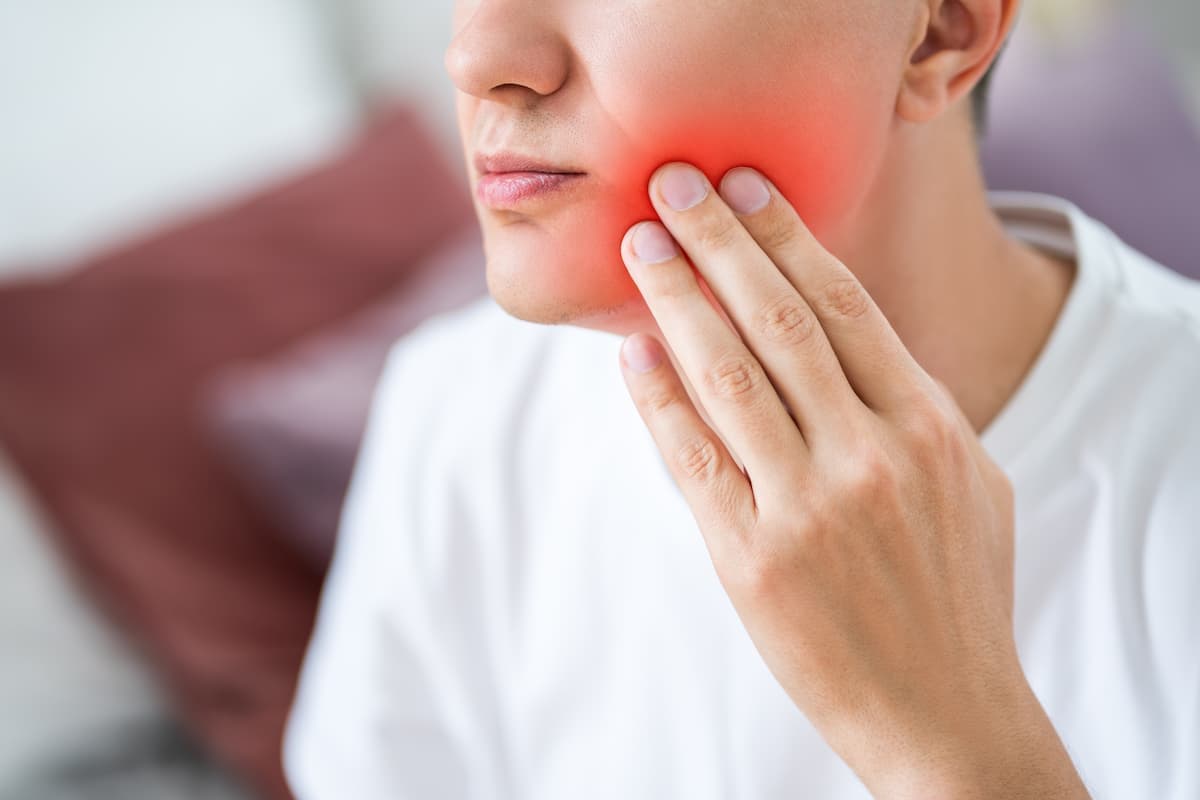
Cold Water Sensitivity: Why It Hurts Broken Teeth So Quickly

The reaction is unmistakable — a sip of cold water and an immediate, sharp jolt from a tooth that felt fine a moment earlier.
What makes it striking is the speed. There is no gradual build-up. The sensation is essentially instantaneous.
That speed is a clue to what is actually happening, and it is not what most people assume.
Why Does Cold Water Hurt a Broken Tooth So Fast?
Is the cold reaching the nerve directly?
No. Dentine is riddled with microscopic tubules running from the outer surface toward the pulp, each filled with fluid. The widely accepted explanation, known as the hydrodynamic theory, is that a sudden temperature change causes rapid movement of that fluid within the tubules. Mechanoreceptors associated with nerve endings at the inner end of the tubules detect this movement and fire. Because fluid movement is essentially instantaneous, the pain arrives immediately — far faster than heat could conduct through the tooth. When a tooth breaks and dentine is exposed, thousands of tubules are opened directly to the mouth, which is why a broken tooth reacts so much more sharply than an intact one.
The Tooth's Normal Defences
Enamel. The outer layer, highly mineralised and containing no nerve supply or tubules. It insulates the dentine beneath from temperature change and physical stimulus.
Cementum. Covers the root surface below the gum, performing a similar though thinner protective role.
Dentine. Softer, permeated by tubules, and directly connected to the pulp. It is not designed to be exposed.
Pulp. The soft tissue core containing nerves and blood vessels.
Smear layer. After any cutting or abrasion, a layer of debris partially occludes exposed tubules and reduces sensitivity. It is easily removed by acid.
An intact tooth is well insulated. Remove the enamel over an area — by fracture, wear, erosion, or recession — and that insulation is gone.
Why Broken Teeth React More Sharply
• A large area of tubules is opened at once, rather than the few exposed by gradual wear
• Freshly exposed tubules are open, without the mineral deposition that gradually narrows them over time
• Fluid movement is unimpeded across the whole fracture surface
• The fracture may be close to the pulp, shortening the distance and increasing the effect
• The pulp may already be inflamed from the trauma, lowering its threshold for firing
• Flexing of the fractured segment under biting adds a mechanical stimulus alongside the thermal one
This last point matters. A tooth with an incomplete fracture can produce pain both on cold and on release of biting pressure, and the combination is characteristic. See cracked tooth.
What Different Patterns Suggest
Sharp pain that stops immediately. Typically consistent with exposed dentine and a healthy pulp. This is the most common and least concerning pattern.
Sharp pain lingering for many seconds or minutes. Suggests the pulp is more significantly inflamed, and the outlook for the nerve is less favourable.
Pain on heat rather than cold. Often a more concerning sign, sometimes associated with a pulp that is severely inflamed or dying. Relief from cold in a tooth that hurts with heat is a recognised warning pattern.
Spontaneous pain, particularly at night. Suggests irreversible pulp inflammation and usually indicates root canal treatment or extraction. See toothache.
Pain on biting and releasing. Points toward a fracture rather than simple sensitivity. See pain when biting.
No pain at all. Does not mean the tooth is fine. A non-vital tooth feels nothing.
These are patterns rather than diagnoses, and they overlap. Testing during an examination is what distinguishes them.
When Professional Dental Assessment May Be Needed
Seek assessment if:
• A tooth has broken or chipped — see broken tooth
• Sensitivity lingers for more than a few seconds after the stimulus
• Pain occurs spontaneously or wakes you
• Heat provokes pain more than cold does
• The tooth hurts when you bite or release
• There is swelling of the gum or face — see facial or jaw swelling
• Sensitivity has developed without any obvious break — see tooth sensitivity
Swelling, fever, or difficulty swallowing needs urgent care. See emergency dentist.
The NHS provides general information about broken teeth at nhs.uk/conditions/broken-tooth/.
Reducing Sensitivity in the Meantime
• Avoid cold drinks and cold air on the tooth where possible
• Drink through a straw to bypass the affected area
• Use a desensitising toothpaste containing potassium nitrate or stannous fluoride, and rub a little onto the area rather than only brushing with it
• Chew on the other side to avoid flexing a fractured segment
• Avoid acidic food and drink, which strip the protective layer over exposed tubules
• Use a soft brush and gentle technique
• Do not apply painkillers directly to the gum, which causes chemical burns
Desensitising toothpaste takes days to weeks to have full effect and does not address the underlying break. It is a holding measure, not a treatment.
Treatment Options
Bonded restoration. Sealing exposed dentine with composite, which is often immediately effective because it physically occludes the tubules. See white fillings.
Onlay or crown. Where a substantial portion of the tooth has broken away or the tooth needs protecting from further fracture. See dental crowns.
Desensitising agents. Professionally applied varnishes and sealers.
Root canal treatment. Where the pulp is irreversibly inflamed. See root canal.
Addressing the cause. Grinding, erosion, or recession all need managing alongside the repair, or the problem recurs. See enamel erosion.
Key Points to Remember
• Cold pain results from fluid movement in dentinal tubules, not direct nerve contact
• The speed of onset reflects fluid movement, which is near-instantaneous
• A break exposes thousands of tubules at once
• Brief sharp pain usually indicates a healthy pulp with exposed dentine
• Lingering pain, spontaneous pain, or heat sensitivity are more concerning
• Absence of pain does not confirm the tooth is healthy
• Desensitising toothpaste is a temporary measure only
Frequently Asked Questions
1. Is it normal for a broken tooth to hurt with cold water?
Yes, and it is the expected consequence of exposed dentine. Brief sharp pain that stops as soon as the cold is removed is the usual pattern and generally indicates the pulp is still healthy.
2. Does cold sensitivity mean I need root canal treatment?
Not by itself. Brief sensitivity usually means exposed dentine rather than pulp damage. Lingering pain, spontaneous pain, or pain worse with heat are the features more associated with needing root canal treatment.
3. Can desensitising toothpaste help?
It can reduce symptoms, working by blocking tubules or reducing nerve excitability, though it takes days to weeks. It does not repair the break, and the tooth still needs assessment.
4. Why does cold hurt more than hot in most broken teeth?
Cold causes rapid outward fluid movement in the tubules, which is a more effective stimulus for the receptors involved than the slower inward movement produced by heat. A shift to heat being worse is a change worth reporting.
5. Should I avoid all cold drinks?
Avoiding them relieves symptoms in the short term, but it is not a solution and can delay assessment. It is reasonable while waiting for an appointment, not as an ongoing strategy.
6. Will the sensitivity settle on its own?
It may reduce over weeks as mineral deposits partially occlude the exposed tubules and the pulp lays down reparative dentine. That does not repair the break, and the tooth remains vulnerable to further fracture and decay.
Conclusion
The sharpness and speed of cold sensitivity in a broken tooth are explained by fluid physics rather than by anything touching the nerve. It is a normal response to dentine being exposed where it was never meant to be.
What the pattern of pain tells you is useful, but it is not a substitute for examination. Brief sensitivity generally means a healthy pulp and a repairable tooth; lingering or spontaneous pain means something more is going on. Either way, a broken tooth needs sealing before decay and further fracture take advantage of it.
If you have a broken or sensitive tooth, you are welcome to book an appointment at Wimpole Dental, 22 Wimpole St, London W1G 8GQ, or call 020 7183 0692.
Dental symptoms and treatment options should always be assessed individually during a clinical examination.
Dental Disclaimer
This article is for general educational information only and is not professional dental advice, diagnosis, or a treatment recommendation. Information here is general and cannot replace an in-person assessment by a qualified, GDC-registered dental professional. Symptoms, suitability, fees, timelines, and outcomes vary according to individual clinical circumstances. If you have pain, swelling, or other concerning symptoms, seek prompt professional dental care. Always request a written treatment plan and cost estimate before proceeding with treatment.
Written Date: 5 August 2026
Next Review Date: 5 August 2027
Written by Dr Kamran Yazdi · reviewed by Dr Kamran Yazdi, GDC 197926
This article is general information, not personal clinical advice. For a diagnosis and a plan tailored to you, book a consultation with a GDC-registered dentist.
Related treatments at our Wimpole Street practice