Should You Have a Dental Check-up Even When Nothing Hurts?
Many people only think about booking a dental appointment when something feels wrong — a twinge of sensitivity, an ache that keeps returning, or visible changes they can no longer ignore. It is entirely understandable. When life is busy and you feel perfectly fine, a routine dental check-up can feel like an unnecessary addition to your calendar.
But the absence of pain is not always a reliable guide to what is happening in your mouth. A routine dental examination serves a different purpose to simply addressing discomfort — and understanding that distinction may shift how you think about attending one.
Why Pain Is Not Always a Reliable Indicator of Oral Health
The mouth is, in many ways, not a reliable reporter of its own condition. Several common dental changes can develop gradually and silently before they produce any sensation at all.
Tooth decay, for example, often begins within the outer layers of the tooth's enamel. In its earlier stages, this process may cause no pain whatsoever. It is only when decay progresses closer to the inner pulp of the tooth — where nerves are present — that discomfort tends to become noticeable. By that point, the extent of the change may be considerably greater than it would have been if identified earlier.
Similarly, gum disease in its early form — often referred to as gingivitis — can be present with minimal or no discomfort. Gums may bleed when brushed or flossed, which many people dismiss or attribute to brushing too hard. Left unaddressed, early gum changes may progress to affect the supporting structures around the teeth.
Changes to the soft tissues of the mouth, including the tongue, cheeks and lips, may also occur without causing obvious symptoms in their early stages. A dentist conducting a thorough oral examination will typically assess these areas as part of a routine appointment.
None of this is intended to suggest that every person who feels well necessarily has an underlying dental concern — that would be misleading and unhelpful. The point is simply that the absence of symptoms is not, on its own, confirmation that no assessment is needed.
What Does a Dentist Actually Assess During a Routine Examination?
A routine dental examination involves considerably more than a quick look at your teeth. The scope of an assessment will vary depending on your individual clinical history, oral health status and risk profile, but may commonly include several areas.
Your Teeth
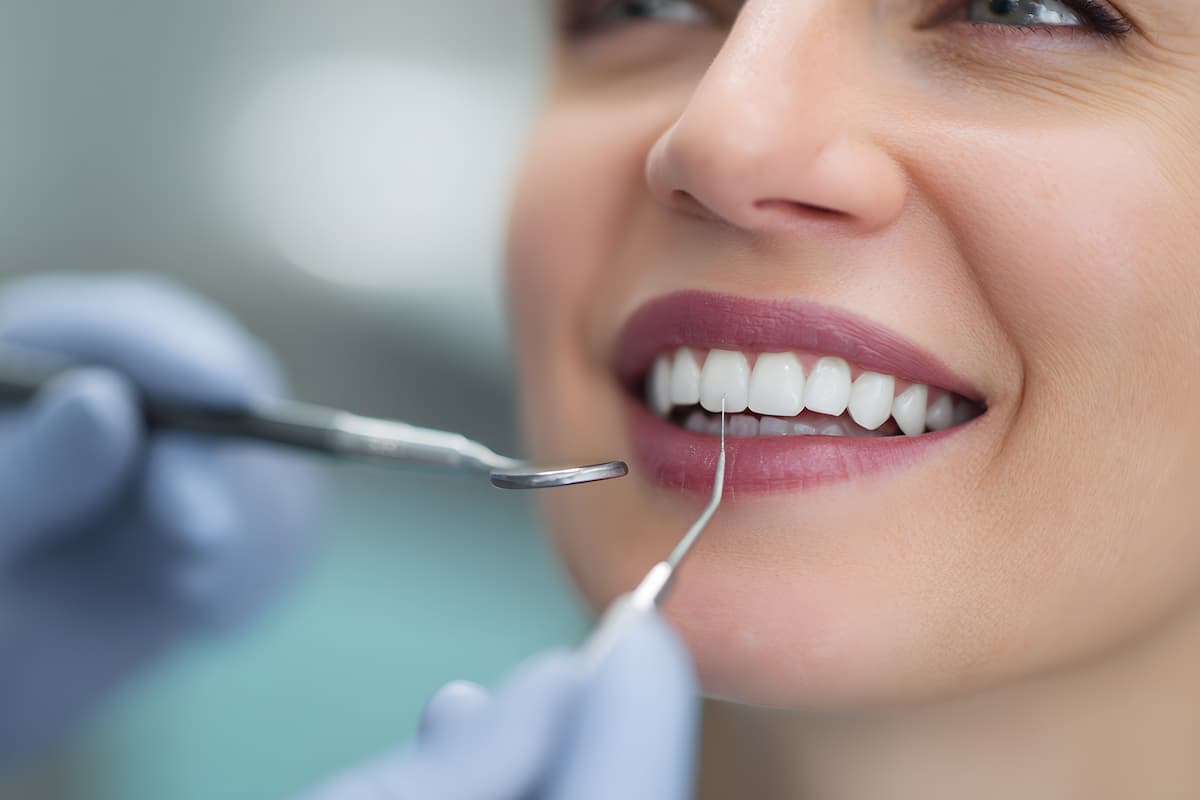
The dentist will examine the surfaces of your teeth, looking for early signs of changes such as decay, erosion or wear. They may use a small mirror and probe to assess areas that are not easily visible to you, including between teeth and at the gumline. Where clinically indicated and appropriate, dental X-rays may be taken — not routinely for every patient, but where they would provide useful additional information that cannot be gathered through visual assessment alone.
Your Gums and Supporting Structures
Gum health is an important part of any oral health assessment. The dentist may examine the gums for signs of inflammation, bleeding, recession or changes in colour or texture. In some cases, gum pocket depths may be measured to assess the health of the supporting bone and tissue around the teeth. Periodontal health is closely connected to long-term tooth stability, which is why it tends to receive careful attention during a thorough examination.
Existing Dental Work
If you have fillings, crowns, bridges, veneers or other restorations, the dentist will assess their condition. Even well-placed dental work can change over time, and monitoring its integrity is a reasonable part of ongoing dental care.
Soft Tissue Assessment
A comprehensive examination includes an assessment of the soft tissues of the mouth — the cheeks, tongue, palate, floor of the mouth and lips. This is a clinically important part of a dental examination that is sometimes less well known to patients.
Your Oral Hygiene
The dentist will typically consider your current oral hygiene and may offer guidance on technique, tools or habits where this would be beneficial. This is educational, not judgemental — the aim is to support your own daily care routine.
Your History and Risk Factors
A dental assessment is not purely clinical. Your medical history, any medications you are taking, lifestyle factors and any changes since your last appointment are all relevant. Factors such as diet, smoking and certain medical conditions can influence oral health, and a dentist who understands your broader picture is better placed to offer appropriate guidance.
How Often Should You Go to the Dentist?
This is one of the most common questions patients ask, and the honest answer is that there is no single answer that applies to everyone.
Current UK dental guidance, including guidance from NICE and the NHS, indicates that individual recall interval advice should be determined based on individual oral health needs and risk assessment, rather than a blanket schedule applied to all patients. Depending on clinical findings, this may mean an interval of anywhere from three months to two years between examinations.
Some patients may have a higher risk of developing tooth decay or gum disease due to their clinical history, medical conditions, medication use or lifestyle. For these individuals, more frequent monitoring may be clinically appropriate. For others who are assessed as being at lower risk and who maintain good oral hygiene, longer intervals may be suitable.
The important thing is that the frequency of your dental examinations is a clinical decision, guided by your dentist's assessment of your individual oral health status. If you are unsure about your recall interval, it is entirely reasonable to ask your dentist to explain their reasoning — a good dental team will be happy to do so.
What If You Feel Completely Well and Have Had No Problems?
It is genuinely good news if you have no symptoms and no recent dental concerns. However, feeling well is not quite the same as having confirmed that all is well. A routine dental examination simply provides a professional clinical perspective that you cannot replicate yourself at home.
For many patients, a check-up confirms that their oral health is in good shape — and that in itself is a worthwhile outcome. It also provides an opportunity to have any questions answered, to review your oral hygiene routine and to ensure that any minor changes are captured early, when they are generally easier to address.
Attending a routine examination does not mean that treatment is inevitable. Many dental appointments result in no treatment at all — simply an assessment, any relevant preventive guidance and an agreed plan for the next appointment. The examination and any subsequent treatment are separate things.
Is a Dental Check-up the Same as a Hygiene Appointment?
This is a common point of confusion and it is worth addressing clearly. A dental examination and a hygienist appointment are different, though they may sometimes be combined or scheduled together.
A dental examination is carried out by a dentist and involves the clinical assessment described above — reviewing teeth, gums, soft tissues, existing restorations and oral health risk factors.
A hygiene appointment, carried out by a dental hygienist or therapist, focuses on what a hygiene visit covers — removing plaque and calculus (tartar) that cannot be removed by brushing and flossing alone — alongside oral hygiene instruction tailored to your needs.
Both can play a complementary role in supporting good oral health. Your dental team can advise on choosing a private hygienist cadence for your situation.
A Word on Dental Anxiety
If the thought of attending a dental appointment makes you anxious — whether you are experiencing symptoms or not — you are far from alone. Dental anxiety is genuinely common and something that a patient-centred dental team should be well equipped to accommodate.
It can be helpful to let the practice know in advance if you feel anxious, so that the team can take a little extra time with you and explain each step of the appointment. A routine dental examination is generally a gentle and straightforward process, and knowing what to expect can help reduce uncertainty.
Avoiding dental visits due to anxiety is understandable, but it can sometimes lead to conditions being identified later than they might otherwise have been. If anxiety is a barrier for you, speaking with the practice about how they support anxious patients is a reasonable first step.
Supporting Your Oral Health Between Appointments
A dental examination is one part of a wider picture. The daily habits you maintain at home form the foundation of good oral health. Brushing thoroughly twice daily with a fluoride toothpaste, cleaning between the teeth with floss or interdental brushes, and being mindful of dietary factors — particularly the frequency of sugary or acidic food and drink — all contribute to maintaining the oral health that your examinations help to monitor.
Your dental team can provide personalised guidance on your home care routine as part of your appointment, and are a good source of practical advice tailored to your specific needs.
When to Seek Professional Advice
If you notice any changes between appointments — including persistent sensitivity, bleeding gums, changes to your soft tissues, loose teeth, discomfort when biting, or anything that concerns you — it is sensible to contact your dental practice without waiting for your next scheduled appointment. You do not need to be in severe pain to seek professional guidance.
Equally, if it has been some time since your last dental examination and you are uncertain about your oral health status, booking an appointment to discuss this with a dentist is a reasonable step.
At Wimpole Dental, our team takes a preventive approach to dental care — focusing on assessment, education and personalised guidance to support the long-term oral health of each patient we see. If needed, you can book a preventive assessment to discuss your individual risk profile.
Frequently Asked Questions
1. Do I need a dental check-up if I have no pain at all?
Yes, a dental examination may still be worthwhile even when you have no discomfort. Pain is not always an early indicator of oral health changes, and a routine examination allows a dentist to assess areas that you cannot evaluate yourself. Many patients leave a routine appointment with a clean bill of health, which is a reassuring outcome in itself.
2. Can dental problems really develop without any symptoms?
Yes, this is clinically possible. Early tooth decay can develop within the enamel before reaching the nerve, meaning it may cause no sensation in its initial stages. Similarly, early gum inflammation may produce only subtle signs such as occasional bleeding, which patients sometimes overlook. This does not mean every symptom-free patient has a hidden problem — but it does mean that professional assessment can provide useful information.
3. How long can I leave it between dental check-ups?
This depends on your individual oral health status and clinical risk assessment, as determined by your dentist. Current UK dental guidance indicates that recall intervals should be personalised rather than fixed for all patients. Some individuals may benefit from more frequent appointments; others may be assessed as appropriate for a longer interval. Your dentist can advise on what is suitable for you.
4. Will I need X-rays at every dental check-up?
Not necessarily. Dental X-rays are not a routine requirement at every examination. They are taken where they are clinically indicated — for example, to assess areas between teeth that cannot be visually examined, or where there is a clinical reason to investigate further. Your dentist will explain why X-rays have been recommended if they suggest them.
5. What happens if the dentist finds something during my check-up?
If a dentist identifies something during a routine examination, they will discuss their findings with you, explain what they have observed and outline the options available to you. In some cases, monitoring and watchful waiting may be appropriate. In others, intervention may be recommended. No treatment should take place without your informed consent, and you are always entitled to ask questions and take time to consider your options.
6. Is a dental check-up uncomfortable?
A routine dental examination is generally a gentle process. The dentist uses small instruments to carefully look at your teeth and soft tissues. Some patients may experience minor sensitivity when the gumline is being assessed, but the examination itself is not intended to cause discomfort. If you find any part of the appointment uncomfortable, you can let the dentist know and they can adjust their approach.
7. Does a dental check-up include a hygiene clean?
Not automatically. A dental examination and a hygiene appointment are two separate things, though they are sometimes scheduled together. A hygienist carries out professional cleaning to remove plaque and calculus. Your dental team can advise whether a hygiene appointment alongside your examination would be beneficial for your oral health.
8. I had treatment recently — do I still need a routine check-up?
Yes, in most cases. Recent treatment does not remove the need for ongoing assessment. Your dentist will usually advise when your next appointment should be following any treatment, and this will form part of your agreed recall schedule going forward.
9. What can I do if I am nervous about attending?
It is helpful to let the practice know in advance that you feel anxious. A patient-focused dental team can explain each step of the appointment before it begins, allow extra time and check in with you throughout. Many patients find that understanding what to expect during a routine examination significantly reduces their anxiety over time.
10. Will attending regular check-ups ensure my teeth stay healthy?
No — and it would not be accurate to suggest otherwise. Routine examinations support the ongoing monitoring of your oral health and provide an opportunity for preventive guidance, but they work alongside your daily oral hygiene habits rather than replacing them. The combination of good home care and professional examinations at appropriate intervals offers the most consistent foundation for long-term oral health.
--- ---
Dental Disclaimer
This article is for general educational information only and does not replace a personal dental examination. Advice, diagnosis, and treatment decisions should always be based on an assessment by a GDC-registered dental professional. If you have symptoms or concerns, please seek prompt professional dental care.
Written Date: 9 October 2026 | Next Review Date: 9 October 2027
Written by Wimpole Dental Editorial Team · reviewed by Dr Yasha Y Shirazi, GDC 195843
This article is general information, not personal clinical advice. For a diagnosis and a plan tailored to you, book a consultation with a GDC-registered dentist.
Related treatments at our Wimpole Street practice