Do University Students Get Free Dental Care in the UK?
Article structure reflects 80–90% educational depth, with a soft, secondary call to action.
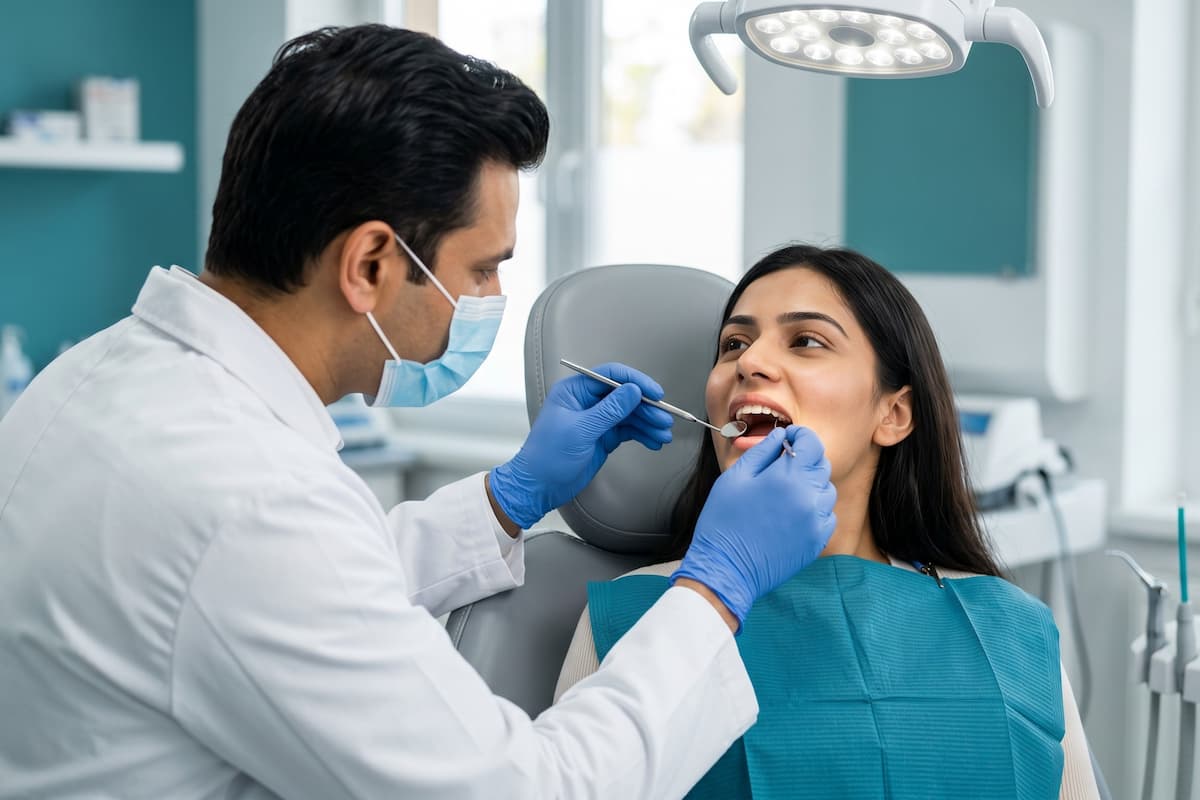
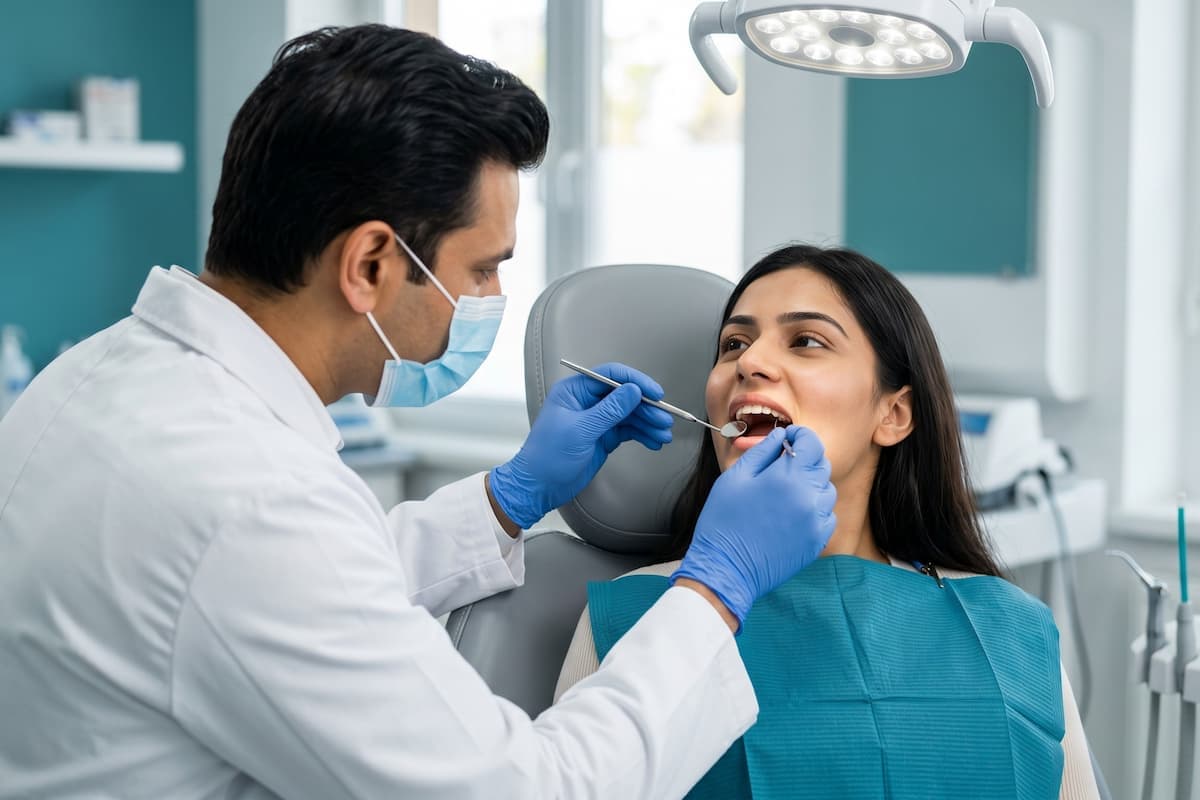
!A professional dental examination in progress at a modern private dental practice A routine dental examination is an important part of maintaining long-term oral health, whatever your student status.
Starting university brings a great deal of financial pressure. Tuition fees, accommodation costs and day-to-day living expenses occupy a significant portion of most students' minds — and dental care can easily fall to the bottom of the priority list. A common question among students, parents and young adults is: do university students get free dental care in the UK?
The straightforward answer is that university attendance alone does not automatically entitle a student to free NHS dental treatment in England. Whether you qualify for free or reduced-cost dental care depends on your age, your specific circumstances and whether you meet the relevant NHS exemption criteria. Understanding exactly how the system works can help you make informed decisions about your oral health during your studies.
Direct Answer — Do University Students Get Free Dental Care? In England, being enrolled at university does not automatically qualify a student for free NHS dental treatment. Eligibility depends on specific criteria: students under 18, or under 19 and in qualifying full-time education, are generally entitled to free NHS dental care. Students aged 19 and above must meet separate exemption or financial assistance criteria to receive help with NHS dental costs.
NHS Dental Eligibility for Students in England
NHS dental treatment in England operates within a structured exemption framework. Free treatment is not universal — it is targeted at individuals who meet certain age thresholds, hold qualifying benefits, or qualify through the NHS Low Income Scheme.
For students studying in England, the relevant factors are:
• Age at the time of treatment
• Education status (whether you are in qualifying full-time education)
• Income and financial circumstances
• Whether you receive certain qualifying benefits
• Whether you hold a valid HC2 certificate
It is worth noting that the rules described throughout this article reflect the arrangements in England. NHS dental eligibility and charging structures operate differently in Scotland, Wales and Northern Ireland, where separate arrangements apply. If you are studying outside England, it is advisable to check the relevant guidance for your nation directly through the NHS or your devolved health authority.
Students Under 18 and Those Under 19 in Full-Time Education
Students under the age of 18 are entitled to free NHS dental treatment in England, regardless of their education status. This is a straightforward exemption based on age alone.
For students aged 18, there is an important extension of this exemption. According to current NHS eligibility guidance, individuals who are under 19 years old and in qualifying full-time education are also entitled to free NHS dental treatment. This means that a student who turns 18 or is still 18 when they begin university — and remains under 19 at the time of their dental appointment — may still qualify for free treatment, provided their education status meets the relevant criteria.
This exemption is specifically tied to age and qualifying education status together. It is not simply a matter of being enrolled at university. The student must be under 19 and in qualifying full-time education at the time of treatment.
Maintaining a regular dental examination during this period is important. Early university years are an opportunity to establish good preventive dental habits before the automatic age-based exemption comes to an end.
Do 19-Year-Old Students Pay for Dental Treatment?
This is one of the most frequently asked questions from students and families navigating NHS dental eligibility in the UK.
Once a student turns 19, the age and full-time education exemption described above no longer applies. Students aged 19 and over do not automatically receive free NHS dental treatment simply because they are attending university. At 19 and above, university enrolment itself is not a recognised NHS dental exemption category.
This often surprises students who have always received free dental treatment and assume their entitlement continues throughout higher education. Unfortunately, the transition can happen quite abruptly — a student who turns 19 during their first year of university may find they are now responsible for NHS dental charges.
However, turning 19 at university does not necessarily mean paying full NHS dental charges without any support. There are other pathways that may help, depending on individual financial circumstances.
Understanding NHS Dental Charges in England
For those who do not qualify for a full exemption, NHS dental treatment in England is currently organised into three charge bands. These bands cover everything from examinations and X-rays through to more complex restorative and orthodontic treatment. NHS dental charges are set centrally and represent a contribution towards the cost of treatment — the NHS subsidises the remainder.
The specific current charge amounts are set by the NHS and are periodically updated. Students should check the current NHS dental charge rates directly on the NHS website or confirm them with their dental practice at the point of booking.
How the NHS Low Income Scheme Can Help Students
For students aged 19 and above who do not qualify through an exemption category, the NHS Low Income Scheme (LIS) may provide meaningful financial assistance with NHS dental costs.
According to current NHSBSA guidance, the NHS Low Income Scheme is designed to help people on low incomes who are not automatically exempt from NHS charges. University students — particularly those living on student loans without substantial additional income — may be eligible to apply.
The scheme works by assessing your financial circumstances, including income, savings and regular outgoings. Based on this assessment, you may receive either:
• An HC2 certificate, which provides full help with NHS dental charges
• An HC3 certificate, which provides partial help with NHS dental charges
It is important to understand that eligibility for the scheme depends entirely on your individual financial situation. Not every student with a low income will automatically qualify, and the scheme does not cover private dental treatment — it applies only to NHS dental charges.
What Is an HC2 Certificate?
An HC2 certificate entitles the holder to full help with the cost of NHS dental treatment. If you hold a valid HC2 certificate, you should not be required to pay NHS dental charges for the duration of its validity. You must present your certificate at your dental practice before treatment commences.
What Is an HC3 Certificate?
An HC3 certificate provides partial help with NHS dental charges. It reduces the amount you are required to pay but does not eliminate the charge entirely. The amount of reduction depends on your individual financial assessment.
You can apply for the NHS Low Income Scheme by completing form HC1, which is available through the NHS Business Services Authority (NHSBSA) and certain NHS treatment sites. Students should apply before their dental appointment where possible, as the certificate must typically be valid at the time of treatment.
Qualifying Benefits and Other NHS Exemption Categories
Regardless of age, certain individuals are automatically exempt from NHS dental charges in England if they are receiving specific qualifying benefits. Students who receive any of the following may be entitled to free NHS dental treatment:
• Universal Credit, subject to applicable income and earnings conditions
• Income Support
• Income-related Employment and Support Allowance (ESA)
• Pension Credit Guarantee Credit
• Other prescribed NHS exemption categories
Current NHS eligibility guidance sets out the precise conditions attached to each of these benefits. If you are a student receiving Universal Credit, for example, it is important to verify whether your specific circumstances meet the conditions required for a dental treatment exemption, as not all Universal Credit claimants automatically qualify.
Always confirm your exemption status with your dental practice before treatment. If you claim an exemption you are not entitled to, you may face a penalty charge.
NHS Dental Treatment and Private Dental Treatment — An Important Distinction
One of the most common points of confusion among students relates to the difference between NHS dental treatment and private dental treatment.
NHS exemptions and Low Income Scheme assistance apply only to NHS dental treatment. If you attend a private dental practice, or receive private treatment within a mixed NHS/private practice, your NHS exemption or HC2 certificate will not cover the private element of your care.
Before booking any dental appointment, students should:
1. Confirm whether the practice offers NHS dental treatment
2. Confirm whether NHS appointments are currently available
3. Clarify whether any element of the proposed treatment will be provided privately
4. Ask for a written treatment plan and cost estimate before consenting to treatment
This is particularly important in London, where a number of dental practices operate on a predominantly or exclusively private basis. At Wimpole Dental on Wimpole Street, care is provided on a private basis — which means NHS exemptions do not apply to treatment provided here. Understanding this distinction helps students make informed decisions about where to seek care and what costs to expect.
You can read more about what a private dental examination typically involves, to help you understand what to expect from a thorough dental assessment.
Dental Care for International University Students
International students studying in the UK often have additional questions about their entitlement to NHS dental treatment.
As a general principle, individuals who are ordinarily resident in the UK and who have been given leave to remain for more than six months may be entitled to access NHS services, including NHS dental treatment. However, the specific rules depend on visa type, length of stay, the student's country of origin, and any applicable reciprocal healthcare arrangements.
International students who are uncertain about their eligibility should:
• Contact their university's student services team for guidance
• Check the NHS and GOV.UK websites for current overseas visitor guidance
• Confirm their status with an NHS dental practice directly
It is important not to assume entitlement. NHS dental practices are required to verify eligibility and patients who access NHS treatment they are not entitled to may be required to pay the full cost of that treatment.
Student Dental Discounts at Private Practices
Some private dental practices choose to offer student discounts or reduced-rate treatments as a matter of their own commercial policy. These are entirely separate from NHS exemptions or the NHS Low Income Scheme.
It is not possible to state that every private dental practice offers student discounts, as this varies between individual practices. If cost is a concern, it is reasonable to ask a private practice directly whether they have any student pricing arrangements or flexible payment options available.
It is important to understand the distinction:
None of these categories overlap automatically. An NHS exemption does not reduce the cost of private treatment, and a private student discount has no bearing on NHS eligibility.
Preventive Dental Care for University Students
Regardless of which category you fall into, preventive dentistry remains the most cost-effective long-term strategy for maintaining your oral health throughout university.
Attending routine dental examinations — even when you feel there is nothing wrong — allows your dentist to identify early-stage problems before they develop into more complex and costly issues. The General Dental Council (GDC) encourages all patients to maintain regular contact with a dental professional, tailored to their individual clinical needs.
Good preventive habits during university years include:
• Brushing twice daily with a fluoride toothpaste
• Cleaning between teeth daily using floss or interdental brushes
• Attending routine dental examinations at a frequency recommended by your dentist
• Maintaining a balanced diet and limiting sugary foods and drinks
• Being mindful of the oral health implications of lifestyle choices common during student years, including alcohol consumption and tobacco use
A strong foundation of preventive dental care during your student years can significantly reduce the risk of needing more complex treatment later in life.
Finding Dental Care in London as a Student
London has a wide range of dental practices, spanning NHS, private and mixed providers. Students based in London should be aware that NHS dental availability varies considerably across the city. NHS dental practices in many London boroughs operate waiting lists or may not be accepting new patients.
If you are entitled to NHS treatment, the NHS website's 'Find a dentist' tool is the recommended starting point for locating an NHS practice accepting new patients in your area.
If you are considering private dental care in London — whether for the quality of care, appointment availability, or access to a broader range of treatments — Wimpole Dental is located in the heart of London's medical and healthcare district on Wimpole Street, W1. Our team provides comprehensive private dental care with a strong emphasis on preventive dentistry and long-term oral health.
We encourage students — particularly those transitioning away from childhood dental care for the first time — to establish a relationship with a dentist early. Knowing what to expect from a thorough dental check-up can make the experience feel far less daunting.
How to Check Your NHS Dental Eligibility
Before attending any dental appointment, students should take a moment to verify their eligibility status. The following steps can help:
1. Check your age and education status — Are you under 18, or under 19 and in qualifying full-time education?
2. Check your benefit entitlements — Are you receiving Universal Credit, Income Support or another qualifying benefit?
3. Consider the NHS Low Income Scheme — If your income is low, obtain form HC1 from the NHS or NHSBSA and apply for an HC2 or HC3 certificate before your appointment
4. Confirm with the practice — Always inform the dental practice of your claimed exemption before treatment begins, and present any relevant documentation
5. Distinguish NHS from private treatment — Confirm whether the practice and your specific treatment are NHS or private
Official eligibility guidance is available through the NHS Business Services Authority (NHSBSA) and NHS.uk. These are the authoritative sources for current exemption categories, charge band amounts and Low Income Scheme application processes.
A Note on Maintaining Oral Health Under Financial Pressure
It is entirely understandable that dental appointments feel like an expense that can be deferred when money is tight. Many students delay visiting the dentist for this reason. However, dental problems rarely resolve on their own, and early treatment is almost always simpler, faster and less costly than treatment for an advanced condition.
If cost is a barrier, checking your eligibility thoroughly — including through the NHS Low Income Scheme — is always worthwhile before concluding that dental care is unaffordable. Many students are unaware that financial assistance may be available to them.
Frequently Asked Questions
1. Does being enrolled at university automatically entitle me to free NHS dental treatment?
No. University enrolment alone is not a recognised NHS dental exemption category in England. Your entitlement to free or reduced-cost NHS dental treatment depends on your age, education status, any qualifying benefits you receive, and your financial circumstances. Always verify your specific situation against current NHS eligibility criteria before claiming an exemption.
2. What happens to my dental entitlement when I turn 19 at university?
Once you turn 19, the age and full-time education exemption ends. You will no longer be automatically entitled to free NHS dental treatment simply because you are a university student. However, you may still qualify for assistance through other exemption categories — such as qualifying benefits — or through the NHS Low Income Scheme, depending on your individual circumstances.
3. Can part-time students claim free NHS dental treatment?
The qualifying full-time education exemption for students under 19 is specifically linked to full-time education. Part-time students do not generally qualify under this particular exemption. However, they may still be eligible through other routes, such as qualifying benefits or the NHS Low Income Scheme, depending on their financial situation.
4. Do international students in the UK qualify for free NHS dental treatment?
This depends on a number of factors, including visa type, length of permitted stay and the student's individual circumstances. Some international students may be entitled to access NHS services, while others may not. International students should check their eligibility carefully through GOV.UK and NHS guidance, and confirm their status with an NHS practice before attending. Do not assume entitlement without verification.
5. What is the difference between an HC2 and an HC3 certificate?
An HC2 certificate provides full help with NHS dental charges, meaning the holder should not be required to pay any NHS dental treatment costs while the certificate is valid. An HC3 certificate provides only partial help, reducing — but not eliminating — the amount payable. Both are issued through the NHS Low Income Scheme following an assessment of financial circumstances, and both apply only to NHS dental treatment, not private treatment.
6. I am a student receiving Universal Credit. Am I automatically exempt from NHS dental charges?
Not necessarily. Receiving Universal Credit does not automatically entitle every claimant to free NHS dental treatment. The exemption for Universal Credit claimants is subject to specific income and earnings conditions. You should check the current NHS eligibility guidance carefully or contact the NHSBSA to confirm whether your particular Universal Credit circumstances qualify you for a dental treatment exemption.
7. Will a private dental practice student discount apply to any treatment I need?
This depends entirely on the individual dental practice. Some private practices may offer student pricing on certain treatments as part of their own policy, but this varies and is not guaranteed. A private student discount is entirely separate from NHS exemptions and the NHS Low Income Scheme. It is worth asking a practice directly about any student arrangements before booking, rather than assuming a discount will be available.
8. Can I use an HC2 certificate at a private dental practice?
No. HC2 certificates issued through the NHS Low Income Scheme apply only to NHS dental treatment. If you attend a private dental practice, your HC2 certificate will not cover the cost of private treatment. Always confirm whether a practice offers NHS treatment before assuming your certificate will be applicable.
9. What should I do if I am unsure whether my dental appointment is NHS or private?
Before confirming your appointment and certainly before consenting to any treatment, ask the dental practice directly whether the appointment and proposed treatment are being provided under the NHS or on a private basis. NHS practices are required to provide a treatment plan setting out the proposed care and the applicable charges. If in doubt, ask for written clarification before proceeding.
10. Is dental care treated differently in Scotland, Wales and Northern Ireland compared to England?
Yes. Dental charging arrangements and eligibility rules differ across the four nations of the UK. Notably, NHS dental treatment has been free for all residents of Wales since 2006 (subject to current arrangements), and Scotland and Northern Ireland each operate their own frameworks. The information in this article primarily reflects the arrangements in England. Students studying outside England should consult the relevant NHS or health authority guidance for their nation.
Dental Disclaimer
The information provided in this article is intended for general educational and informational purposes only. It relates to NHS dental eligibility, dental charging arrangements and financial assistance options as they apply broadly to university students in the UK, with particular reference to England. This content does not constitute professional dental advice, clinical guidance or a formal assessment of any individual's dental health needs or financial eligibility. Eligibility for NHS dental treatment, the NHS Low Income Scheme and related financial assistance depends on individual circumstances, which are subject to change. NHS charging arrangements and exemption criteria are set centrally and may be updated. Readers are encouraged to verify their eligibility directly through the NHS, the NHS Business Services Authority (NHSBSA) or GOV.UK, and to seek appropriate professional dental advice from a registered dental professional before making decisions about their dental care. Wimpole Dental operates as a private dental practice; NHS exemptions do not apply to private dental treatment provided at this practice. The Care Quality Commission (CQC) and General Dental Council (GDC) set the standards that govern regulated dental care in England.
Written Date: 25 November 2026 Next Review Date: 25 November 2027
Written by Wimpole Dental Editorial Team · reviewed by Wimpole Dental Clinical Team
This article is general information, not personal clinical advice. For a diagnosis and a plan tailored to you, book a consultation with a GDC-registered dentist.