Superglue on a Dental Crown: Why Dentists Advise Against It

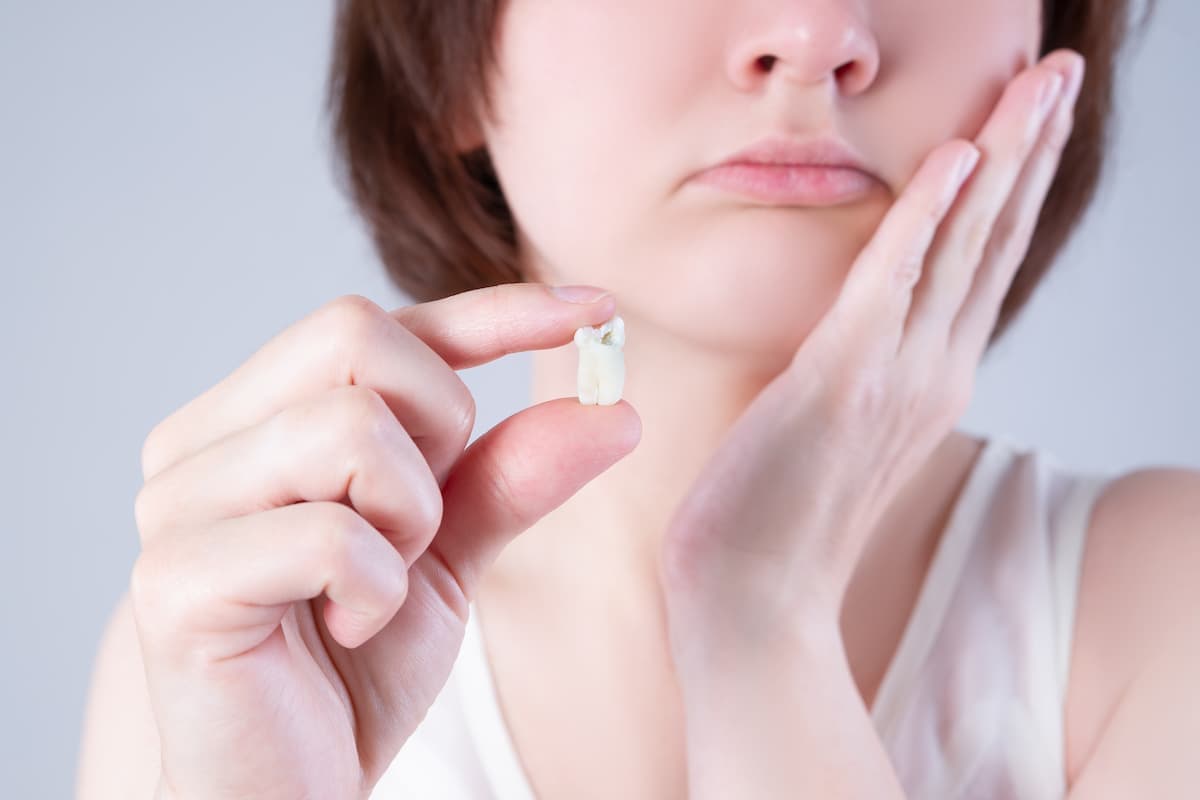
A crown comes off on a Friday evening. It is intact, the tooth underneath does not hurt much, and there is a tube of superglue in the kitchen drawer. The reasoning is easy to follow: it is only going back where it came from, and it can be sorted out properly next week.
The reason dental professionals advise against this is not squeamishness about household products. It is that cyanoacrylate — the chemistry behind superglue — behaves in ways that create specific and often avoidable problems in the mouth. This article explains what those are, without overstating the case.
What cyanoacrylate actually does
Superglue polymerises on contact with moisture. That is the whole mechanism: trace water on a surface triggers a rapid chain reaction that turns the liquid monomer into a solid polymer.
In a dry workshop, the tiny amount of ambient moisture on the parts gives a controlled, thin bond line. In the mouth, the surfaces are saturated. Polymerisation happens almost instantly and with considerable heat release, and it happens before the crown can be seated fully.
This produces the first practical problem. Crowns fit with a film thickness of tens of microns. A layer of prematurely hardened adhesive sitting between the crown and the tooth is thicker than that. The crown sits high. A crown seated even a fraction of a millimetre high takes the full biting force before the neighbouring teeth make contact, which loads a tooth that has just been through a failure. Patients who do this frequently describe the bite feeling wrong, and then experience discomfort in the days that follow.
The second problem is that the resulting bond is not what people expect. Cyanoacrylate is strong in tension along its bond axis and weak in shear and peel. Chewing applies shear and peel. Combined with continuous hydrolytic breakdown in a warm, wet, enzymatically active environment, the bond degrades. The crown usually comes off again — often days later, sometimes when it is least convenient, and sometimes while eating, with the attendant risk of swallowing or inhaling it.
What it does to the tooth underneath
Cyanoacrylate hardens into a rigid, irregular layer that bonds tenaciously to dentine.
Removing it is not straightforward. Because it has no distinct boundary from the tooth visually, it usually has to be taken off with a bur, which removes some tooth structure with it. For a tooth that has already been prepared for a crown, and has therefore already lost a significant amount of structure, this matters. Where the tooth was already marginal for retention, the loss can be the difference between re-cementing a crown and needing a different plan altogether.
There is also a pulpal consideration. The reaction is exothermic, and heat applied to prepared dentine can irritate the pulp. On a vital tooth — one that has not had root canal treatment — this may contribute to sensitivity or, less commonly, to pulp inflammation that needs treating in its own right.
And the adhesive tends to be forced beyond the crown margin into the gum sulcus, where it sits as a rigid, rough foreign body against soft tissue. The predictable result is localised inflammation and bleeding around that tooth.
What it does to the crown
This is the part that often decides the financial outcome.
A crown that has come off cleanly can frequently be cleaned and re-cemented, provided the tooth underneath is sound and the crown is undamaged. That is a short appointment.
A crown with hardened cyanoacrylate inside it is a different proposition. The internal surface of a crown is precisely shaped to the preparation. Cleaning hardened adhesive out of that surface without altering it is difficult, and in many cases not achievable. Once the internal fit is compromised, the crown will not seat correctly, and a new one has to be made.
So the attempt to avoid a visit often converts a re-cementation into a remake. Our article on what to do when a crown comes loose while eating covers the sequence that keeps re-cementation possible.
Why professional cements are different
Dental cements are engineered around the constraints of the oral environment rather than despite them.
They are formulated to have a working time long enough to seat the crown fully before setting begins. They set to a controlled film thickness. Many release fluoride at the margin, where secondary decay is most likely to start. They have been assessed for biocompatibility with pulp and gingival tissue, which household adhesives have not been. And critically, the dentist can isolate and dry the preparation, check the seating, remove excess cement from the margin and verify the bite before the patient leaves.
The internal fit and the behaviour of the cement layer are more consequential than most patients realise. Our article on the internal fit of dental crowns and cement washout covers why crowns come loose in the first place.
Why the crown came off matters more than reattaching it
A crown that de-bonds is a symptom, not the problem. Common underlying reasons include:
Decay at the margin. The most frequent cause. The cement seal has been breached and decay has progressed under the crown, removing the structure the cement was bonded to. Re-gluing the crown over active decay traps the process out of sight, and because a crowned tooth that has had root canal treatment has no nerve, there may be no pain to signal what is happening.
Insufficient retention. A short or over-tapered preparation relies heavily on the cement. These crowns come off repeatedly.
Occlusal overload. Heavy contact or grinding produces forces that fatigue the cement seal.
Core failure. Where the crown sits on a build-up, failure of that build-up can release the crown. Our article on core build-up requirements for crowns explains the mechanics.
Fracture of the underlying tooth. Sometimes a crown comes off because the tooth beneath has fractured, in which case the tooth needs assessment before anything is reattached.
A dentist examines the tooth and the inside of the crown to work out which of these applies. That information is lost once adhesive has been introduced.
What to do instead
Retrieve the crown and keep it. Rinse it under cold water — with the plug in the sink — and store it somewhere safe and dry.
Do not attempt to reattach it with household products. This includes superglue, epoxy, chewing gum and denture adhesive.
Contact a dental practice promptly. Even if there is no pain. The prepared tooth underneath is exposed dentine and can become sensitive, and neighbouring teeth can drift into the space over a period of weeks, after which the crown may no longer fit.
Consider pharmacy temporary cement carefully. Preparations sold for this purpose are designed to be removable and are less likely to cause the problems described above. They are intended for very short-term use, and applying one that prevents the crown seating fully causes its own difficulties. If you use one, mention it when you attend.
Protect the tooth in the meantime. Chew on the other side. Keep the prepared tooth clean — it is more vulnerable to decay than an intact tooth. A sensitivity toothpaste applied to the area may help with cold sensitivity.
Watch for signs that need urgent attention. Pain that builds, swelling, or a bad taste suggests something beyond a simple de-bond. Our article on broken crown emergency care covers these situations, and where the crown sits on an implant, our article on whether a loose implant crown is an emergency is more relevant.
If you have already used superglue
It happens, and it is worth being straightforward about it rather than hoping it goes unnoticed.
Tell the dental practice what you used when you make the appointment. It affects how long they need to allocate and what they need to prepare. Do not attempt to prise the crown off yourself — you risk fracturing the tooth. Note whether your bite feels different, since a high crown loading a compromised tooth is the more immediate concern.
The outcome varies. Sometimes the crown can be removed, the adhesive cleaned off and the crown re-cemented. Sometimes the crown needs remaking. Occasionally the tooth requires further work before anything can be placed. Which of these applies depends on how much adhesive was used, how long it has been in place, and the condition of the tooth beneath.
Key points
• Cyanoacrylate hardens on contact with moisture, so in a wet mouth it sets before the crown seats fully, leaving the crown high.
• The bond is weak in shear and degrades in the oral environment, so the crown typically comes off again.
• Hardened adhesive usually has to be removed with a bur, costing further tooth structure.
• Adhesive inside the crown often makes the crown unusable, converting a re-cementation into a remake.
• A crown coming off is a symptom — decay, retention failure, overload or tooth fracture — that needs diagnosing.
• Keep the crown, avoid household adhesives, and arrange a prompt appointment.
Frequently Asked Questions
What happens if I have already used superglue on my crown?
Tell the practice when you book so they can allow time. Depending on how much adhesive was used and how long it has been in place, the crown may be removable and re-cementable, or it may need remaking. Do not attempt to remove it yourself.
Is pharmacy temporary dental cement safe to use?
Preparations sold for this purpose are formulated to be removable and biocompatible, and are less likely to cause the problems described here. They are intended for very short-term use until you can be seen, and they are not a substitute for assessment.
Why did my crown come loose in the first place?
Common reasons include decay at the margin, insufficient retention in the underlying preparation, heavy biting forces, failure of the core build-up, or fracture of the tooth. Determining which applies requires examining both the tooth and the inside of the crown.
Can I eat normally with a loose crown?
It is safer to remove it and keep it than to leave it loosely in place, because a loose crown can be dislodged while eating. If it is off, chew on the opposite side and avoid hard or sticky foods on that tooth.
How long can I leave the tooth without the crown?
Not indefinitely. Exposed prepared dentine is sensitive and more prone to decay, and adjacent and opposing teeth can move within weeks, after which the crown may no longer fit. Arrange an appointment promptly even if there is no pain.
Will the same crown go back on?
Often, if it is undamaged, the tooth is sound and no household adhesive has been used. Those conditions are what make the difference between a short appointment and a new crown.
Next Steps
If a crown has come loose or come off, keep it safe and contact our team to arrange a prompt appointment. Urgent situations can be discussed with our emergency dentist service, and treatment may involve re-cementing or replacing dental crowns.
Dental Disclaimer
This article is provided for general information only and does not constitute dental advice. A loose or lost crown should be assessed by a qualified dental professional, as the underlying cause can only be determined through clinical examination and radiographs. Outcomes vary between individuals. If you experience pain, swelling or difficulty swallowing, seek urgent professional care.
Next review due: 9 September 2027
Written by Dr Elisabeth Lichtmannegger · reviewed by Dr Elisabeth Lichtmannegger, GDC 319325
This article is general information, not personal clinical advice. For a diagnosis and a plan tailored to you, book a consultation with a GDC-registered dentist.
Related treatments at our Wimpole Street practice