Airflow Polishing vs Traditional Scaling for Sensitive Teeth
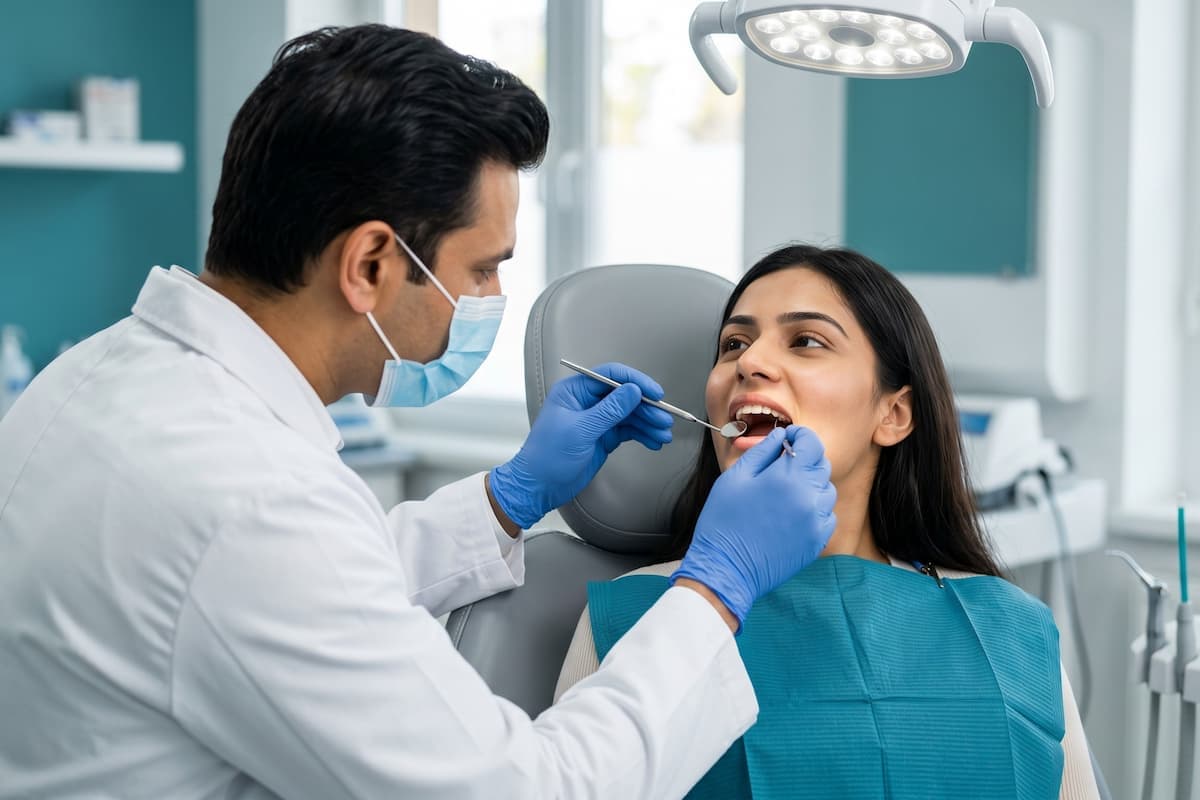
Patients with sensitive teeth often arrive at a hygiene appointment braced for the worst, and frequently ask whether airflow polishing can replace scaling altogether. The honest answer is that it sometimes can, sometimes cannot, and the reason has less to do with comfort than with what is actually sitting on your teeth.
Scaling and airflow polishing address different deposits. Understanding that difference makes it much easier to have a useful conversation with your hygienist about what your appointment should involve.
What each method actually does
Traditional scaling removes calculus — mineralised deposit, essentially plaque that has taken up calcium and phosphate from saliva and hardened onto the tooth surface. Calculus is firmly attached and cannot be brushed, rinsed or blown away. It is removed either with hand instruments, which shear it off mechanically, or with an ultrasonic scaler, where a tip vibrating at high frequency fractures the deposit while a water spray cools the tip and flushes debris.
Airflow polishing directs a controlled stream of compressed air, warm water and a fine powder at the tooth. It removes biofilm — the soft, living bacterial layer — plus extrinsic staining from tea, coffee, red wine and tobacco. The powder used matters: erythritol and glycine powders are low-abrasivity and designed for use on enamel, exposed root surfaces and restorations, while older sodium bicarbonate powders are more abrasive and reserved for stain above the gumline.
The critical point is this: airflow polishing does not remove calculus. It is not a gentler alternative to scaling; it is a different task. If you have calculus, it needs to be scaled, and no amount of air polishing substitutes for that.
Why sensitive teeth react in the first place
Dentine sensitivity is explained by hydrodynamic theory. Dentine is riddled with microscopic tubules running from the pulp outward. Where enamel is worn or gum recession has exposed root surface, those tubules open to the mouth. Fluid inside them shifts in response to cold, heat, air, sweetness or touch, and that movement stimulates nerve endings at the pulpal end. The result is the short, sharp pain characteristic of sensitivity.
This explains why certain parts of a hygiene appointment provoke it. The water spray from an ultrasonic scaler is cool. The air component of airflow polishing is a direct stimulus to open tubules. Instrument contact on an exposed root is a mechanical trigger. Sensitivity is not evidence of harm — it is an exposed surface responding as exposed dentine does.
It follows that the meaningful comparison is not "which machine hurts less" but "which stimuli trigger your sensitivity, and what can be done about the exposure itself". Our guide on managing sensitive teeth covers the longer-term side of that.
Comparing the two for a sensitive mouth
Contact. Airflow polishing works without instrument-to-tooth contact, which removes one trigger entirely for patients whose sensitivity is provoked mainly by touch. Hand scaling and ultrasonic scaling both involve direct contact.
Temperature. Ultrasonic water spray is typically cool. Most airflow units warm the water, which some patients with cold-triggered sensitivity find noticeably more tolerable. Ultrasonic units can be run with warmed water in some setups.
Air stimulus. Airflow polishing introduces a directed air stream, and for patients whose sensitivity is triggered by air rather than cold, this can actually be the more provocative of the two. This is not the answer most people expect, and it is why blanket recommendations are unhelpful.
Time on the tooth. Where biofilm and stain are dealt with efficiently by airflow first, the subsequent scaling is more targeted — the clinician can see exactly where calculus remains rather than working through a stained surface. Less instrumentation time generally means less cumulative stimulus. This sequencing is the principle behind guided biofilm therapy protocols.
Root surfaces. Exposed root dentine is softer than enamel and both more sensitive and more vulnerable to abrasion. Low-abrasivity erythritol powder is designed for these surfaces. Coarser powders are not appropriate there.
Where airflow polishing is not the right tool
Air polishing has defined limitations, and a hygienist who declines to use it on you is not withholding a better option.
It is generally avoided or modified where there is active respiratory disease affecting breathing through the procedure, in patients on sodium-restricted regimens if bicarbonate powder is being considered, and around certain restorative margins depending on powder choice. It does not replace subgingival debridement in periodontal disease, where the objective is disrupting biofilm and removing deposits deep within pockets. Some airflow systems have subgingival nozzles for maintenance in treated pockets, but that is an adjunct within a periodontal programme rather than a substitute for it.
If your sensitivity coincides with bleeding gums, recession or teeth that feel longer than they used to, the sensitivity may be a symptom of gum disease rather than an isolated nuisance. The distinction between gingivitis and periodontitis matters here, because the treatment pathway differs substantially.
Practical steps that reduce discomfort
• Desensitising toothpaste, started early. Potassium nitrate formulations work by reducing nerve excitability and need consistent use over a couple of weeks to take effect. Starting two to three weeks before your appointment is more useful than starting the day before. Stannous fluoride formulations work differently, by occluding tubules.
• Brush it on, do not rinse it off. Rubbing a small amount of desensitising paste directly onto the sensitive area with a fingertip and leaving it, rather than rinsing, increases contact time.
• Say so at the start. A hygienist can adjust power settings, change tip selection, warm the water, work in shorter passes and apply topical desensitising agents during treatment — but only if they know.
• Local anaesthetic is available. For genuinely uncomfortable root surface debridement, hygienists can administer local anaesthesia where they are trained and competent to do so. This is routine, not a last resort.
• Fluoride varnish at the end. Applied to exposed root surfaces, it helps settle post-appointment sensitivity.
• Shorter intervals help. Less accumulated calculus between visits means less instrumentation each time. Our article on how often to see a hygienist explains how the interval is decided.
What to expect afterwards
Some sensitivity for a day or two after a thorough hygiene appointment is common, particularly where calculus has been removed from root surfaces that were previously covered by it. The surface underneath has been shielded and is now exposed to the mouth for the first time in a while. This typically settles.
Sensitivity that increases rather than settles over a week, or that becomes a lingering ache rather than a sharp response to stimulus, is worth reporting. A lingering response can indicate pulpal involvement rather than dentine sensitivity, and that is a different problem.
If your primary concern was staining rather than sensitivity, it is worth knowing that airflow polishing removes surface stain but does not alter the underlying shade of the tooth. The distinction is covered in airflow stain removal versus teeth whitening.
Frequently Asked Questions
Is airflow polishing gentler than scaling?
For many patients with contact-triggered or cold-triggered sensitivity, yes. For patients whose sensitivity is provoked by air, it may be less comfortable. It also does not remove calculus, so it is rarely a complete replacement for scaling.
Can I ask for airflow polishing only?
You can ask, and if your deposits are limited to soft biofilm and stain it may be all that is needed. Where calculus is present, omitting scaling leaves the deposit in place, which does not serve your gum health.
Does airflow polishing damage enamel?
Modern low-abrasivity powders such as erythritol and glycine are formulated for use on enamel, exposed dentine and restorative materials. Powder selection and technique are what matter, which is why it is clinician-applied rather than something to attempt at home.
Will my sensitivity be worse after either treatment?
Short-term sensitivity for a day or two is common after thorough debridement. It generally settles, and desensitising products plus fluoride varnish help. Persistent or worsening symptoms should be reported.
Why does my hygienist use both in one appointment?
Because they do different jobs. Removing biofilm and stain first makes remaining calculus clearly visible, so instrumentation can be targeted rather than exploratory. Our guide to a dental hygiene appointment explains the sequence.
Next Steps
If sensitivity has been putting you off hygiene appointments, it is worth raising before treatment begins rather than during it. There are more adjustments available than most patients realise.
You can contact our team to arrange an appointment at our Wimpole Street practice. Our dental hygiene page explains what an appointment involves.
Dental Disclaimer
This article provides general information about professional cleaning methods and tooth sensitivity and does not constitute individual dental advice. Suitability for airflow polishing depends on your medical history, the deposits present and the condition of your gums, and can only be determined by clinical assessment. Wimpole Dental is regulated by the Care Quality Commission, and our clinicians are registered with the General Dental Council.
Next review due: 17 September 2027
Written by Dr Elisabeth Lichtmannegger · reviewed by Dr Elisabeth Lichtmannegger, GDC 319325
This article is general information, not personal clinical advice. For a diagnosis and a plan tailored to you, book a consultation with a GDC-registered dentist.
Related treatments at our Wimpole Street practice