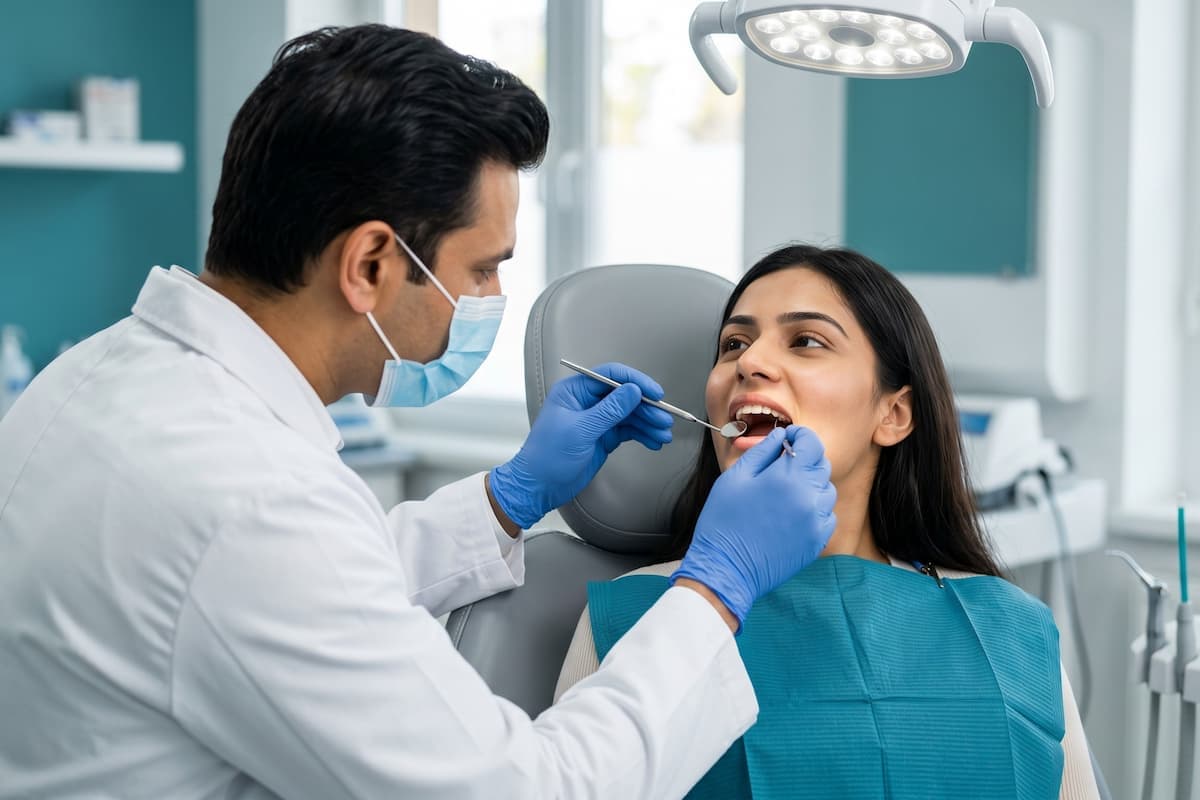
Dental Hygiene Treatment During Pregnancy: What Is Appropriate and When

A recurring pattern in practice is a patient who cancels her hygiene appointment on becoming pregnant, on the reasonable-sounding assumption that anything non-urgent is better postponed.
It is the wrong instinct in this specific case, and the reason is straightforward. Pregnancy changes how the gums respond to plaque — the same amount of plaque produces a markedly greater inflammatory response. Deferring hygiene care through the pregnancy means removing support at precisely the point when the tissues are least tolerant.
Routine hygiene treatment during pregnancy is appropriate, and the practical questions are about timing, positioning and which adjuncts are used — not whether to attend.
What changes during pregnancy
Progesterone and oestrogen rise substantially. Both affect the gingival tissues. Progesterone increases vascular permeability and dilates the small blood vessels of the gum, producing greater swelling and redness in response to a given bacterial challenge.
The inflammatory response is amplified. The tissue reaction to plaque is exaggerated, so gums that were previously only mildly inflamed can become visibly swollen and bleed readily.
The subgingival flora shifts. Certain bacteria, notably Prevotella intermedia, can use steroid hormones as a substitute for a growth factor they normally require, and their proportions rise during pregnancy.
The result is pregnancy gingivitis. It affects a substantial proportion of pregnant patients, typically becoming noticeable from around the second month and peaking in the third trimester. It is the same disease process as ordinary gingivitis with an exaggerated host response. Our article on pregnancy and gum care covers this in more detail, and the difference between gingivitis and periodontitis sets out the stages.
A pregnancy epulis may develop. A localised, often dramatic-looking overgrowth of gum tissue, usually between teeth, which bleeds readily. It is benign and usually regresses after delivery. It is plaque-associated, so hygiene care reduces the likelihood of it developing.
Morning sickness introduces an acid problem. Repeated vomiting exposes the teeth to gastric acid, which erodes enamel — typically on the inner surfaces of the upper front teeth. The instinct to brush immediately afterwards is counterproductive, because softened enamel is abraded by brushing. Rinse with water or a fluoride mouthrinse, or a teaspoon of bicarbonate of soda in water, and delay brushing for an hour.
Dietary changes matter. More frequent eating, cravings for sweet foods, and grazing all increase the number of acid exposures per day. Frequency matters more than quantity. Our article on foods that support healthy teeth and gums is relevant here.
What is appropriate, and when
Examination, hygiene treatment and periodontal therapy are appropriate throughout pregnancy. Scaling above and below the gum margin is a mechanical procedure with no systemic exposure, and the principal consideration is comfort rather than safety.
The second trimester is the usual preference for elective procedures. Not because other periods are unsafe, but for practical reasons: nausea is often settling, and the patient can lie back comfortably, which becomes harder later.
In the third trimester, positioning matters. Lying flat can compress the inferior vena cava and reduce venous return, producing dizziness or faintness. This is managed by tilting slightly to the left, supporting the right hip, keeping appointments shorter and allowing breaks. Say if you feel lightheaded — it is a positional matter and immediately correctable.
Local anaesthetic is used where needed. Lidocaine with adrenaline is widely used in pregnancy. Treating a patient in pain without adequate anaesthesia is the greater problem — pain and stress are not neutral.
Radiographs are taken when there is a clinical need. The radiation dose from a dental radiograph is very low, the beam is directed away from the abdomen, and lead protection is used. Routine screening radiographs are usually deferred; radiographs needed to diagnose infection or acute problems are not, because an untreated dental infection carries more risk than the imaging. Our article on pregnancy and dental emergencies covers urgent situations.
Some things are deferred. Elective cosmetic procedures, including whitening, are routinely postponed — not because of demonstrated harm but because there is no reason to introduce an unnecessary exposure. Elective extensive treatment is usually scheduled after delivery where it can wait safely.
Medication is prescribed with care. Some antibiotics and analgesics are avoided in pregnancy. Paracetamol is generally the first-line analgesic; non-steroidal anti-inflammatory drugs such as ibuprofen are usually avoided, particularly in the third trimester. Always check with your midwife or doctor, and tell your dentist what you are taking.
Tell your dentist you are pregnant, and how far along. Also mention any pregnancy-related conditions such as gestational diabetes, raised blood pressure or a history of complications, since these affect planning. Our article on diabetes and gum disease risk is relevant where gestational diabetes is present.
On the question of pregnancy outcomes
You may encounter claims that gum disease causes premature birth or low birth weight.
The honest position: an association between periodontal disease and adverse pregnancy outcomes has been observed in a number of studies, and biologically plausible mechanisms have been proposed involving inflammatory mediators. However, intervention trials treating periodontal disease during pregnancy have not consistently shown improved birth outcomes. Association is not the same as causation, and shared risk factors may explain part of the link.
What can be said without overstating it: gum disease is worth treating on its own merits, pregnancy makes the tissues more reactive, and treatment during pregnancy is appropriate and well tolerated. That is sufficient reason to attend without relying on claims the evidence does not support.
Daily care during pregnancy
• Brush twice daily with a fluoride toothpaste, spitting rather than rinsing afterwards so the fluoride is not washed away
• Clean between the teeth daily — this is where pregnancy gingivitis is most evident. Our article on flossing properly covers technique
• Use a soft brush, since inflamed tissue is tender; bleeding is a reason to clean more carefully, not less. Our article on bleeding gums when brushing explains why
• If the toothpaste flavour triggers nausea, switch to a milder or unflavoured one, or brush at a different time of day
• After vomiting, rinse and delay brushing for an hour
• Limit the frequency of sugary and acidic snacks and drinks, and finish with water
• Consider more frequent hygiene appointments during pregnancy — our article on how often to see a hygienist covers intervals
When to seek assessment sooner
• Gums that bleed heavily or are significantly swollen
• A lump on the gum that bleeds when touched
• Toothache, particularly if it persists or wakes you
• Facial swelling, fever or difficulty swallowing — same-day care
• Increased tooth sensitivity, particularly with morning sickness
• A tooth that feels loose
Untreated dental infection is a more significant concern during pregnancy than the treatment required to resolve it. Deferring an infection to "after the baby" is not a neutral choice.
Key points
• Hormonal changes amplify the gum's response to plaque, so pregnancy is a period of higher, not lower, need.
• Hygiene treatment and periodontal therapy are appropriate throughout pregnancy.
• The second trimester is preferred for elective work, largely for comfort reasons.
• In late pregnancy, tilt slightly left and keep appointments shorter.
• Radiographs are taken when clinically indicated, with shielding; routine screening ones are deferred.
• After vomiting, rinse rather than brush, and wait an hour.
• Evidence linking gum treatment to improved birth outcomes is inconsistent — treat gum disease on its own merits.
Frequently Asked Questions
Can I have my teeth cleaned during pregnancy?
Yes. Scaling and hygiene treatment are appropriate at any stage, and are particularly useful given the amplified gum response during pregnancy. Positioning and appointment length are adjusted in later pregnancy for comfort.
Are dental X-rays safe while pregnant?
The dose from a dental radiograph is very low, the beam is directed away from the abdomen and shielding is used. Radiographs needed to diagnose infection or an acute problem are taken; routine screening radiographs are usually deferred until after delivery.
Will pregnancy gingivitis go away after the baby is born?
The hormonal amplification resolves after delivery, and the gums typically settle considerably within a few months. That is conditional on plaque control — where periodontal attachment has been lost during pregnancy, that loss does not reverse.
Can dental problems during pregnancy affect the baby?
Associations between periodontal disease and adverse pregnancy outcomes have been reported, but intervention studies have not consistently shown that treatment changes outcomes. What is clear is that untreated dental infection and dental pain are best avoided during pregnancy on their own account.
Should I tell my dentist I am pregnant?
Yes, and how many weeks. It affects appointment scheduling, positioning, radiographic decisions and any prescribing. Mention it as soon as you know, including if you are trying to conceive.
Can I use whitening products while pregnant?
Whitening is routinely deferred until after pregnancy and breastfeeding. There is no established evidence of harm, but there is no clinical need either, so the exposure is avoided.
Next Steps
If you are pregnant and due a hygiene appointment, or have noticed your gums bleeding more than usual, this is a good point to be seen rather than to wait.
You can contact our team at our Wimpole Street practice, or read about dental hygiene appointments and gum disease treatment.
Dental Disclaimer
This article provides general information about dental care during pregnancy and does not constitute individual dental or medical advice. Treatment planning during pregnancy should take account of your stage of pregnancy, medical history and any pregnancy-related conditions, and should be discussed with your dentist and, where relevant, your midwife or doctor. Wimpole Dental is regulated by the Care Quality Commission, and our clinicians are registered with the General Dental Council.
Next review due: 18 September 2027
Written by Dr Elisabeth Lichtmannegger · reviewed by Dr Elisabeth Lichtmannegger, GDC 319325
This article is general information, not personal clinical advice. For a diagnosis and a plan tailored to you, book a consultation with a GDC-registered dentist.
Related treatments at our Wimpole Street practice