Can Clear Aligners Correct Crowding Without Tooth Extractions?

Crowding is the most common reason people seek orthodontic treatment, and the prospect of having healthy teeth removed to make room is understandably unwelcome.
Non-extraction treatment is achievable in a good proportion of cases, and modern planning software makes the space arithmetic considerably more precise than it once was.
But space has to come from somewhere. The question is not whether extractions can be avoided, but whether the alternatives can supply enough space without creating a different problem.
Can Crowding Be Treated Without Removing Teeth?
Do I have to have extractions to straighten crowded teeth?
Not always. Space can be created without extractions in three main ways: reducing a small amount of enamel between teeth, expanding the dental arch, and tipping the front teeth slightly forward. Used together and within sensible limits, these can accommodate mild to moderate crowding. The constraint is that each has a finite capacity and a point beyond which it causes harm — thinning enamel excessively, moving teeth outside the supporting bone, or pushing incisors forward in a way that compromises the profile and long-term stability. Where crowding exceeds what these can supply, extraction remains the more appropriate route.
Why Crowding Happens
Tooth size and jaw size mismatch. The commonest cause. The teeth are simply larger than the available arch length, which is largely genetically determined.
Late lower incisor crowding. Very common in the late teens and twenties, and continuing gradually through adult life. Contributing factors include continued mandibular growth, soft tissue forces, and the ageing of periodontal fibres.
Early loss of baby teeth. Where a primary molar is lost early and adjacent teeth drift, space for the permanent successor is reduced.
Relapse after previous treatment. Teeth returning toward their original positions where retention has lapsed.
Retained or impacted teeth. Including the contribution attributed to wisdom teeth, which remains debated in the literature. See wisdom teeth.
See crowded teeth.
Interproximal Reduction
A very small amount of enamel is removed from the sides of teeth, typically a fraction of a millimetre per surface. Enamel on the contacting surfaces of posterior teeth is thicker than many people assume, and conservative reduction stays well within it.
The total space obtainable across an arch is meaningful but limited. Reduction must be planned per contact rather than applied uniformly, and the resulting surfaces are polished and usually treated with fluoride.
Excessive reduction thins enamel, can cause sensitivity, and creates surfaces more vulnerable to decay. This is why it is planned and measured rather than done freehand.
Arch Expansion
Widening the arch by tipping the posterior teeth outward creates space in the buccal segments. In adults, the mid-palatal suture is fused, so this is dental expansion rather than skeletal expansion.
The limit is the bony envelope. Teeth moved beyond the supporting bone risk dehiscence, recession, and instability. See receding gums.
Proclination
Tipping the front teeth slightly forward increases arch circumference. A small amount is well tolerated and often desirable where incisors are upright.
Excessive proclination thins the labial bone, can affect lip support and profile, and is associated with relapse. It is also the change most likely to be noticed as an unwanted alteration in appearance.
See ProAligner treatment.
When Extractions May Still Be Appropriate
• Severe crowding, where the space deficit exceeds what conservative methods can supply
• Bimaxillary protrusion, where the front teeth are already forward and further proclination would worsen the profile
• Significant skeletal discrepancy requiring camouflage
• A compromised tooth that is heavily restored, root treated, or of poor prognosis — extracting it rather than a sound tooth
• Long-term stability concerns, where non-extraction correction would sit outside the bony envelope
• Thin gingival biotype with existing recession, where expansion carries greater risk
Extraction is not a failure of planning. In the right case it produces a more stable, healthier, and better-looking result than forcing a non-extraction approach.
What Non-Extraction Treatment Involves
1. Assessment and records — photographs, radiographs, and a digital scan
2. Space analysis — calculating the deficit and how it will be supplied
3. Digital planning — a simulation showing planned positions and where reduction will occur
4. Attachment placement and any initial enamel reduction
5. Sequential aligners, with further reduction staged through treatment
6. Refinement aligners where movements have not fully tracked
7. Retention, which is essential — see fixed retainer
Crowding correction has a well-documented tendency to relapse, particularly in the lower front teeth. Long-term retention is not optional.
When to Seek a Professional Assessment
Arrange an assessment if:
• Your teeth have become more crowded over recent years
• You have difficulty cleaning between overlapping teeth
• Your gums bleed around crowded areas — see bleeding gums
• You have had orthodontic treatment before and teeth have shifted
• A tooth is trapped or displaced out of the arch
• You have wear on the edges of your front teeth
• You want to know whether extractions would be needed in your case
A proper assessment includes measuring the space deficit rather than estimating it, which is what determines whether non-extraction treatment is realistic.
The NHS provides general information about orthodontics at nhs.uk/conditions/orthodontics/.
Maintaining Results
• Wear retainers exactly as instructed, indefinitely
• Clean interdentally daily, particularly where enamel reduction has been carried out
• Attend regular hygiene appointments
• Attend check-ups so reduced surfaces are monitored for decay
• Use a fluoride toothpaste, and a higher-fluoride one if advised
• Report any retainer breakage promptly rather than waiting
Key Points to Remember
• Space can be created by enamel reduction, expansion, and proclination
• Each method has a limit beyond which it causes harm
• Adults cannot achieve skeletal expansion; movement is dental only
• Excessive proclination affects profile and stability
• Severe crowding often still warrants extraction
• Crowding relapses readily, so retention is a long-term commitment
Frequently Asked Questions
1. Is enamel reduction harmful?
Carried out conservatively and within planned limits, it removes a small fraction of the enamel thickness and is well documented as safe. Excessive or unplanned reduction is a different matter and can cause sensitivity and increased decay risk.
2. How much crowding can be treated without extractions?
There is no single figure, because it depends on how much space each method can safely supply in that individual, on the starting incisor position, and on the profile. Mild to moderate crowding is often manageable; severe crowding frequently is not.
3. Will my face change if my teeth are pushed forward?
Small amounts of proclination generally produce no perceptible change. Larger amounts can alter lip support and profile, which is one reason planning software models the intended incisor position rather than simply resolving the crowding.
4. Do wisdom teeth cause crowding?
The relationship is debated. Late lower crowding occurs in people with and without wisdom teeth, and removing them is not a reliable way to prevent it. Wisdom teeth are assessed on their own merits.
5. Can crowding come back after treatment?
Yes, and lower incisor crowding is particularly prone to relapse. This is why retention is required indefinitely rather than for a fixed period after treatment.
6. Are aligners as effective as braces for crowding?
For mild to moderate crowding requiring predominantly tipping and alignment, aligners perform well. Where substantial bodily movement or large space closure is needed, fixed appliances are generally more predictable.
Conclusion
Avoiding extractions is a reasonable goal and often achievable, but not by wishing the space into existence. Enamel reduction, expansion, and proclination each contribute, and each stops contributing at a defined point.
Good treatment planning establishes how much space is actually needed and where it will come from, before any aligner is made. Where the arithmetic works, non-extraction treatment gives an excellent result. Where it does not, forcing it produces instability, recession, or a profile change nobody intended.
If you would like your crowding assessed, you are welcome to book an appointment at Wimpole Dental, 22 Wimpole St, London W1G 8GQ, or call 020 7183 0692.
Dental symptoms and treatment options should always be assessed individually during a clinical examination.
Dental Disclaimer
This article is for general educational information only and is not professional dental advice, diagnosis, or a treatment recommendation. Information here is general and cannot replace an in-person assessment by a qualified, GDC-registered dental professional. Symptoms, suitability, fees, timelines, and outcomes vary according to individual clinical circumstances. If you have pain, swelling, or other concerning symptoms, seek prompt professional dental care. Always request a written treatment plan and cost estimate before proceeding with treatment.
Written Date: 7 August 2026
Next Review Date: 7 August 2027
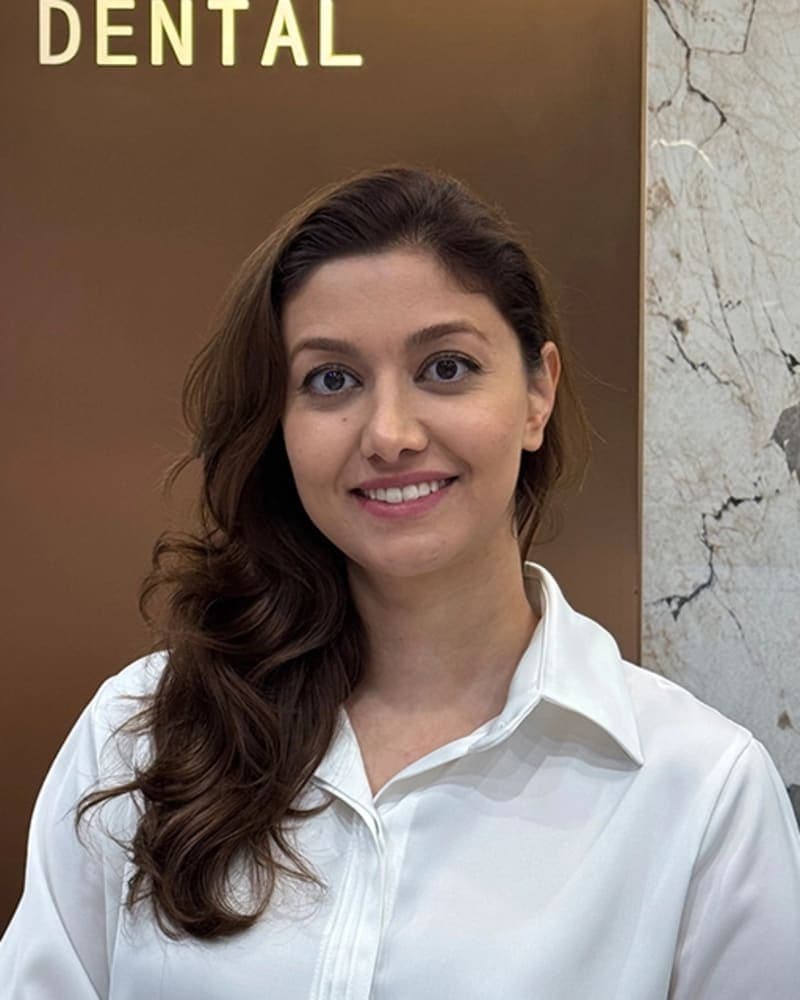
Written by Dr Reza Davari · reviewed by Dr Reza Davari, GDC 302422
This article is general information, not personal clinical advice. For a diagnosis and a plan tailored to you, book a consultation with a GDC-registered dentist.
Related treatments at our Wimpole Street practice