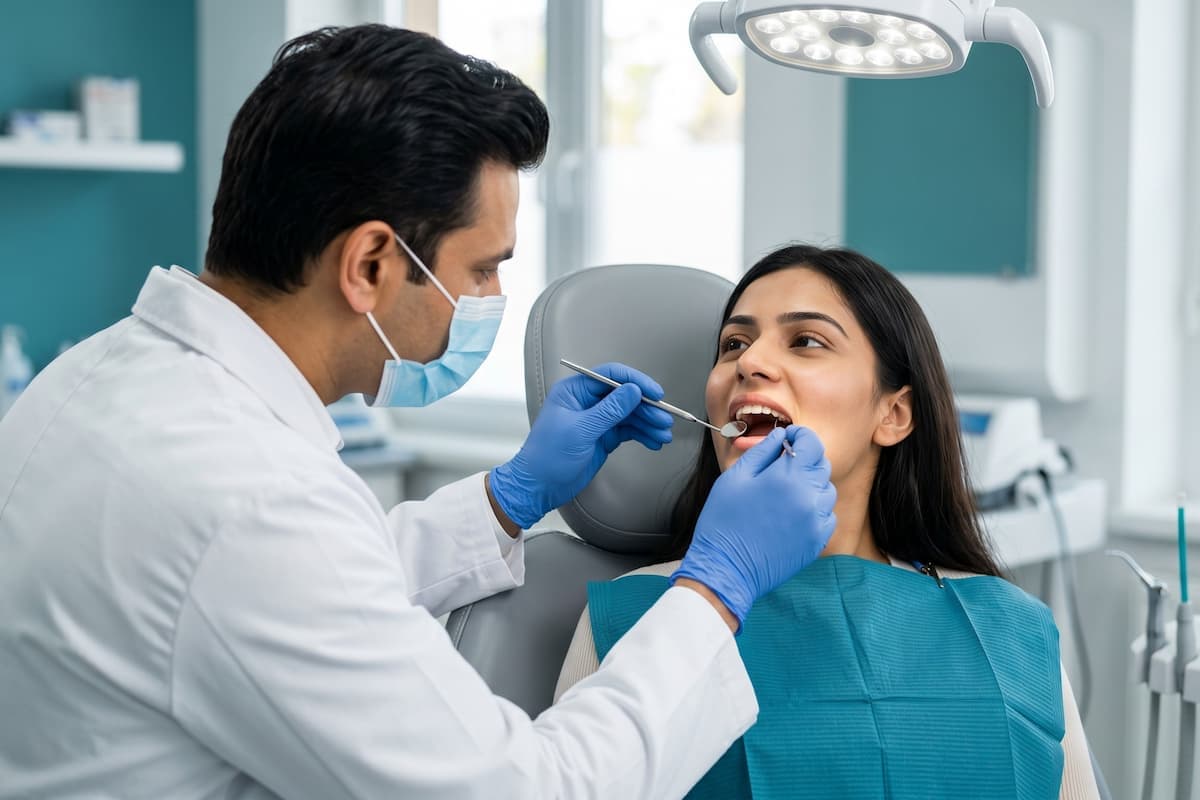
How Dental Hygienists Support Modern Preventive Medicine

There is a persistent perception that a hygienist appointment is a cosmetic service — a scale and polish, teeth that feel smooth, some stain removed before an event.
That description is around a decade or two out of date. The scope of hygienist practice in the UK has expanded substantially, and the appointment now sits within a broader picture of preventive healthcare that extends beyond the mouth.
This article sets out what the role actually covers.
What a dental hygienist is
Dental hygienists are registered with the General Dental Council as a distinct profession, with their own qualification, registration, continuing professional development requirements and professional indemnity. They are not dental assistants and they are not a lesser version of a dentist; they are a separate registrant group with a defined scope of practice.
Since 2013, patients in the UK have been able to see a hygienist directly without first seeing a dentist, under direct access arrangements. This changed the relationship considerably and reflects the profession's standing.
Dental therapists have a broader scope again, including certain restorative procedures. Our article on the difference between a dental therapist and a dental hygienist explains the distinction, and our article on whether a hygienist can carry out fillings covers the boundary.
The core clinical work
Periodontal assessment and charting. Measuring pocket depths around each tooth, recording bleeding on probing, assessing recession and mobility, and monitoring change over time. This is the diagnostic backbone of periodontal care, and it produces data that appearance alone cannot.
Non-surgical periodontal therapy. Removal of plaque, calculus and bacterial deposits from root surfaces below the gum margin. This is the primary treatment for periodontitis and it is what actually changes the course of the disease. Our gum disease treatment page describes it.
Supportive periodontal therapy. Ongoing maintenance at intervals determined by individual risk. Periodontitis is a chronic condition; it is managed rather than resolved, and the maintenance phase is what prevents recurrence. Our article on how often to see a hygienist explains how intervals are set.
Prevention of decay. Fluoride varnish application, fissure sealants, and dietary advice targeted at the frequency of sugar exposure rather than simply the amount.
Stain removal and polishing. Present in the role, but a small part of it. Our article comparing airflow stain removal with whitening explains what it does and does not achieve.
Maintenance of implants and restorations. Implants require specific instruments and a specific monitoring protocol, and peri-implant disease is detected at these appointments before it becomes symptomatic. Our article on All-on-4 maintenance covers full arch cases.
Oral hygiene instruction. Which sounds routine and is anything but, when done properly. Effective instruction is individualised to what the charting actually shows — which surfaces are being missed, which interdental brush sizes fit which spaces, and how to modify technique where there is recession, crowding, bridgework or limited dexterity.
The wider preventive role
This is where the description of the role as cosmetic breaks down entirely.
Soft tissue and oral cancer screening
Hygienists examine the soft tissues at every appointment — tongue, floor of mouth, buccal mucosa, palate, and the tissues at the back of the throat. Oral cancer incidence in the UK has risen substantially over recent decades, and survival is strongly dependent on the stage at diagnosis.
Because patients often see a hygienist more frequently than they see any other healthcare professional, these appointments represent a meaningful screening opportunity. Anything suspicious is referred onward promptly.
Smoking cessation and alcohol advice
Smoking is among the strongest risk factors for periodontal disease, impairs healing, affects implant outcomes and is a major risk factor for oral cancer. Hygienists are well placed to raise it, provide brief advice and signpost to cessation services, and there is reasonable evidence that brief interventions in this setting are effective.
Our article on smoking and dental implants covers one of the consequences.
The oral-systemic connection
This area is frequently overstated in marketing, so it is worth being precise about what is and is not established.
Diabetes. The relationship here is the best supported and is considered bidirectional. Poor glycaemic control increases the risk and severity of periodontitis, and periodontal inflammation appears to make glycaemic control more difficult. There is evidence that periodontal treatment produces a modest improvement in HbA1c. Our article on dental implants with controlled diabetes covers the implant implications.
Cardiovascular disease. A consistent association exists between periodontitis and cardiovascular disease, and plausible mechanisms involving systemic inflammation and bacteraemia have been proposed. What has not been demonstrated is that treating periodontal disease reduces cardiovascular events. The honest position is association, not established causation.
Pregnancy. Periodontitis has been associated with preterm birth and low birth weight, though intervention trials have produced mixed results. Periodontal treatment during pregnancy is safe and worthwhile for the mother's own health regardless.
Respiratory disease. Aspiration of oral bacteria is a recognised route in pneumonia, particularly in hospitalised and care home populations, and oral care protocols in those settings have shown benefit. Our article on whether better oral hygiene can prevent chronic respiratory disease examines the evidence.
Rheumatoid arthritis, cognitive decline and other conditions. Associations have been reported and mechanisms proposed, but the evidence is at an earlier stage and should be described as such.
Our article on whether poor oral health influences chronic disease goes through this in more detail. The reasonable summary is that the mouth is not separate from the body, that chronic oral inflammation is worth treating on its own merits, and that claims of dental treatment preventing heart attacks go beyond what the evidence supports.
Detection of other conditions
Findings in the mouth sometimes prompt referral for conditions that have not yet been diagnosed elsewhere: signs suggestive of undiagnosed diabetes, eating disorders indicated by characteristic erosion patterns, reflux disease, nutritional deficiencies, and medication side effects including dry mouth. Our article on dry mouth and implant failure covers one consequence.
What the hygienist cannot do
Being clear about the boundaries is part of respecting the role.
A hygienist does not diagnose in the way a dentist does — our article on whether a hygienist can officially diagnose dental problems sets out the distinction. Prescribing is restricted, though patient group directions and exemptions allow certain medicines to be administered — covered in our article on whether hygienists can prescribe medication in the UK.
Local anaesthetic administration is within scope for hygienists with the appropriate training, which our article on whether a hygienist can give injections explains.
Complex treatment planning, restorative work beyond the relevant scope, extractions and surgical procedures sit with the dentist.
Why the appointment interval is not six months
The six-month interval is a historical convention rather than an evidence-based standard. Current guidance is that recall intervals should be set individually based on risk.
Someone with a history of periodontitis, who smokes, who has diabetes or who has implants may need three-monthly maintenance. Someone with excellent plaque control, no history of periodontal disease and low decay risk may safely attend less often.
If you have been told to come every three months, that reflects an assessment of your individual risk rather than a commercial preference — and the reasoning should be explained to you. Our article on the cost benefits of regular hygiene visits versus emergency care covers the economics.
Frequently Asked Questions
Do I need to see a dentist before seeing a hygienist?
Under direct access arrangements in the UK you can see a hygienist without a dentist referral. In practice, an initial dental examination is often valuable because it establishes the wider picture — decay, restorations, radiographic bone levels — which informs the hygienist's assessment.
Is a hygienist appointment just a clean?
No. It includes periodontal charting, soft tissue examination, risk assessment, preventive advice tailored to your findings, and treatment of periodontal disease where present. The cleaning is the visible part of a longer process.
Does the appointment hurt?
Where the gums are inflamed or there are deeper pockets, some discomfort is possible. Local anaesthetic or topical anaesthetic can be used, and hygienists with the relevant training can administer it. Tell the hygienist if you are uncomfortable — the technique can be modified.
How long does it take?
It varies with what is needed. A maintenance appointment for a healthy mouth may be relatively short; treatment of established periodontitis often requires longer appointments, sometimes split across several visits by quadrant. Our article on what to expect at a hygiene appointment covers the practicalities.
Will my gums bleed less afterwards?
Bleeding generally reduces within days to a couple of weeks after treatment, provided daily cleaning is maintained. Bleeding that persists beyond that warrants review. Our article on bleeding gums when brushing explains what bleeding indicates.
Can hygienist treatment reverse gum disease?
Gingivitis — inflammation confined to the gum — generally resolves with thorough cleaning and good daily hygiene. Periodontitis, where attachment and bone have been lost, can be stabilised and its progression halted, but lost support is not reliably regained. Our article on whether gum disease can be reversed sets out what is achievable.
Is it worth going if my teeth look fine?
Periodontal disease typically produces no discomfort until it is advanced, and it is measured rather than seen. A mouth that looks fine can have significant pocketing. That is precisely the argument for assessment rather than self-monitoring.
Next Steps
If you have not had a periodontal assessment recently — pockets measured, bleeding recorded, the numbers written down — that is worth arranging regardless of how your teeth look or feel.
If you have diabetes, are pregnant, smoke, or have a family history of gum disease, mention it. Those factors change the assessment and the appropriate interval.
You can contact our team to arrange an appointment at our Wimpole Street practice. Our dental hygiene and gum disease treatment pages explain what is involved.
Dental Disclaimer
This article provides general information and does not constitute individual dental or medical advice. Your periodontal status and appropriate recall interval can only be determined following clinical examination. The associations between oral and systemic health described here are drawn from published research; association does not establish causation, and dental treatment is not a treatment for systemic disease. Wimpole Dental is regulated by the Care Quality Commission, and our clinicians are registered with the General Dental Council.
Next review due: 12 September 2027
Written by Dr Elisabeth Lichtmannegger · reviewed by Dr Elisabeth Lichtmannegger, GDC 319325
This article is general information, not personal clinical advice. For a diagnosis and a plan tailored to you, book a consultation with a GDC-registered dentist.
Related treatments at our Wimpole Street practice