The Aligner Refinement Trap: Why Low-Cost Treatment Often Costs More

Aligner treatment is advertised with a headline number and a duration, and both are presented as though they were fixed. In practice, a meaningful proportion of cases need additional aligners beyond the original series — a stage known as refinement — and whether those are included in the fee you were quoted varies enormously between providers.
This is not a scandal. Refinements are a normal and expected part of aligner treatment, and needing them does not mean anything has gone wrong. The problem is that they are often presented as an unexpected extra rather than a predictable stage, which leaves patients budgeting for one figure and paying another.
This article explains why refinements happen, how different providers handle them, and how to establish the real total before you start.
Why Does Low-Cost Aligner Treatment Often Cost More Overall?
Where does the extra money go?
Mostly into refinements, retainers and repeat scans that were not in the original quote. A low headline price commonly covers the initial series of aligners only. If teeth do not reach their planned positions — which is common — additional aligners are needed and may be charged separately. Retainers, which are essential rather than optional, are often quoted as an extra. Reduced supervision also means problems are caught later, when correcting them takes more stages. The headline figure is real; it is just not the total.
What Are Aligner Refinements?
At the end of the planned series, your clinician compares where the teeth actually are with where the plan said they would be. If there is a meaningful discrepancy — a tooth that has not rotated fully, a space that has not closed, a bite that has not settled — a new scan is taken and a further series of aligners is produced to finish the job.
That is a refinement. It usually involves a fresh scan, a new plan, and anywhere from a handful to twenty or more additional trays depending on what remains.
Estimates of how often refinements are needed vary between studies and between practices, but they are common rather than exceptional, particularly in more complex cases. A provider who tells you refinements are unlikely in a complex case is either unusually optimistic or not being straightforward with you.
Why Refinements Are Frequently Needed
Biological variability. Bone density, periodontal ligament characteristics, age and general health all affect how quickly and how far teeth move. Two patients with identical starting positions and identical plans can finish in noticeably different places.
Complex movements. Some movements are simply harder for aligners to achieve. Rotating round-rooted teeth such as canines and premolars, extruding a tooth downwards, and moving roots bodily rather than tipping crowns are all known to under-express. Plans compensate for this, but compensation is approximate.
Compliance. Aligners work only while worn. Falling short of the prescribed 20 to 22 hours a day means each tray achieves less than intended, and the shortfall compounds — the next aligner does not seat fully, tracking is lost, and the divergence grows.
Attachment issues. Composite attachments bonded to the teeth give aligners purchase for difficult movements. If one debonds and is not replaced promptly, the movements that depended on it stall.
Anatomical factors. Short clinical crowns, unusual root shapes, existing restorations and prior trauma all affect how a tooth responds.
The Hidden Costs of Budget Aligner Treatment
Pricing structures vary. Some providers include unlimited refinements within the fee. Some include one round. Some charge for every additional series. The same nominal treatment can therefore end up costing very different amounts. This is the single largest source of divergence between quotes.
Reduced clinical supervision. Lower-cost models often reduce the number of in-person appointments, sometimes to none. Remote monitoring by photograph has a role, but it does not detect a developing cavity, measure periodontal pockets, or assess a tooth that has become tender. Problems found late take more work to correct — and if gum disease develops undetected during treatment, the consequences go well beyond the alignment.
Retainers and aftercare. Retention is not a nice-to-have. Without it, teeth drift back and the money spent on treatment is progressively wasted. Retainers wear out and need replacing periodically, and a bonded fixed retainer needs checking at reviews. Ask whether the first set is included and what replacements cost.
Emergency and repair visits. A debonded attachment, a cracked tray or a sharp edge needs attention. Whether that is included varies.
The Clinical Science Behind Predictable Movement
Tooth movement is bone remodelling. Sustained light pressure causes osteoclasts to resorb bone on the pressure side while osteoblasts deposit bone on the tension side, and the tooth migrates. The process is biological and rate-limited — around a millimetre a month is typical, and heavier force does not speed it up. Excessive pressure compresses the periodontal ligament to the point where blood supply is interrupted and movement stalls entirely.
Two clinical consequences follow. First, treatment durations that seem dramatically shorter than conventional estimates deserve careful questioning. Second, the accuracy of planning matters enormously: a well-planned sequence that respects biological limits will track better than an aggressive one, which is why the diagnostic and planning stage is not the place to economise. Our article on how aligner planning software works explains what happens at that stage.
What to Consider Before Choosing a Provider
What is included in the price? Ask specifically about refinements, retainers, review appointments, repeat scans and emergency visits. Ask for the answer in writing.
Who is supervising? Establish the name and GDC registration number of the clinician responsible, and how often you will physically see them.
What happens if things do not go to plan? Ask what the process is, who pays, and how long it takes.
Was there a clinical examination first? Orthodontic treatment should not begin without an in-person examination and appropriate radiographs. Untreated decay, an abscess or active periodontal disease all change what should happen next, and none of them are visible on a scan of tooth surfaces.
Our article on what actually drives the cost of adult orthodontic treatment covers this comparison in more depth.
When Professional Assessment Is Important
Arrange an assessment if:
• You are considering aligner treatment and want an independent view on suitability
• You are mid-treatment and the aligners no longer fit properly
• Teeth have become tender, loose or sensitive during treatment
• Your gums bleed or have receded since starting
• Treatment has finished but you are not happy with the result
• You have crowded teeth or a bite that has changed and want to know the options
If a tooth becomes mobile or painful during aligner treatment, that should be looked at promptly rather than at the next scheduled remote check.
Making an Informed Decision
Compare total cost, not starting price. Build a like-for-like figure that includes refinements, retainers and reviews for each provider.
Ask about the clinician's experience with cases like yours, and what proportion typically need refinement.
Read the terms. Refund conditions, what happens if you stop treatment partway, and who owns your scan data are all worth knowing before you sign.
Be realistic about compliance. If you know you will struggle to wear trays 22 hours a day, say so at the consultation. Fixed appliances may suit you better, and that conversation is more useful before treatment than after.
Key Points to Remember
• Refinements are a normal stage in aligner treatment, not a failure
• Whether refinements are included varies enormously between providers
• Retainers are essential and are frequently quoted separately
• Reduced in-person supervision means problems are detected later
• Tooth movement is biologically rate-limited; very short timeframes warrant questioning
• An in-person examination with radiographs should precede treatment
• Ask for a written total covering refinements, retainers, reviews and emergencies
The NHS orthodontics page offers neutral background on treatment and eligibility.
Frequently Asked Questions
1. Are refinements normal, or does needing them mean something went wrong?
They are normal. Planning software projects an ideal sequence, but biological response varies and some movements consistently under-express. Refinements are how the gap between plan and reality is closed. Needing one is expected in many cases, particularly complex ones.
2. How many rounds of refinement might I need?
Most patients who need refinement need one round. Some need two, and complex cases occasionally need more. It depends on case difficulty, how well you wore the aligners, and how accurately the original plan anticipated your response. Your clinician can give a realistic expectation after examining you, though it remains an estimate.
3. Why are some aligner treatments so much less expensive than others?
Usually because they include less: fewer or no in-person appointments, no refinements, no retainers, and sometimes no clinical examination before treatment begins. Some difference also reflects genuine variation in case complexity and clinician time. Comparing the full inclusion list is the only reliable way to understand a price difference.
4. Can I switch providers mid-treatment?
It is possible but often awkward. A new clinician will usually need to examine you, take fresh records and produce a new plan, which means additional cost. Aligners are made for a specific sequence and are not transferable between systems. If you are unhappy with your current treatment, raise it with the provider first and put your concerns in writing.
5. Do direct-to-consumer aligners work as well as dentist-supervised treatment?
They can move teeth, but they typically involve no in-person examination, no radiographs and limited or no clinical supervision. That means existing decay, gum disease or root problems may go undetected while force is being applied to the teeth. The General Dental Council has raised concerns about remote orthodontic treatment provided without adequate clinical oversight, and it is worth reading that guidance before deciding.
6. What should I ask before starting aligner treatment?
Ask for the diagnosis, why aligners are being recommended over other appliances, what the risks are in your case, how many refinements are included, whether retainers are included, how often you will see the clinician in person, and what the total cost is. Ask for all of it in writing before paying anything.
Conclusion
Refinements are not a trap in themselves — they are ordinary orthodontics. What catches patients out is discovering, halfway through, that a stage everybody in the profession expects to happen was not covered by the fee they were quoted.
The remedy is straightforward. Ask what is included, get it in writing, and compare providers on the total rather than the advertised number. A practice that is confident in its pricing will have no difficulty putting it in writing.
To discuss aligner treatment with a written plan and a full cost breakdown, arrange an appointment at 22 Wimpole St, London W1G 8GQ, or call 020 7183 0692.
Dental symptoms and treatment options should always be assessed individually during a clinical examination.
Dental Disclaimer
This article is for general educational information only and is not professional dental advice, diagnosis, or a treatment recommendation. Information here is general and cannot replace an in-person assessment by a qualified, GDC-registered dental professional. Symptoms, suitability, fees, timelines, and outcomes vary according to individual clinical circumstances. If you have pain, swelling, or other concerning symptoms, seek prompt professional dental care. Always request a written treatment plan and cost estimate before proceeding with treatment.
Written Date: 31 July 2026 Next Review Date: 31 July 2027
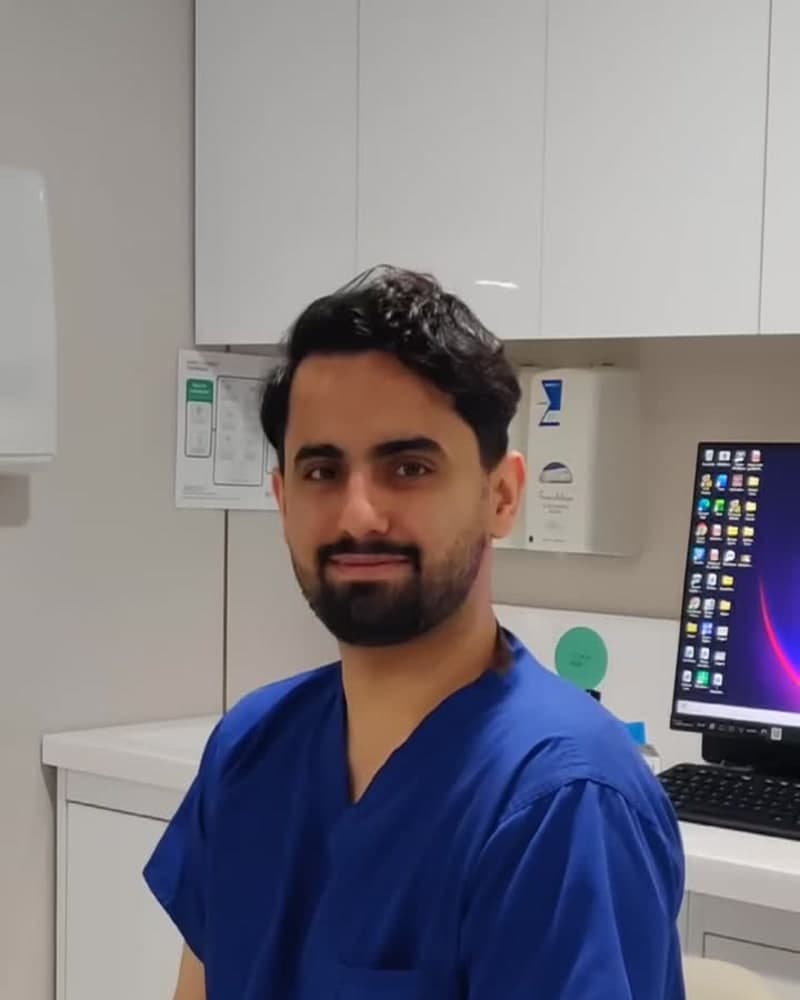
Written by Dr Kamran Yazdi · reviewed by Dr Kamran Yazdi, GDC 197926
This article is general information, not personal clinical advice. For a diagnosis and a plan tailored to you, book a consultation with a GDC-registered dentist.
Related treatments at our Wimpole Street practice