Crown Options for a Broken Tooth: What to Expect at Each Visit

Single-visit crowns have had a great deal of attention, and reasonably so. But the majority of crowns placed in the UK are still made in a dental laboratory across two appointments — and for a number of cases that remains the better route, not merely the default one.
This article sets out what happens at each stage of the conventional workflow, what the temporary phase is genuinely for, and how to decide between the two routes.
First: is a crown the right restoration?
Not every broken tooth needs a crown, and starting with the crown question skips the more important one.
Small chips and worn edges are often better addressed with composite bonding — minimally invasive, reversible, and repairable. Our article on fixing chipped teeth with cosmetic bonding covers this.
Partial cuspal loss may be restored with an onlay, which covers the weakened cusps while preserving more sound structure than a full crown.
A crack that has not separated may need cuspal coverage to prevent propagation. Our article on repairing a large tooth crack covers the assessment, and cracked tooth syndrome covers the diagnosis.
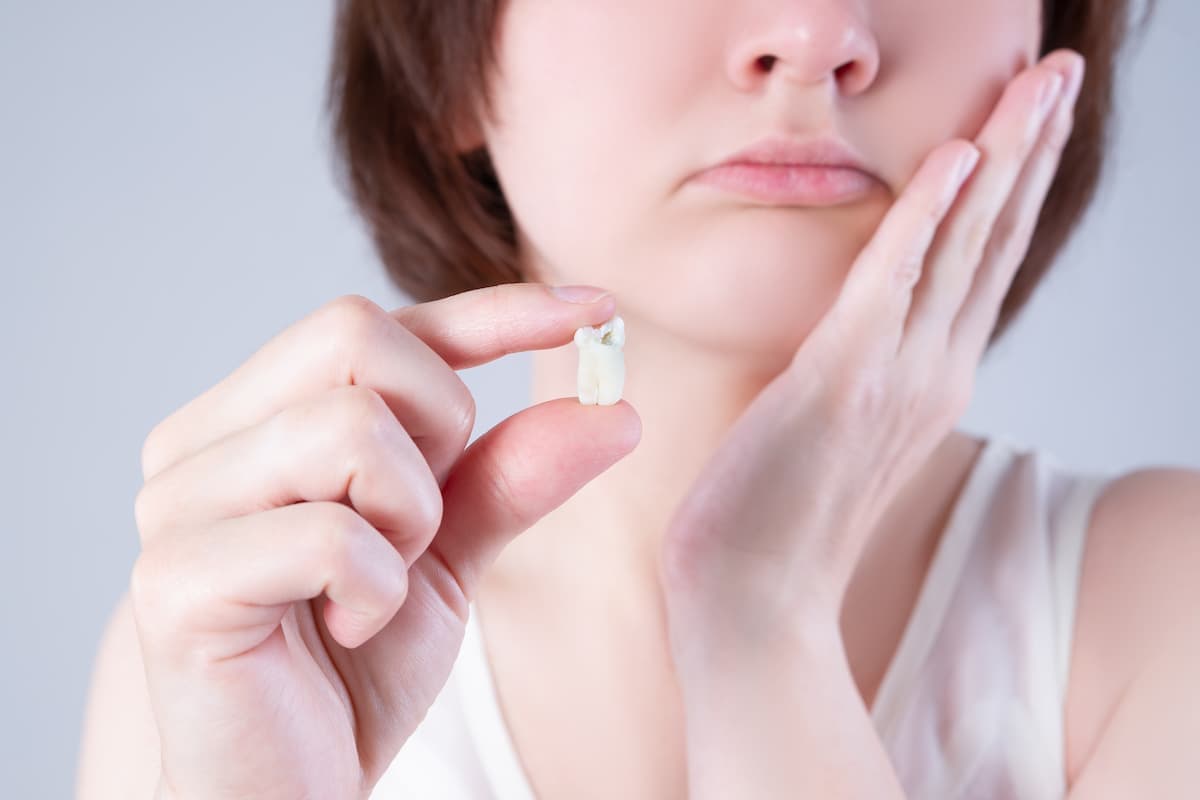
Fractures extending below the gum or into the root may not be restorable at all, and the honest answer is sometimes extraction and replacement.
A crown is indicated where enough structure has been lost that the remaining tooth cannot reliably withstand function, or where a root-treated posterior tooth needs cuspal protection. Our article on whether a crown stops a tooth cracking covers the rationale.
Visit one: preparation and impression
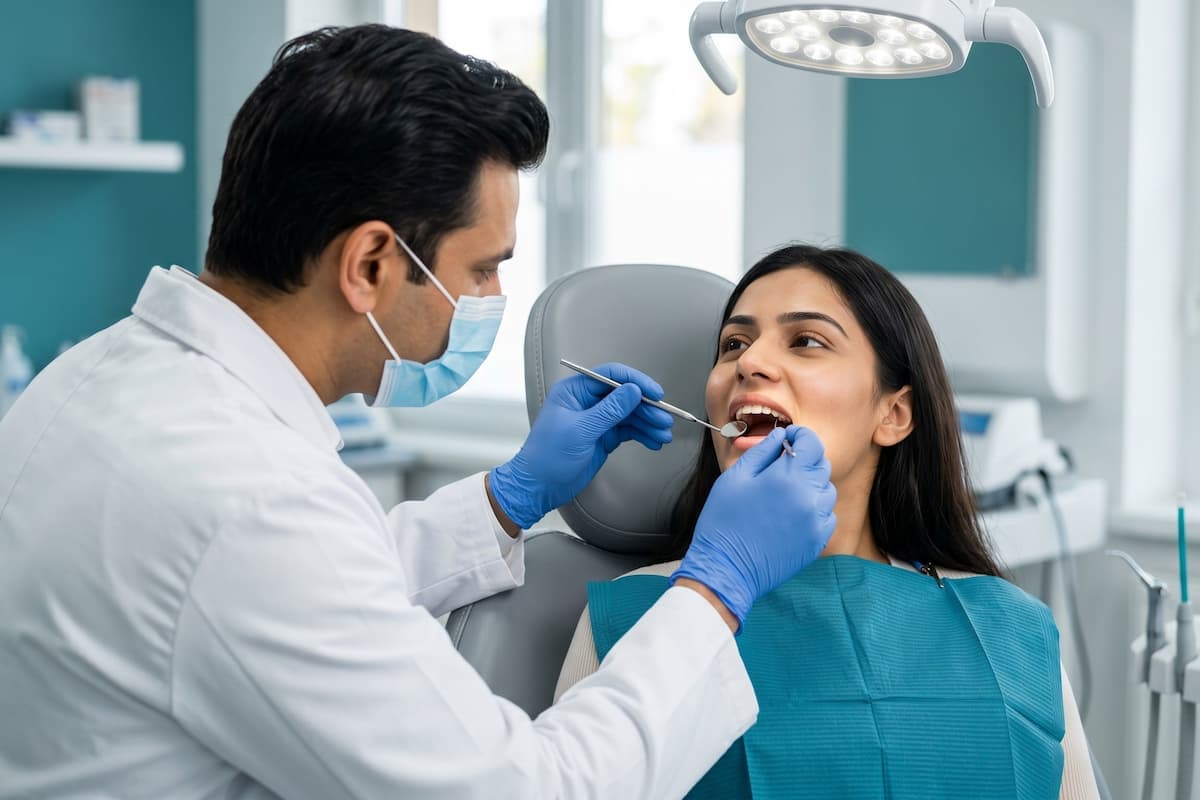
Assessment and imaging. Radiographs establish the extent of the fracture, the condition of the root and whether the pulp is involved. Sensibility testing checks whether the nerve is healthy.
Anaesthetic and removal of damaged tissue. Loose fragments, old restorations and any decay are removed. Only at this stage is the full extent of the damage visible — which is why plans occasionally change mid-appointment. A tooth expected to need a crown may turn out to need root canal treatment first, or in some cases to be beyond restoring.
Core build-up. Where substantial structure is missing, a composite core is built to provide a shape for the crown to fit over. The core is not there to make the tooth stronger — it fills space so the crown has a preparation to grip.
Preparation. The tooth is reduced by roughly one to two millimetres depending on the material, creating clearance for the crown and a defined margin at its edge. This is the stage that determines the fit and longevity of the finished crown more than any other.
Impression or scan. Either conventional impression material in a tray, or a digital intraoral scan. The bite is recorded, and the shade matched — ideally early in the appointment, before the teeth dehydrate under rubber dam or from being open, which makes them appear temporarily lighter.
Temporary crown. Made chairside and cemented with a deliberately weak temporary cement so it can be removed at the next visit.
What the temporary is actually for
Patients often regard the temporary as simply cosmetic cover. It does four jobs, three of which matter more than appearance.
It maintains the space. Teeth move. Without a temporary, the neighbouring teeth drift and the opposing tooth over-erupts, and the laboratory crown may not fit at the second visit.
It protects the prepared dentine. A prepared tooth has exposed dentinal tubules. Uncovered, it is sensitive and vulnerable to bacterial ingress.
It shapes the gum. The temporary supports the soft tissue around the margin so it maintains its contour, which matters particularly at the front.
It lets you test the shape. Where the tooth is visible, the temporary is a chance to assess length, contour and how it feels in function, and to feed that back before the definitive crown is made.
If a temporary comes off, it needs recementing promptly rather than being left out for a fortnight. Our article on a lost temporary crown covers what to do.
Between visits
The laboratory receives the impression or scan file, the bite record, the shade information and any photographs. A technician builds the crown — pressed, cast, milled or layered depending on the material — and this typically takes one to two weeks.
The involvement of a technician is the central argument for the laboratory route in complex cases. A skilled ceramist working with layered porcelain can build colour internally, reproduce translucency gradients and match characterisation in a way that surface staining on a monolithic block cannot. For a single front tooth next to a natural neighbour, that difference is often decisive, and a try-in at the biscuit-bake stage allows adjustment before the crown is finished.
Our article on natural aesthetics and translucency covers the optical principles.
Visit two: fitting
The temporary is removed, the preparation cleaned, and the crown tried in. Checks cover the fit at the margin, the contacts with neighbouring teeth, the shade against adjacent teeth in natural light, and the occlusion in both closing and sliding movements.
Adjustments at this stage are normal rather than a sign of error. A crown that fits perfectly but sits marginally high causes soreness and risks fracture. Our article on occlusal adjustment covers what is being checked.
The crown is then cemented or bonded depending on material — zirconia and metal-based crowns are usually conventionally cemented, glass ceramics adhesively bonded. Excess cement is removed carefully, particularly below the gum margin, where retained cement causes persistent inflammation.
Which route for which case
The single-visit route suits a single back tooth, a broken tooth needing prompt protection, and situations where attending twice is genuinely difficult. Our article on how chairside milling works covers that workflow in detail.
The laboratory route suits demanding anterior aesthetics, multiple units, cases where the bite is being reorganised, margins that are difficult to capture on the day, and teeth with uncertain pulpal status where a period of observation in a temporary is sensible.
It is worth being clear that "same-day" applies to the crown, not to the whole episode of care. If the tooth needs root canal treatment, periodontal therapy or a crown lengthening procedure first, those stages take their own time regardless of how the crown is subsequently made.
Aftercare
• Mild sensitivity for a few weeks is common where the tooth remains vital
• Gum tenderness at the margin settles within days
• Return promptly if the bite feels high
• Clean the margin thoroughly, including interdentally — decay at the crown edge is the commonest reason crowns are replaced
• Avoid biting hard objects with the crowned tooth
• Wear a night guard if you grind
Our article on getting used to a new crown covers the settling period.
Key points
• Not every broken tooth needs a crown — bonding and onlays are often more conservative.
• The full extent of damage is only visible once old material is removed, so plans occasionally change mid-appointment.
• The temporary maintains space, protects dentine, shapes gum and allows shape to be tested.
• Laboratory work allows technician involvement and a try-in stage, which matters most for front teeth.
• Adjusting the occlusion at fitting is routine, not a sign that something went wrong.
• "Same-day" describes the crown, not necessarily the whole course of treatment.
Frequently Asked Questions
How many appointments does a crown take?
Conventionally two, around one to two weeks apart, with a temporary in between. A single-visit chairside crown is possible in suitable cases. Preparatory treatment such as root canal therapy adds appointments regardless of route.
Does having a crown hurt?
Preparation is carried out under local anaesthetic, so the appointment itself is comfortable. Some tenderness afterwards, particularly at the gum margin, is normal for a day or two.
What if my temporary crown falls off?
Contact the practice to have it recemented. In the meantime keep the area clean and avoid chewing on it. Leaving the preparation uncovered for an extended period allows teeth to drift and the tooth to become sensitive.
Can a badly broken tooth always be crowned?
No. If the fracture extends significantly below the gum or into the root, there may not be enough sound structure above the bone to retain a crown predictably. Assessment, including radiographs, establishes this.
How long do crowns last?
Many function well for a decade or considerably longer, but outcomes vary with the amount of remaining tooth structure, the bite, grinding habits and how well the margin is kept clean. No individual timescale can be promised.
Is a crown better than a filling for a broken tooth?
It depends on how much structure remains. A filling is more conservative and appropriate for smaller defects; a crown distributes load across the whole tooth and is appropriate where cusps are lost or weakened. Over-treating a small defect with a crown is its own kind of error.
Next Steps
If you have broken a tooth, prompt assessment establishes what is restorable and what the appropriate restoration is.
You can contact our team at our Wimpole Street practice, or read about dental crowns and our emergency dental care.
Dental Disclaimer
This article provides general information about crown treatment for broken teeth and does not constitute individual dental advice. Whether a tooth can be crowned, and which workflow is appropriate, depends on the extent of damage, the position of the fracture margin and pulpal status, all of which require clinical assessment including radiographs. Wimpole Dental is regulated by the Care Quality Commission, and our clinicians are registered with the General Dental Council.
Next review due: 18 September 2027
Written by Dr Elisabeth Lichtmannegger · reviewed by Dr Elisabeth Lichtmannegger, GDC 319325
This article is general information, not personal clinical advice. For a diagnosis and a plan tailored to you, book a consultation with a GDC-registered dentist.
Related treatments at our Wimpole Street practice