Same-Day Crowns for Broken Teeth: How Chairside Milling Works

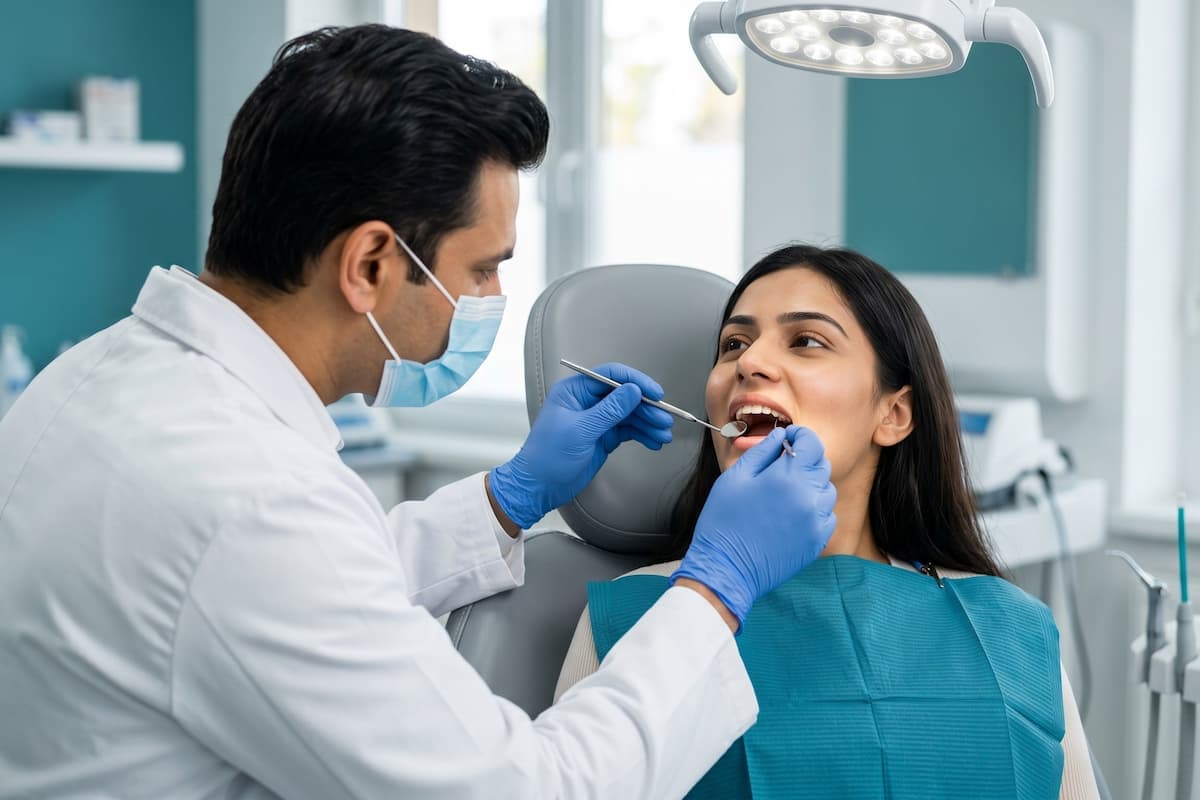
A same-day crown compresses a process that traditionally spans two appointments and a laboratory into a single visit. The tooth is prepared, scanned digitally, designed on screen, milled from a ceramic block in the practice, characterised and fitted — typically within a couple of hours.
The technology has been in clinical use since the 1980s and is well evidenced. The interesting questions are not whether it works, but where the workflow fits and where the traditional route remains preferable.
What the workflow actually involves
Preparation. Identical to preparing for any crown. The broken tooth is assessed, any decay removed, a core build-up placed if structure is missing, and the tooth reduced to the required dimensions. This stage is unchanged by the technology — our article on core build-up requirements for crowns covers it.
Optical scanning. An intraoral camera captures the preparation, the opposing teeth and the bite, building a three-dimensional model on screen. There is no impression material, which removes an entire category of error: tray distortion, material tearing, gag reflex, and the inaccuracy introduced when a physical impression is poured into stone.
Scanning is only as good as what it can see. The margin must be visible and dry, which means gingival retraction or laser troughing where the margin sits near or below the gum. Blood or fluid over the margin produces an inaccurate scan in exactly the way it produces an inaccurate impression.
Design. Software proposes a crown from a library of tooth forms, and it is then adjusted: contour, contact points with the neighbouring teeth, occlusal anatomy and how the crown meets the opposing teeth in function. The design stage is where clinical judgement enters, and the software proposal is a starting point rather than an answer.
Milling. A block of ceramic is shaped by diamond burs following the design file. Milling typically takes ten to twenty minutes depending on the material and the fineness of the cut.
Crystallisation and glaze. Lithium disilicate blocks are milled in a partially crystallised, softer state — they are the characteristic blue-violet colour at this stage — and then fired in a furnace, which converts the crystal structure and brings the material to full strength and final shade. Stains and glaze are applied at this stage to add character.
Fit, adjust and cement. Contacts and occlusion are checked and adjusted, and the crown is bonded or cemented.
What suits the workflow
A single unit on a back tooth. The archetypal case. Aesthetic demands are moderate, the tooth is largely enclosed by neighbours, and a milled monolithic ceramic performs well.
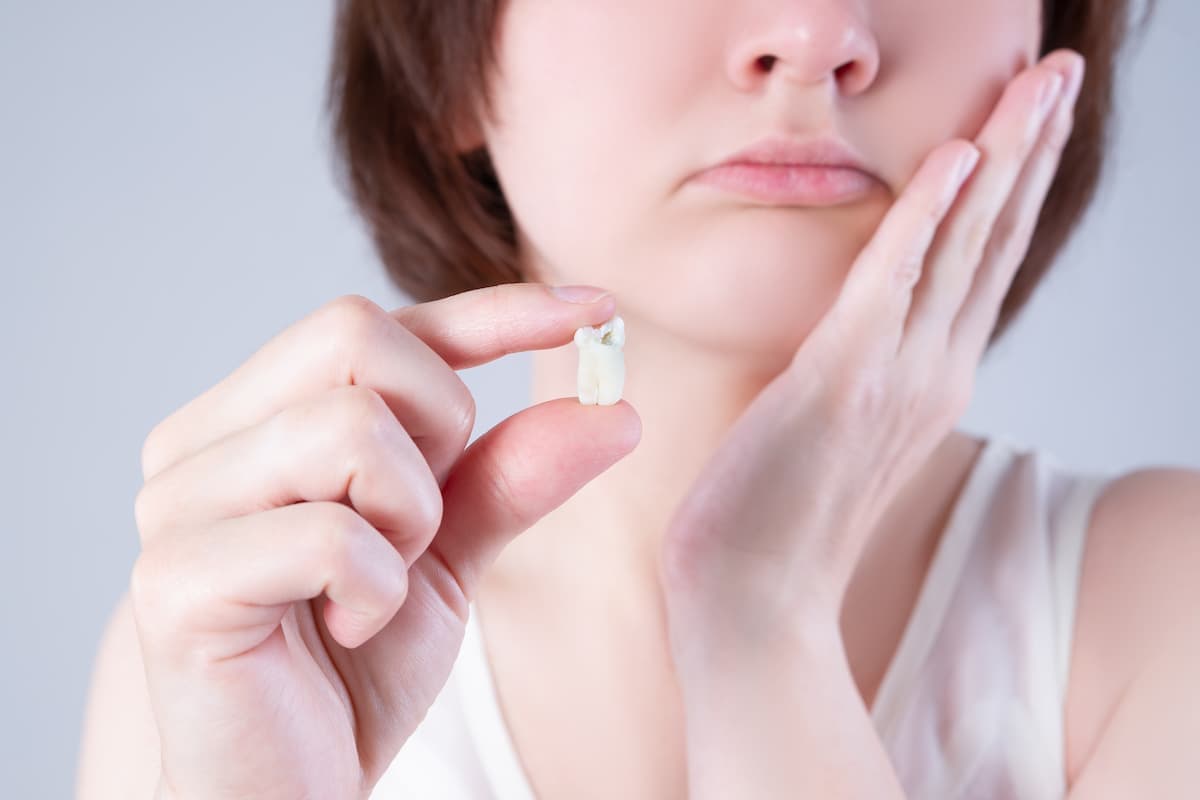
A broken tooth needing prompt protection. A cusp has fractured and the remaining structure is at risk. Restoring it in one visit avoids the interval during which an unprotected tooth can fracture further.
Patients for whom a second appointment is genuinely difficult. Travel, work commitments, or a strong gag reflex that makes impressions and temporary crowns unpleasant.
Root-treated teeth needing cuspal coverage. Where the objective is protection rather than a demanding aesthetic match.
Cases where a temporary would be unreliable. A short preparation with poor retention where a temporary crown is likely to come off repeatedly.
What does not suit it
Demanding anterior aesthetics. A single central incisor matched to a natural neighbour is the hardest problem in restorative dentistry. It usually calls for layered ceramic, a stump shade assessment and often a biscuit-bake try-in — a laboratory process. Monolithic milled ceramic, however well stained, has limits in reproducing internal characterisation. Our article on translucency in cosmetic crowns explains why the substrate complicates this further.
Subgingival or bleeding margins. If the scanner cannot see the margin clearly, the fit will be compromised. Sometimes the right answer is to place a temporary, let the tissue settle, and scan at a second visit.
Multiple units requiring shared design. Possible, but the chairside time extends considerably, and complex cases benefit from technician involvement.
Cases where the bite is being altered. Changing vertical dimension or reorganising the occlusion needs planning on articulated models or in software with a full-arch record, and is not a single-visit exercise. Our article on occlusal adjustment in crowns covers the principles.
Teeth with uncertain pulpal status. If there is doubt about whether the pulp will remain healthy, committing to a definitive restoration immediately may not be the right sequence. Our article on root canal treatment for a broken tooth covers the assessment.
How the two approaches compare
Fit. Digital scanning eliminates impression material distortion and model pouring error; milling is limited by bur diameter in very fine internal angles. Laboratory work can use pressing or casting, which reproduce fine detail well, but adds impression and model stages. Clinically, both approaches achieve marginal fit within accepted tolerances when executed properly. Our article on marginal fit and long-term tooth health covers why this matters.
Strength. Milled lithium disilicate and zirconia are the same materials used in the laboratory. The block is industrially produced and homogeneous, which is arguably an advantage over layered porcelain, where the interface between core and veneering ceramic is a potential weak point.
Appearance. This is the genuine difference. Monolithic milled ceramic is stained and glazed on the surface; layered laboratory ceramic builds colour internally in three dimensions. For a back tooth, the difference is not perceptible. For a front tooth beside a natural one, it can be.
Convenience. One appointment, no temporary crown, no interval during which a temporary can debond and allow the preparation to drift or the tooth to become sensitive.
No temporary phase. Worth noting in its own right, since the temporary phase is where a meaningful proportion of problems arise — our article on a lost temporary crown covers those.
Aftercare
• Expect some gum tenderness around the margin for a day or two, particularly if retraction cord was used
• Mild sensitivity to cold for a few weeks is common where the tooth remains vital
• Return if the bite feels high — an unadjusted contact causes soreness and can fracture the ceramic
• Clean the margin thoroughly, including between the teeth; a crown does not protect against decay at its edge
• Avoid biting hard objects with the crowned tooth
• Use a night guard if you grind
Our article on getting used to a new crown covers the settling period.
Key points
• Same-day crowns use the same ceramic materials as laboratory crowns; the workflow differs, not the material.
• Preparation requirements are identical — the technology does not reduce how much tooth must be removed.
• A clean, visible, dry margin is essential; the scanner cannot see through blood or fluid.
• The workflow suits single posterior units and broken teeth needing prompt protection.
• Demanding anterior aesthetics generally still favour layered laboratory ceramic.
• The absence of a temporary phase removes a common source of problems.
• Milled lithium disilicate is fired after milling, which brings it to full strength and final shade.
Frequently Asked Questions
How long does a same-day crown appointment take?
Commonly around two hours in total, including preparation, scanning, design, milling and fitting. There is usually a gap during milling and firing when you are free rather than in the chair.
Are same-day crowns as durable as laboratory crowns?
The materials are the same, and published outcome data for chairside ceramic crowns are comparable to laboratory equivalents. Durability depends more on preparation design, remaining tooth structure, the bite and grinding than on where the crown was made.
Can any practice provide same-day crowns?
No — it requires an intraoral scanner, milling unit, furnace and clinician training. Not every practice is equipped for it, and not every case is suited to it even where the equipment exists.
Do same-day crowns look natural?
On back teeth, generally yes. On front teeth beside natural neighbours, layered laboratory ceramic usually gives a better result because colour is built internally rather than applied to the surface.
Is the process comfortable?
Preparation is carried out under local anaesthetic. Many patients find the absence of impression material and of a temporary crown makes it more comfortable than the traditional route overall.
What if the crown does not fit properly?
It can be redesigned and re-milled at the same appointment, which is one practical advantage of the workflow. If the margin cannot be captured cleanly, the appropriate response is a temporary and a second attempt once the tissue has settled.
Next Steps
If you have broken a tooth, prompt assessment establishes what the tooth needs and which restorative route is appropriate.
You can contact our team at our Wimpole Street practice, or read about dental crowns and our emergency dental care.
Dental Disclaimer
This article provides general information about chairside CAD/CAM crowns and does not constitute individual dental advice. Whether a tooth is suited to a single-visit restoration depends on the extent of damage, margin position, pulpal status and aesthetic requirements, all of which require clinical assessment. Wimpole Dental is regulated by the Care Quality Commission, and our clinicians are registered with the General Dental Council.
Next review due: 18 September 2027
Written by Dr Elisabeth Lichtmannegger · reviewed by Dr Elisabeth Lichtmannegger, GDC 319325
This article is general information, not personal clinical advice. For a diagnosis and a plan tailored to you, book a consultation with a GDC-registered dentist.
Related treatments at our Wimpole Street practice